AI Local SEO for Restaurants: Dominating Search and AEO for Restaurant Marketing
Updated: October 26, 2026
E-commerceQuick Summary
6 min read- 01
Local diners no longer search the way they used to. A few years ago, hungry customers typed simple keywords like "best Italian food near me" into a standard search bar. Today, they speak...
- 02
If your restaurant relies solely on outdated local search tactics, your tables risk staying empty. The shift from classic search engine optimization to Answer Engine Optimization (AEO) means...
- 03
Here is how restaurant operators can leverage artificial intelligence to automate local visibility, outrank nearby competitors, and capture high-intent diners across search engines and AI...
- 04
Your Google Business Profile serves as your digital storefront. While traditional local SEO focuses on filling out static profile fields, AI systems continuously scan your profile for...
01AI Local SEO for Restaurants: Winning Diners in the Age of Answer Engine Optimization
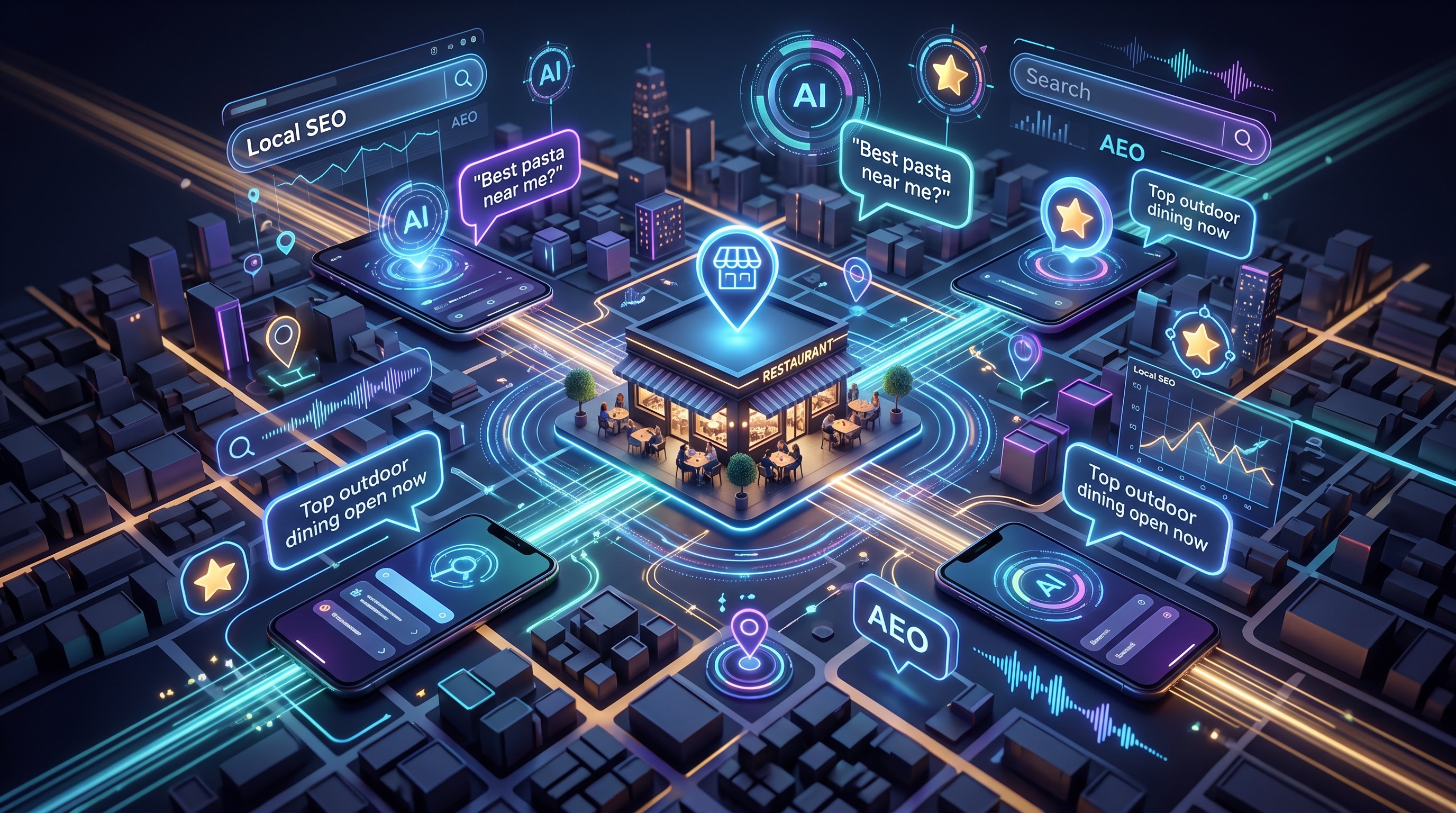
Local diners no longer search the way they used to. A few years ago, hungry customers typed simple keywords like "best Italian food near me" into a standard search bar. Today, they speak directly into voice assistants, consult AI conversational engines, and expect hyper-tailored recommendations: "Find a quiet Italian bistro within walking distance with gluten-free pasta and outdoor patio seating open after 9 PM."
If your restaurant relies solely on outdated local search tactics, your tables risk staying empty. The shift from classic search engine optimization to Answer Engine Optimization (AEO) means your digital presence must directly feed AI models such as Google Gemini, ChatGPT, and Apple Intelligence. By combining AI local SEO for restaurants with targeted AEO for restaurant marketing, you position your brand directly in front of diners at the exact moment of decision.
Here is how restaurant operators can leverage artificial intelligence to automate local visibility, outrank nearby competitors, and capture high-intent diners across search engines and AI assistants.
AI-Powered Google Business Profile (GBP) Optimization
Your Google Business Profile serves as your digital storefront. While traditional local SEO focuses on filling out static profile fields, AI systems continuously scan your profile for freshness, context, sentiment, and active customer engagement to determine your local ranking.
Semantic Menu Ingestion and Attribute Enrichment
AI search engines extract fine details from your menu and photo uploads. Use generative AI tools to enrich your GBP attributes by translating user reviews into relevant profile features:
- Identify emerging dining preferences (e.g., "dog-friendly patio", "kid-friendly booths", "biodynamic wine lists") by running your customer reviews through natural language processing tools.
- Add these precise attributes directly into your Google Business Profile to match natural-language voice queries.
Automating High-Context Q&A and Review Responses
Google favors profiles with active, context-rich conversations. AI tools can analyze incoming customer reviews, assess sentiment, and draft responses that incorporate target local keywords naturally:
- Positive Review Response: An AI assistant drafts a reply acknowledging a diner's praise for your "truffle gnocchi" while subtly reinforcing your geographic presence in the neighborhood.
- Negative Feedback De-escalation: Natural language models generate empathetic, brand-aligned solutions that address customer concerns without sounding robotic.
- Proactive GBP Q&A: Seed your own profile's Q&A section with anticipated conversational queries (e.g., "Do you take large party reservations on weekends?") answered using structured, direct language that AI answer engines easily parse.
To streamline this process without dedicating hours each week, explore our specialized Useryze Local SEO Services to automate profile monitoring and review management.
Generating Hyper-Local Content with AI: Menus and Events
Traditional local SEO relied on creating repetitive city landing pages. Modern AEO requires deep topical authority, unique culinary storytelling, and real-time community integration.
AI-Crafted, Structured Menu Descriptions
Generic item listings such as "Cheeseburger: lettuce, tomato, fries" fail to trigger conversational search engines. AI prompt workflows allow you to turn simple ingredient lists into rich, sensory descriptions embedded with local culinary keywords:
- Use AI to rewrite menu items highlighting regional sourcing: "Grass-fed beef sourced from local valley farms, served with house-made pickles and triple-cooked russet potatoes."
- Wrap these descriptions in clean Schema.org
RestaurantandMenuItemmicrodata so AI bots can instantly parse allergens, ingredients, and pricing.
Neighborhood Event Promotions and Micro-Content
Answer engines prioritize real-time local relevance. Use AI writing assistants to publish ongoing event-based content:
- Generate targeted blog updates and social snippets promoting local community tie-ins (e.g., pre-theater dinner specials, game-day viewing parties, or holiday brunch menus).
- Craft calendar-event structured data that informs Google and conversational agents of special dining events weeks in advance.
Looking to automate your content production pipeline while maintaining authentic brand voice? Learn how Useryze AI Solutions build custom content workflows tailored specifically for hospitality brands.
Decoding Local Search Intent with Predictive AI
Ranking for general dining terms does not guarantee paying customers. AI enables restaurant operators to move beyond basic search volume and evaluate actionable, hyper-local dining intent.
Conversational Intent Mapping
Traditional keyword research tools show you search terms. Predictive AI models identify user intent profiles:
- Immediate Intent: "Late-night food delivery open now" requires instant hours verification, direct ordering links, and prominent delivery radius markup.
- Exploratory Intent: "Romantic dinner spots with a view" demands high-resolution image alt tags, ambiance-driven review citations, and contextual mentions across local directories.
Real-Time Trend and Competitor Gap Analysis
AI scraping and analytics engines evaluate competitor menus, pricing changes, and localized demand patterns:
- Identify dishes competitors in your immediate radius are removing or pricing out of reach.
- Adjust your daily digital specials and featured search metadata to capture unmet demand in your neighborhood before your competitors catch on.
Actionable AI Implementation Playbook for Restaurant Owners
Here is a straightforward roadmap to start applying these tactics today:
- Audit Your Digital Footprint with AI Prompts: Ask leading conversational AI tools (such as ChatGPT or Google Gemini) for dining recommendations in your neighborhood and cuisine type. Note whether your restaurant appears, what attributes it cites, and where information is missing or inaccurate.
- Implement Structured Recipe and Menu Schema: Ensure every dish on your website features structured JSON-LD code containing ingredients, dietary labels (vegan, halal, gluten-free), and prices.
- Set Up an AI-Assisted Review Management Flow: Connect your review feeds to an AI response assistant with strict brand safety guardrails. Never post automated responses blindly; always have a manager review and approve outgoing messages.
- Publish Hyper-Local Neighborhood Guides: Use AI to draft guides featuring your favorite local artisans, wine suppliers, and community events, establishing your restaurant as an indispensable culinary hub.
Claim Your Spot at the Top of Local Search
The shift toward AI search and conversational answer engines presents an unprecedented opportunity for independent restaurants and multi-location hospitality groups alike. By actively optimizing for AI answer engines and local search algorithms, you ensure your dining room remains full no matter how customer search habits evolve.
Ready to see how your restaurant performs in AI-driven search results?
Request Your Free Local SEO and AEO Audit from Useryze Today and let our team uncover the hidden gaps keeping your restaurant off page one.
Related Posts
View All ›
Learn how to reduce friction and build trust in the jewelry funnel using high fidelity visuals, sizing solutions, and anxiety reduction strategies.


An analysis of the funnel structures that scale jewelry brands. We focus on technical trust, friction management, and the transition from discovery to conversion.

An analytical breakdown of jewelry sales funnels based on real-world execution. We examine how to align high-consideration purchases with technical funnel stages to improve conversion without relying on hype.