
Hyperlocal SEO for Restaurant Chains: Dominating Google Maps & Voice Search Across Multiple Locations
Updated: October 22, 2026
E-commerceQuick Summary
7 min read- 01
For a single-location diner, local search is relatively straightforward: optimize a single profile, gather local reviews, and secure a spot on the neighborhood map. However, when you are...
- 02
For multi-location restaurant brands, winning the local market requires a shift from standard optimization to hyperlocal SEO for restaurant chains. Diners today do not search for "best...
- 03
If your brand fails to show up in the top three results of Google Maps (the Local 3-Pack) or voice search queries across every single footprint, you are forfeiting high-intent customers...
- 04
Below, we break down the unique obstacles restaurant chains face in local search and outline the exact playbook required to dominate Google Maps, voice queries, and AI-driven local...
For a single-location diner, local search is relatively straightforward: optimize a single profile, gather local reviews, and secure a spot on the neighborhood map. However, when you are managing 10, 50, or hundreds of restaurant locations, local search transforms into a complex ecosystem.
For multi-location restaurant brands, winning the local market requires a shift from standard optimization to hyperlocal SEO for restaurant chains. Diners today do not search for "best burger in the country" they search for "best burger near me," "sushi open now in downtown," or ask Voice Search, "Where can I get gluten-free pizza nearby?"
If your brand fails to show up in the top three results of Google Maps (the Local 3-Pack) or voice search queries across every single footprint, you are forfeiting high-intent customers directly to competitors.
Below, we break down the unique obstacles restaurant chains face in local search and outline the exact playbook required to dominate Google Maps, voice queries, and AI-driven local discovery.
01The Unique Local Search Challenges Facing Restaurant Chains
Scaling local search across dozens or hundreds of storefronts presents operational and technical hurdles that single-location businesses never encounter:
- Managing Inconsistent NAP Data: Name, Address, and Phone number (NAP) details easily become fragmented across locations, aggregators, and directories. A minor discrepancy such as an outdated phone number or conflicting opening hours on one location can dilute search engine trust and lower rankings for that branch.
- Duplicate and Unclaimed Listings: Franchisees, former managers, or enthusiastic customers often create duplicate listings. Duplicate profiles confuse Google’s algorithm and split review equity across multiple pages.
- Menu & Operational Variances: Daily specials, localized menus, changing seasonal hours, and unique location features (e.g., drive-thru vs. patio seating) make maintaining real-time accuracy at scale a logistical nightmare.
- Voice Search & Conversational Queries: Voice search queries via Siri, Google Assistant, and Alexa tend to be highly specific and conversational. Capturing these queries requires structured data and clear, localized answers tailored to each branch.
Core Strategies to Dominate Local Search Across Locations
To overcome these hurdles and achieve market dominance, multi-location restaurant chains must execute a coordinated, hyperlocal search strategy.
1. Optimize Google Business Profiles (GBP) for Every Single Branch
Your Google Business Profile (GBP) is the primary digital front door for each of your restaurants. Treating every location as an individual entity on Google Maps is non-negotiable.
- Nomenclature Consistency: Keep brand naming clean and consistent without keyword stuffing (e.g., Brand Name - Neighborhood/City).
- Complete & Precise Data: Ensure address pins are placed accurately on Google Maps, phone numbers connect directly to the specific branch, and business categories accurately reflect each venue's core offerings.
- Dynamic Menu Integration: Upload localized menus directly to each profile using Google’s structured menu feature or integrated menu APIs to capture long-tail dish queries (e.g., "birria tacos near me").
- High-Quality Visuals: Regularly upload interior photos, popular dishes, and kitchen highlights. User-generated photos and fresh owner updates signal active, popular operations to search algorithms.
2. Streamline Citation Management & Localized Page Architecture
Search engines rely on external web citations to verify that a physical location exists and operates reliably at a given address.
- Centralize Citation Updates: Use centralized management platforms to sync store information across major aggregators (Apple Maps, Yelp, Bing Places, TripAdvisor, and local business directories).
- Build Location-Specific Landing Pages: Every restaurant branch needs a dedicated, indexable landing page on your main website domain (e.g.,
[brand.com/locations/chicago-loop](https://brand.com/locations/chicago-loop)). - Implement Schema Markup: Embed structured data (LocalBusiness and Restaurant schema) on each landing page. Explicitly state opening hours, accepted payment methods, menu URLs, reservation links, and geo-coordinates to help search crawlers and voice assistants parse your data effortlessly.
- Highlight Unique Amenities: Include location-specific details on each page, such as parking availability, private dining options, or outdoor seating.
To learn more about how tailored page architecture drives real-world foot traffic, explore our specialized local SEO services.
3. Leverage Customer Reviews as a Local Ranking Engine
Review volume, velocity, and sentiment are direct ranking factors for Google Maps and local pack positioning. For restaurant chains, review strategy must be executed locally while monitored centrally.
- Automate Review Generation: Implement post-dining SMS or email prompts, QR codes on physical receipts, or loyalty program triggers to encourage diner feedback.
- Incorporate Targeted Keywords Naturally: When responding to reviews, subtly incorporate localized terms and dish descriptions (e.g., "Thanks for stopping by our Downtown branch for our wood-fired pizza!").
- Maintain High Response Rates: Respond promptly to both positive and negative feedback across all locations. Swift responses display strong business operational health to search algorithms and build brand loyalty among customers.
4. Harness AI Tools and Generative Search Visibility
The rise of AI search engines (such as Google Gemini, ChatGPT Search, and Apple Intelligence) is changing how consumers find places to eat. Modern diners ask AI models for curated recommendations based on nuanced criteria: "Find a family-friendly Mexican restaurant open after 9 PM with outdoor seating and vegan options."
Winning in this landscape requires optimizing for AI discovery and conversational search:
- Conversational FAQ Content: Build localized FAQ sections on each location page answering specific, multi-layered customer questions.
- Sentiment & Unstructured Data Optimization: AI models crawl consumer review sites, social media mentions, and blogs to determine brand reputation and context. Monitoring and shaping overall sentiment across third-party platforms ensures AI assistants enthusiastically recommend your branches.
- Predictive Local Insights: Employ AI-powered analytics to monitor local search performance, predict shifting search trends in specific neighborhoods, and automatically detect profile discrepancies before they harm visibility.
Discover how your restaurant chain can capture conversational AI search queries through Useryze's advanced AI search visibility solutions.
Why Restaurant Chains Partner with Useryze
Scaling local SEO across dozens or hundreds of venues requires technical expertise, specialized technology, and a deep understanding of multi-location search mechanics. This is where Useryze excels.
Useryze empowers multi-location restaurant groups to turn local search from an operational headache into a predictable revenue driver. Our multi-location framework gives restaurant brands complete control over their digital footprint across Google Maps, Apple Maps, Voice Search, and AI-driven engines.
How Useryze Transforms Multi-Location Local Visibility:
- Centralized Store-Code Management: We eliminate NAP discrepancies and bulk-manage listing data across your entire chain, protecting brand consistency while enabling localized customization.
- Advanced Schema & Menu Deployment: Our team builds robust LocalBusiness and Restaurant schema setups for each branch, ensuring search engines and AI assistants read your menu, hours, and features with zero ambiguity.
- AI-Powered Local Performance Monitoring: We track hyper-specific local rankings down to the neighborhood grid level, giving you actionable insights into which branches are dominating local map packs and which need targeted support.
- Turnkey Multi-Location Execution: From review generation strategies to voice search optimization, Useryze provides end-to-end management so your internal team can focus on delivering exceptional dining experiences.
Take Control of Your Multi-Location Local Search Strategy
Dominating local search across multiple restaurant locations isn't just about managing listings it's about building a scalable digital presence that consistently drives diners through your doors. By pairing robust Google Business Profile management and citation cleanup with cutting-edge AI search optimization, your chain can achieve unmatched visibility in Google Maps and voice search results.
Ready to scale your restaurant chain's search presence and outshine local competitors in every market you serve?
Get in touch with the local search team at Useryze today to request a multi-location audit and discover how we can transform your local search visibility across every footprint.
Related Posts
View All ›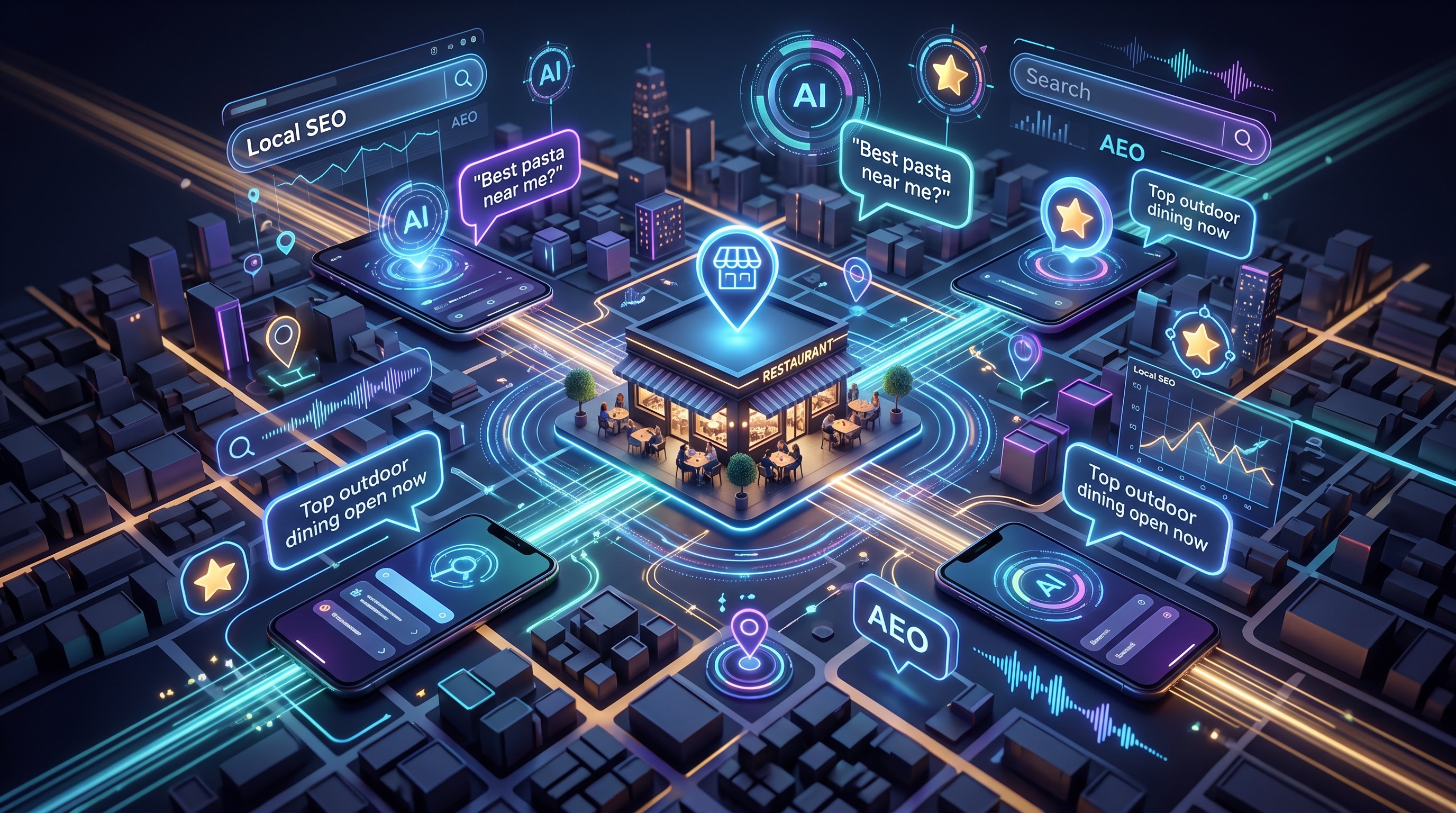
Discover how combining local SEO for restaurants with modern AEO strategies can help you dominate search results, power AI assistants, and attract more diners online in 2026.


An operator's breakdown of organic vs paid traffic for high-AOV jewelry brands. Compare conversion performance, cash flow demands, and long-term channel dynamics.

A practical guide for jewelry store operators looking to capture high-intent local search traffic, optimize their Google Business Profile, and build a reliable local search engine.