The Independent Jeweler's Guide to Website Personalization and AI: Competing with Online Giants
Updated: October 28, 2026
E-commerceQuick Summary
11 min read- 01
Independent jewelers possess a generational advantage that mass-market digital aggregators cannot easily replicate: genuine human trust, master bench craftsmanship, and deep personal...
- 02
However, the rapid growth of massive online jewelry marketplaces has disrupted that dynamic. Mega-retailers deploy multi-million-dollar tech stacks, limitless advertising budgets, and vast...
- 03
Faced with this digital scale, independent jewelers often feel pressured into an unwinnable volume game. Attempting to match online diamond warehouses on raw inventory size or aggressive...
- 04
The digital storefront must stop functioning as a static digital catalog. To win high-consideration purchases, independent retailers must bring the intimacy of the showroom counter to every...
011. Introduction: The Challenge of Standing Out in the Jewelry Market
Independent jewelers possess a generational advantage that mass-market digital aggregators cannot easily replicate: genuine human trust, master bench craftsmanship, and deep personal relationships. For decades, a customer entered a local boutique, sat across from a passionate owner, and received a bespoke consultation tailored to their budget, taste, and emotional milestones.
However, the rapid growth of massive online jewelry marketplaces has disrupted that dynamic. Mega-retailers deploy multi-million-dollar tech stacks, limitless advertising budgets, and vast inventories of certified loose diamonds. They dominate search engine results pages and set high expectations for digital convenience, instant answers, and fast delivery.
Faced with this digital scale, independent jewelers often feel pressured into an unwinnable volume game. Attempting to match online diamond warehouses on raw inventory size or aggressive price cuts erodes margins and dilutes brand heritage. As explored in our deep dive on how independent jewelers beat online diamond giants, the path to sustainable growth lies in differentiation, relationship equity, and superior client experience rather than cut-rate pricing.
The digital storefront must stop functioning as a static digital catalog. To win high-consideration purchases, independent retailers must bring the intimacy of the showroom counter to every digital visitor. This transformation is driven by artificial intelligence and automated web personalization. Modern AI solutions allow boutique brands to deliver tailored, white-glove interactions at scale. By combining your proprietary craftsmanship with smart software, you create a distinct digital advantage that giant corporations cannot match.
2. Why Personalization is Key for High-Value Jewelry Sales
Jewelry is rarely an impulse purchase. Whether an engagement ring, an anniversary pendant, or a self-gifted gemstone bracelet, jewelry transactions are deeply tied to sentiment, identity, and substantial financial commitment.
When shopping for luxury goods, consumers do not respond well to generic digital storefronts. A collector researching platinum art deco mountings expects a radically different digital experience than a first-time groom searching for a classic solitaire within an entry-level budget. Presenting both individuals with identical generic best-seller banners creates friction, increases bounce rates, and breaks emotional resonance.
Luxury e-commerce personalization bridges this psychological gap. High-value sales require three emotional pillars:
First, reassurance and authority. When a website understands and adapts to an individual's explicit taste and unspoken budget parameters, the customer feels recognized. Trust builds faster when prospective buyers are not forced to sort through hundreds of irrelevant stock items.
Second, friction elimination. A buyer preparing to spend several thousand dollars requires targeted educational cues. If a visitor repeatedly inspects rose gold settings with vintage milgrain detailing, presenting educational content about metal longevity, diamond color matching, and heirloom restoration directly lowers purchase hesitation.
Third, margin protection. Discounting is a blunt tool that hurts luxury perception. Personalization replaces blanket couponing with value-driven relevance. Showing the right piece to the right buyer at their moment of peak intent protects your margin and naturally lifts Average Order Value (AOV). For brands exploring broader direct-to-consumer frameworks, our guide on scaling a DTC jewelry brand from $1M to $5M revenue through CRO and funnel architecture examines how personalized paths anchor strong gross margins.
3. How AI Enables Personalized Shopping Experiences
Modern AI for independent jewelers does not require enterprise engineering squads or speculative technological bets. Practical, commercial artificial intelligence platforms interpret behavioral signals in real time, translating clicks, scroll depth, and interaction history into curated shopping journeys.
Dynamic Product Recommendations Based on Browsing Intent
Traditional e-commerce recommendation engines rely on simple product tagging such as "Customers who bought this also bought that." In high-end jewelry, this simplistic logic fails because purchases are infrequent and highly taste-specific.
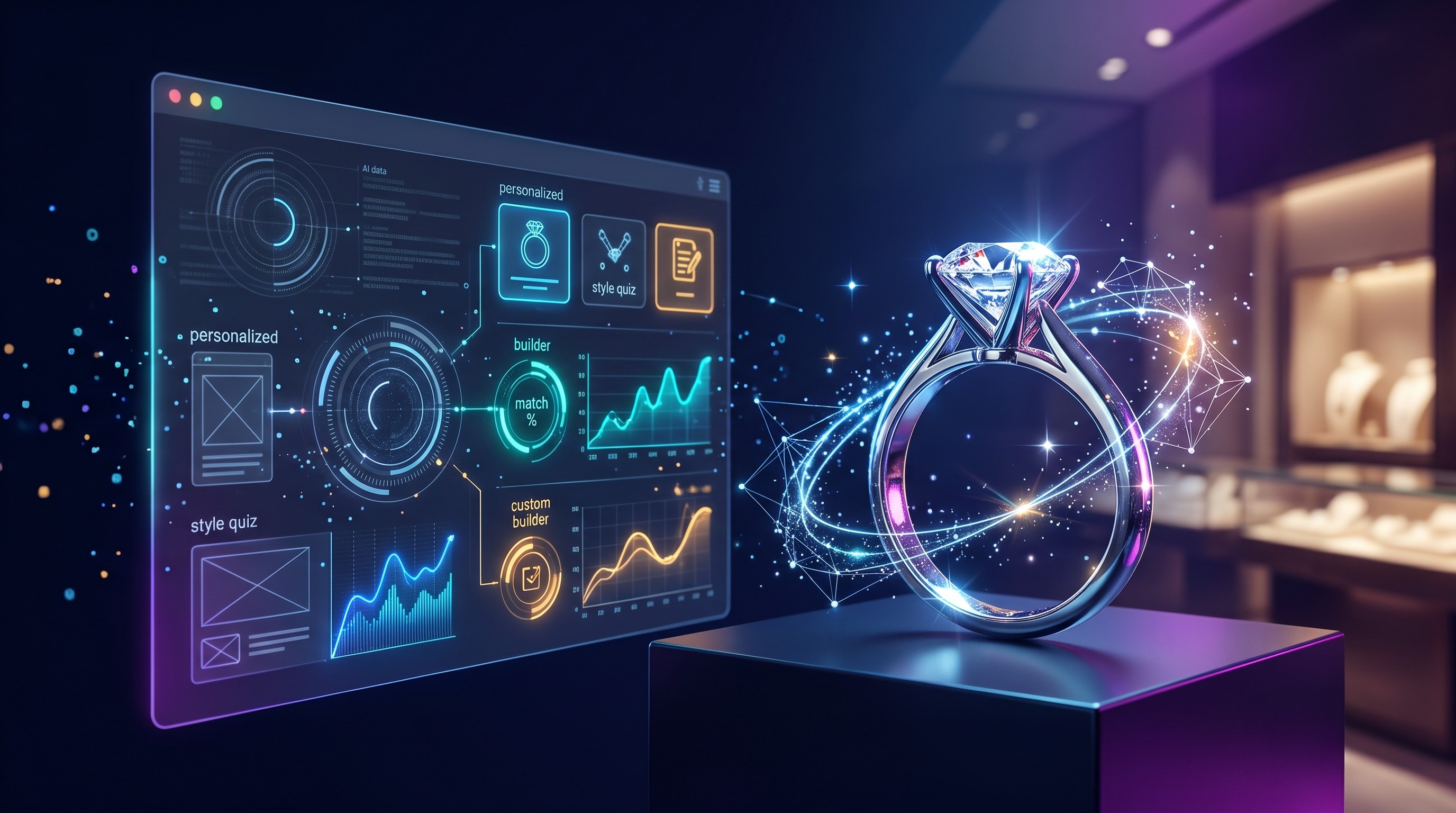
Machine learning models evaluate multi-layered user telemetry. If an anonymous visitor filters by oval cuts, lingers on bezel settings, and scrolls past prong mountings, predictive algorithms automatically curate collection grids to highlight bezel-set oval pieces. Instead of static best-seller ranks, your home and collection pages transform dynamically to present items that match the user's specific visual and aesthetic profile.
Custom Ring Builder Data and Real-Time Design Curation
Custom engagement ring builders often see substantial traffic but suffer from high abandonment rates. Visitors get overwhelmed by the Four Cs (Cut, Color, Clarity, Carat) or struggle to visualize how a specific center stone pairs with a custom mounting.
AI engines monitor how visitors adjust sliders and switch between metals. If a customer consistently selects loose lab-grown stones over two carats alongside delicate micro-pave bands, the system detects their preference for size and intricate sparkle. If they stall at the cart step, the platform can dynamically surface a short video breakdown explaining prong security for that precise stone dimension, or adjust the default gallery images to show hand-model proportions.
Interactive Style Quizzes That Map Aesthetic Preferences
Style discovery quizzes provide one of the most effective methods to capture clean, first-party data while offering direct value to the shopper. A multi-step interactive quiz asks questions regarding the recipient's daily wardrobe, metal preferences, lifestyle activity levels, and target budget.
Rather than funneling quiz takers into broad product categories, AI models calculate preference affinities to deliver a custom lookbook. Furthermore, this zero-party data stays attached to the shopper's profile. When that user returns to the site days later, their personalized jewelry shopping experience continues uninterrupted, displaying complementary wedding bands, matching earrings, or custom engraving possibilities.
Discover more ways we optimize specialized store funnels across our dedicated jewelry industry solutions.
4. Leveraging AI for Personalized Communication
Personalization must extend beyond the browser session. High-ticket jewelry sales cycles can span weeks or months. AI-driven messaging keeps your brand top of mind while maintaining a genuine, boutique tone.
Triggered, High-Context Email Follow-Ups
Standard abandoned cart emails usually send an uninspired "You left something behind!" alert paired with a generic discount. In fine jewelry, this strategy cheapens the brand and frequently fails.
Intelligent email workflows leverage the rich context gathered during the browsing session. If an identified user spent eight minutes examining your custom Montana sapphire line before exiting, the automated follow-up should spotlight your ethical sourcing practices, your lapidary cutting standards, and a direct invitation to speak with your gemologist.
Natural language models can draft dynamic subject lines and body copy variations tailored to the specific collection viewed. A buyer browsing heirloom-redesign services receives an educational story on transforming family estate pieces, while a buyer reviewing men's wedding bands receives a guide on comfort-fit sizing and alternative metals like tantalum and platinum.
Intelligent Chat Support That Mirrors an In-Store Bench Jeweler
Typical customer service chatbots are rigid decision trees that frustrate shoppers seeking expert guidance. Modern conversational AI, trained on your brand catalog, custom design history, and return policies, functions as an online concierge.
When an online customer asks, "Will this low-profile emerald ring sit flush with an eternity band?" an advanced AI assistant recognizes the geometric challenge. It pulls the dimensional specifications of both items, confirms whether a curved or contour band is needed, and shares clear imagery of the combination. If the question requires bespoke bench assessment, the AI schedules a direct consultation with your master bench jeweler, capturing ring sizes, stone preferences, and reference images ahead of the meeting.
5. Creating a Seamless Omnichannel Experience (Online to In-Store)
The ultimate strength of an independent jeweler is the physical retail space. The tactile experience of trying on precious metals, observing diamond light performance under specialized lighting, and feeling the weight of a signet ring cannot be duplicated on a screen.
Rather than treating the physical store and the website as separate silos, AI-powered luxury e-commerce personalization unites them into a continuous customer journey:
- Digital Wishlists and Consultation Booking: When a shopper saves favorites, completes a quiz, or configures a ring online, that information syncs to a unified client profile. When they schedule an in-store appointment, your showroom staff receives an automated dossier summarizing their preferred metals, gem shapes, and price comfort zone.
- Informed Showroom Consultations: Instead of starting from scratch when the client walks in, the sales associate prepares a velvet presentation tray featuring the exact pieces or design styles the visitor explored online. This level of preparation demonstrates extraordinary professionalism and immediately establishes rapport.
- Post-Visit Digital Mirroring: If a customer visits the showroom to examine three diamonds but leaves to reflect before buying, their online experience should adapt accordingly. The next time they visit your website from home, the hero banner can display high-resolution 360-degree videos of those three specific stones alongside direct links to complete the purchase or text their dedicated associate.
By connecting web intelligence with in-person hospitality, independent jewelers unlock conversion rates that pure-play e-commerce conglomerates cannot match.
6. Hypothetical Case Study: The Gemstone Vault
To illustrate the measurable impact of AI-driven website personalization, consider the experience of The Gemstone Vault, a multi-generation independent jeweler specializing in colored gemstones and bespoke bridal design.
The Challenge
The Gemstone Vault maintained strong foot traffic in their regional boutique, but their e-commerce storefront suffered from sluggish metrics:
- An Average Order Value (AOV) of $620 online, compared to over $2,800 in-store.
- An overall site conversion rate of 0.8%, heavily weighed down by low-margin silver gift items.
- High bounce rates on their custom bridal category, where shoppers felt overwhelmed by stone choices and left without booking consultations.
Tactical Implementation
The brand executed a targeted personalization strategy utilizing predictive AI and funnel optimization:
- Dynamic Homepage Curation: First-time visitors were greeted by a short aesthetic prompt ("Are you exploring custom bridal, rare colored gems, or everyday fine jewelry?"). Based on their answer and immediate click behavior, the entire site layout adjusted dynamically.
- Intelligent Gemstone Matching: An AI recommendation module was placed across loose stone galleries. When a shopper selected a cushion-cut teal sapphire, the system suggested compatible ring mountings engineered specifically for that stone's depth and shape, eliminating technical compatibility doubts.
- High-Touch Omnichannel Routing: Visitors lingering on high-value bespoke pages were offered an AI-assisted VIP appointment scheduler. The widget collected their design inspirations and automatically alerted the showroom manager.
The Measurable Outcomes
Within six months of deployment, The Gemstone Vault achieved substantial commercial improvements:
- Average Order Value increased by 44%, rising from $620 to $893, driven by intelligent pairings of settings with premium gemstones.
- Qualified in-store consultation bookings originating from the website increased by 78%.
- Email revenue doubled, directly attributable to high-context, automated follow-ups that educated shoppers on their specific stone interests rather than sending blanket sale blasts.
- Customer return rates within 90 days grew by 23%, as returning clients encountered site layouts that remembered their previous ring sizes, preferred metal choices, and custom project milestones.
7. Practical Steps for Independent Jewelers
Embracing AI-driven personalization does not require overhauling your entire operation overnight. Independent store owners can take steady, high-leverage steps to upgrade their online experience.
Step 1: Clean and Enrich Your Product Catalog Data
AI algorithms depend on structured data. Ensure your e-commerce catalog contains thorough, standardized attributes. Tag items with precise metal types, karat purity, stone origins, setting styles, band widths, and design motifs (e.g., vintage, minimalist, modern, halo). The richer your metadata, the more effectively machine learning models can identify shopper affinities.
Step 2: Implement a First-Party Data Capture Mechanism
Deploy an engaging style quiz or interactive bridal guide on your site. Frame the tool as a styling service that helps the customer discover their distinct aesthetic. Capture their email address, wedding timeline, and ring preferences directly, creating an asset that powers personalized email and SMS journeys.
Step 3: Upgrade from Static to Behavioral Recommendations
Replace standard manual upsell grids on product pages with an intelligent recommendation platform. Prioritize tools that adapt based on active session behavior rather than historic store-wide sales patterns.
Step 4: Unify Your Digital and Showroom Workflows
Train your retail staff to use web intelligence. Ensure your appointment scheduling software captures browsing history and quiz results, and equip your sales consultants with tablets to reference these preferences during face-to-face appointments.
Step 5: Partner for Continuous Conversion Rate Optimization
Software alone does not guarantee results. Personalized funnels require systematic testing, page layout refinements, and rigorous performance auditing. Exploring professional ecommerce optimization services provides the technical and architectural expertise necessary to turn raw web traffic into measurable revenue.
8. Conclusion: Useryze's Role in Building Personalized Jewelry Funnels
The competitive landscape between independent jewelry stores and massive e-commerce operations is not decided by inventory volume or ad budgets. It is decided by relevance, trust, and client experience.
Online giants process shoppers as transactions. Independent jewelers welcome them as lifelong clients. By implementing AI-driven website personalization, you project that signature boutique hospitality onto the digital screen. You ensure that every visitor encounters a storefront that respects their unique style, answers their unasked questions, and guides them effortlessly from initial curiosity to cherished heirloom.
At Useryze, we specialize in architecting high-converting, personalized e-commerce funnels tailored specifically for independent jewelers and luxury brands. We combine deep behavioral psychology, advanced data modeling, and relentless conversion rate optimization to help your boutique outperform national retailers on your own terms.
Transform your digital presence into an automated clienteling engine. Contact Useryze today to audit your current store architecture and discover how bespoke personalization can elevate your average order value and online revenue.
Related Posts
View All ›
An operator's breakdown of the seven structural flaws that hurt conversion rates on independent jewelry product pages, from sizing friction to weak CTA placement.


Independent jewelers cannot outspend Blue Nile or Brilliant Earth on digital ads. Here is how physical stores leverage custom builders and high-touch service to win high-margin sales.
Learn how independent jewelers can reduce website abandonment rates, fix funnel friction, and double e-commerce revenue with actionable CRO strategies.