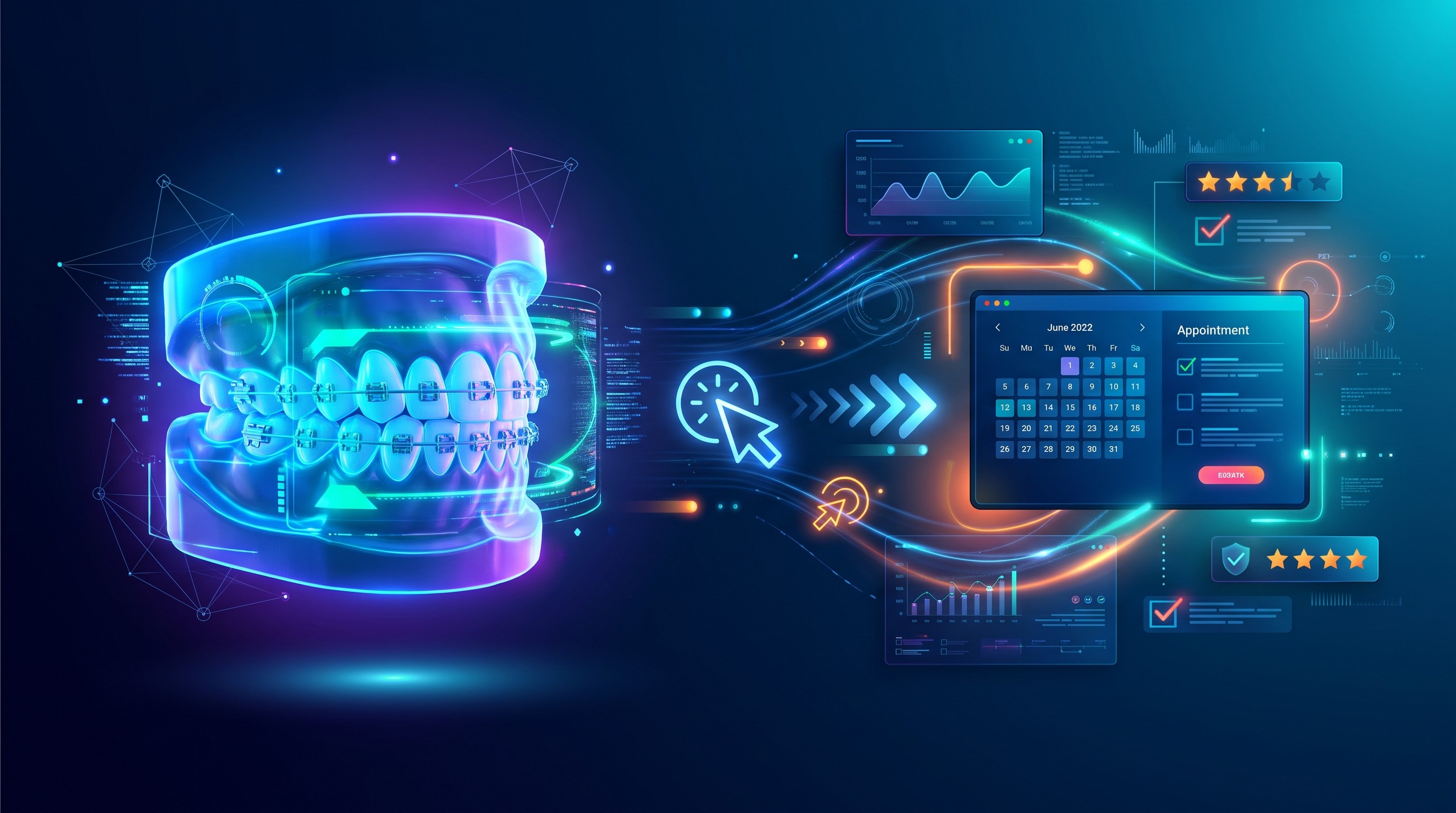
From Clicks to Consultations: CRO Strategies for Dental & Orthodontic Websites
Updated: November 04, 2026
E-commerceQuick Summary
7 min read- 01
Driving traffic to your clinic’s website is only half the battle. Whether prospective patients arrive via Google Maps, organic search, or local pay-per-click ads, their arrival does not...
- 02
Converting high-intent visitors into committed patients requires a structured approach to conversion rate optimization (CRO). By analyzing user behavior and systematically removing friction,...
- 03
Most private practice owners focus almost exclusively on acquisition volume. They invest heavily in local search presence, running ads for terms like "braces near me" or "emergency root...
- 04
When you pair strong discovery with effective AI-powered local SEO strategies for dental and orthodontic practices, conversion rate optimization ensures that every visit delivers maximum...
Driving traffic to your clinic’s website is only half the battle. Whether prospective patients arrive via Google Maps, organic search, or local pay-per-click ads, their arrival does not guarantee an appointment. For dental and orthodontic practices, the website functions as the digital front desk. If that front desk is confusing, slow, or unwelcoming, prospective patients will simply hit the back button and visit a competitor down the street.
Converting high-intent visitors into committed patients requires a structured approach to conversion rate optimization (CRO). By analyzing user behavior and systematically removing friction, clinics can significantly elevate their dental website conversion rate without doubling their advertising spend.
01The Critical Role of Conversion Rate Optimization in Patient Acquisition
Most private practice owners focus almost exclusively on acquisition volume. They invest heavily in local search presence, running ads for terms like "braces near me" or "emergency root canal." However, if a website converts only 1% of visitors, running more traffic into that funnel is an expensive, leaky strategy.
When you pair strong discovery with effective AI-powered local SEO strategies for dental and orthodontic practices, conversion rate optimization ensures that every visit delivers maximum value. A well-optimized website eases the natural anxiety people feel when seeking dental care, answers their immediate concerns about pricing and insurance, and guides them smoothly toward booking their first visit.
Common Conversion Killers on Dental and Orthodontic Websites
Before adding new design flourishes or complicated widgets, you must identify and fix existing leaks. Four primary UX pitfalls consistently depress dental appointment booking numbers:
- Cluttered, Confusing User Experience (UX): Overcrowded homepages packed with clinical jargon, dense paragraphs, and complicated navigation menus overwhelm visitors. Patients looking for an answer to a chipped tooth do not want to wade through a history of pediatric dentistry.
- Ambiguous or Hidden Calls-to-Action (CTAs): Generic buttons like "Submit" or hidden links labeled "Contact Us" fail to provide a compelling reason to act. If a user must search for a way to reach the office, they will leave.
- Sluggish Page Speeds: High-resolution dental photography that is uncompressed can cripple load times. Mobile users expect pages to load in under two seconds. Any longer delay causes bounce rates to spike rapidly.
- Lack of Visible Trust Signals: Dental and orthodontic treatments are intimate, often expensive, and frequently anxiety-inducing. Websites that omit doctor credentials, clear office photographs, or recent patient reviews make visitors hesitate to share sensitive personal details.
Understanding these friction points is vital, because the best place to start with CRO is rarely a full redesign; it begins with identifying where users drop off and fixing the underlying bottlenecks.
Core CRO Strategies for High-Performing Dental Practices
Transforming your orthodontic website conversion rates requires intentional UX design and behavioral psychology. Implement the following actionable strategies to build a patient-centered conversion funnel.
1. Optimize Context-Driven Calls-to-Action
Replace generic buttons with specific, value-oriented language that matches user intent.
- On general cleaning and hygiene pages, use direct action phrases like "Schedule Your Cleaning" or "Reserve Your Spot."
- For high-ticket elective procedures like Invisalign, clear aligners, or cosmetic veneers, lower the barrier to entry with low-friction CTAs such as "Book a Free Smile Consultation" or "Check Your Orthodontic Eligibility."
- Keep primary CTAs visually distinct by using high-contrast colors, sticky mobile headers, and consistent placement above the digital fold.
2. Streamline the Online Appointment Booking Form
Lengthy intake questionnaires cause massive form abandonment. Save detailed medical histories for post-booking confirmation emails or in-office tablets.
- Limit the initial scheduling form to three or four mandatory fields: Full Name, Phone Number, Email, and Preferred Appointment Time.
- Incorporate real-time appointment calendar integration where possible, allowing patients to see available slots directly.
- Enable autofill features and inline form validation so users immediately know if a phone number or email was typed incorrectly.
3. Build Immediate Trust and Clinical Authority
Patients choose practitioners they feel comfortable trusting with their health and appearance.
- Before-and-After Galleries: For orthodontists and cosmetic dentists, visual proof is non-negotiable. Feature clean, high-resolution before-and-after smile transformations with short case summaries detailing treatment duration.
- Authentic Video and Written Testimonials: Embed recent, verified Google or Yelp reviews directly on high-intent service pages, rather than tucking them away on a dedicated testimonials page that few visit.
- Approachable Provider Bios: Showcase warm, high-quality headshots of your dentists and staff. Highlight education, certifications, and personal philosophies on gentle, patient-first care to reduce dental anxiety.
4. Craft Benefit-Oriented Service Pages
Do not write service pages like medical textbooks. Shift the focus from clinical procedures to tangible patient benefits and answers to real-world concerns.
- Explain what the treatment feels like, recovery expectations, and everyday lifestyle benefits.
- Address pricing transparency early. Mention accepted insurance networks, financing options like CareCredit, and in-house membership discount plans for uninsured patients.
- Use bullet points and concise FAQs to address common hesitations directly on the treatment page.
5. Prioritize Mobile-First Performance
Over 65% of local searches for dentists originate on smartphones. An effective mobile experience is critical for dental website conversion rates.
- Implement tap-to-call buttons anchored to the bottom of the screen on mobile devices, enabling one-touch dialing for urgent dental questions.
- Ensure all fonts, buttons, and form inputs are comfortably sized for thumb navigation without zooming or horizontal scrolling.
- Compress WebP images and leverage browser caching to ensure instant loading even on variable cellular networks.
6. Integrate Responsive Live Chat and Smart Chatbots
Many prospective patients browse dental options after business hours when experiencing evening toothaches or researching braces for their children.
- Deploy an intelligent chatbot trained to answer common questions regarding accepted insurance plans, office hours, and clinic location.
- Include a direct scheduling integration within the chat interface, enabling prospective patients to secure a consultation spot at midnight without waiting for morning office hours.
Using A/B Testing to Refine Your Approach
Conversion rate optimization is an iterative discipline, not a one-time project. What works for an urban cosmetic dental clinic may perform differently for a suburban family orthodontist. Using split testing (A/B testing) helps eliminate guesswork by comparing two versions of a webpage against each other.
Leveraging modern tools and frameworks like AI-powered CRO for small businesses allows smaller practices to deploy data-driven experiments efficiently. Key elements to test include:
- CTA Copy: Compare "Book a Free Consultation" against "Claim Your Complimentary Smile Assessment."
- Hero Section Layout: Test a hero section featuring a doctor's warm headshot against a photo of a smiling, satisfied patient.
- Form Structure: Evaluate a single-step intake form against a multi-step progressive form that captures basic contact details first.
Always run tests until they reach statistical significance before rolling out permanent changes, ensuring decisions rest on verified patient behavior rather than intuition.
Measuring Success: Key Metrics to Track
To evaluate patient appointment booking optimization accurately, track these primary conversion metrics across your marketing analytics dashboard:
- Completed Booking Submissions: The absolute number and percentage of website visitors who finish scheduling an appointment or consultation.
- Tracked Inbound Phone Calls: Implement dynamic number insertion (DNI) to determine which landing pages and campaigns generate direct phone calls.
- Form Completion Rate: The percentage of users who start an appointment form versus those who complete it, highlighting specific form fields that trigger drop-offs.
- Chatbot Engagement-to-Lead Ratio: How many casual chat conversations translate into recorded names, emails, and consultation bookings.
Reviewing these data points monthly provides actionable visibility into which treatments drive the highest return on investment and where user friction still lingers.
How Useryze Helps Dental & Orthodontic Practices Scale
Navigating heatmaps, user session recordings, and technical site performance while managing a busy dental practice is challenging. That is where Useryze steps in.
Useryze specializes in analyzing user behavior and implementing proven CRO frameworks tailored specifically for private practices and growing healthcare providers. From identifying unseen user experience bottlenecks to executing high-impact A/B tests and streamlining digital booking flows, Useryze helps dental and orthodontic clinics turn casual website visitors into confirmed consultations. By focusing on conversion architecture rather than just superficial aesthetics, Useryze maximizes the value of your existing marketing channels.
Turn Traffic into Booked Consultations
A visually appealing website is an asset only if it regularly fills your appointment calendar. By cleaning up friction-heavy layouts, featuring prominent trust signals, streamlining mobile forms, and tracking patient conversion pathways, your dental or orthodontic practice can unlock substantial revenue growth from the visitors you already receive. Evaluate your site today, implement these CRO principles, and transform passive clicks into long-term patient relationships.
Related Posts
View All ›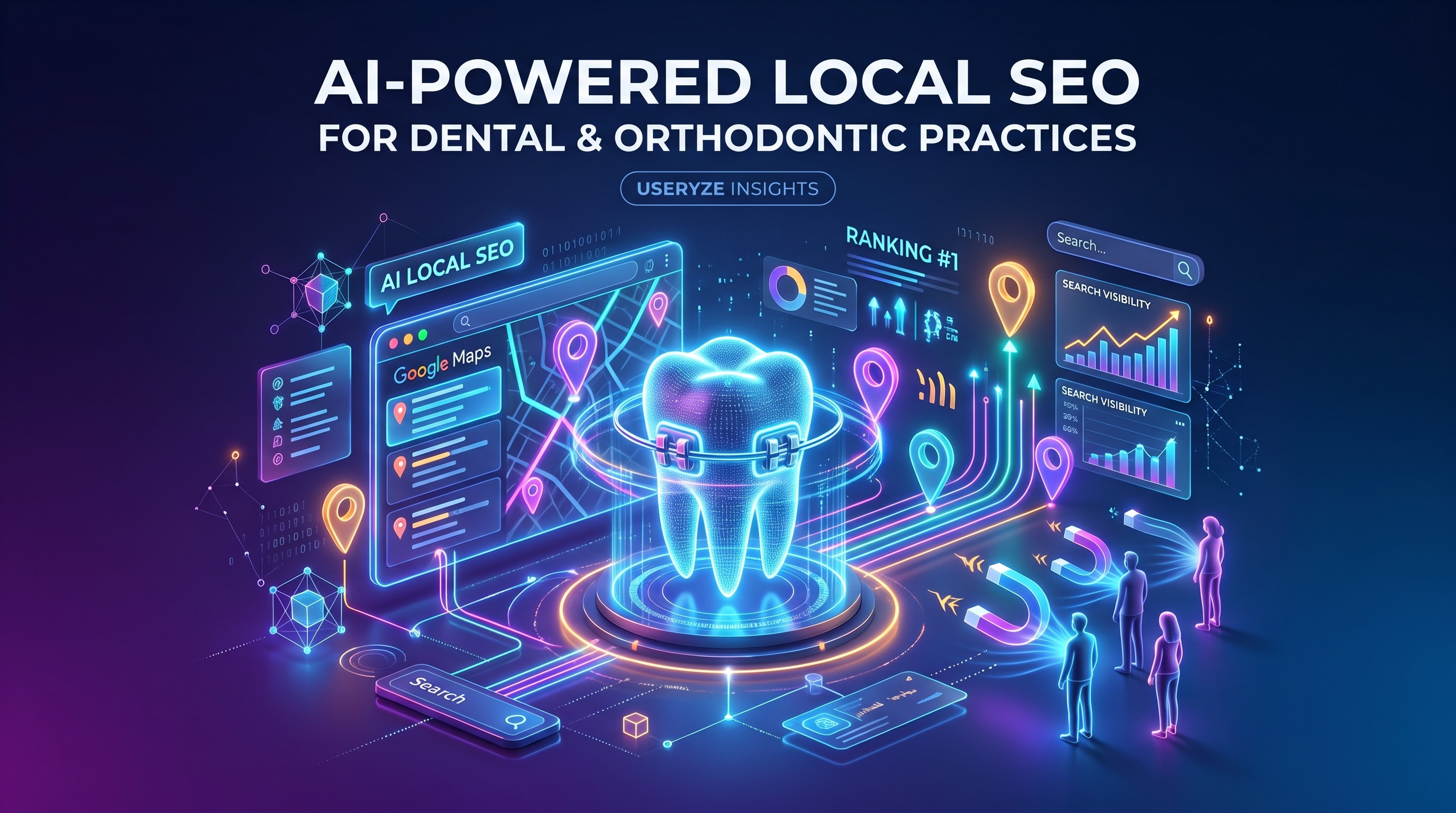
Discover how AI-powered local SEO helps dental and orthodontic practices dominate Google maps, voice search, and AI answer engines to attract high-value patients.

Discover how Conversion Rate Optimization (CRO) helps dental and orthodontic practices turn website traffic into booked appointments. Learn key CRO strategies to boost patient acquisition.
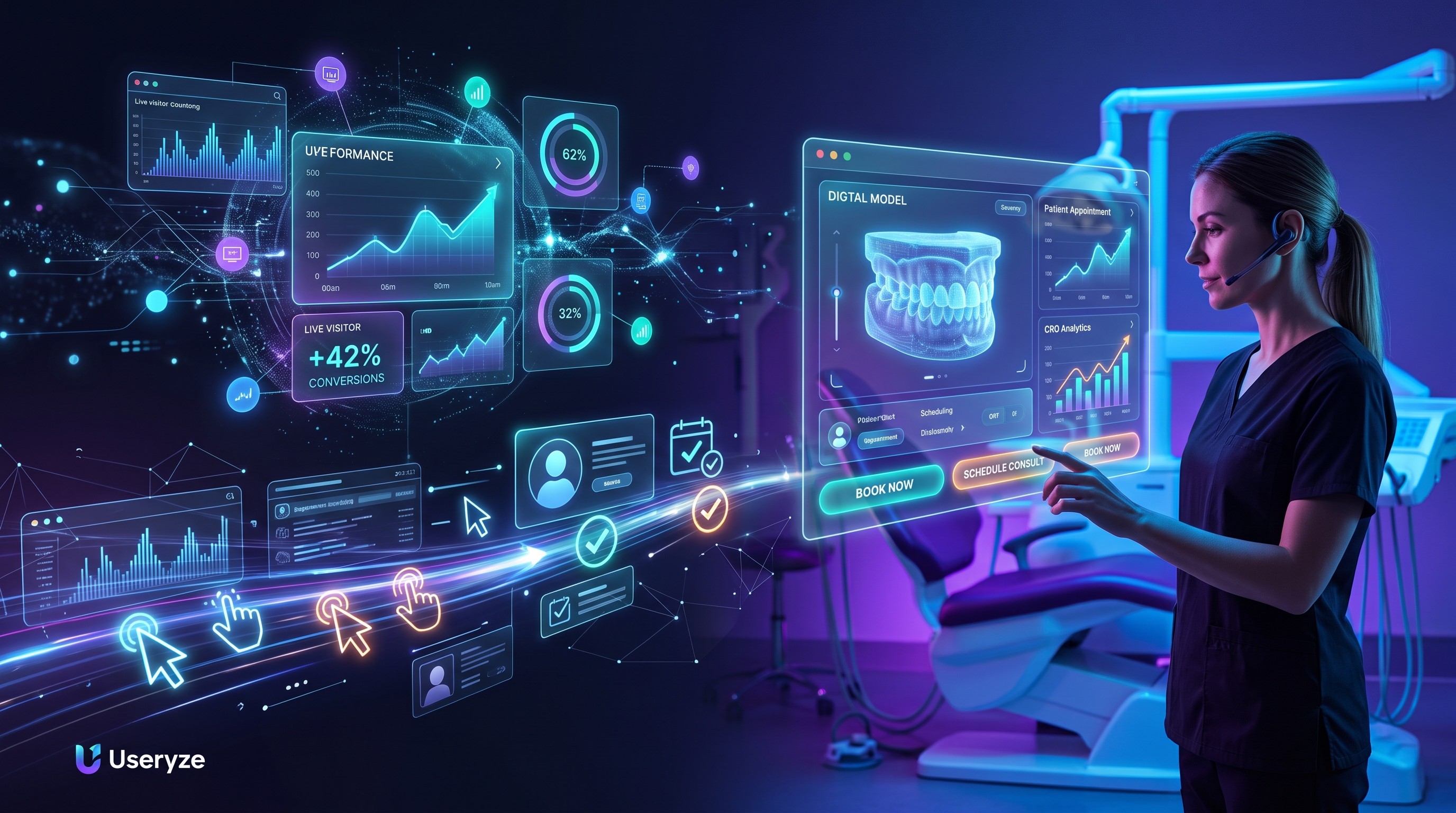
Discover how targeted dental website conversion rate optimization (CRO) turns casual web traffic into booked patient appointments. Learn actionable CRO strategies for CTAs, testimonials, mobile UX, and online forms.