Google Business Profile Guide 2026: How to Rank in Maps, Show Up in AI Answers and Win More Calls
Quick Summary
7 min read- 01
Part 1 of The Art of Organic Growth, a seven-part series on getting customers without paying for every click.
- 02
Short answer: Your Google Business Profile is still the single biggest lever for local customers, but the rules changed in 2026. Google retired the public Q&A section and replaced it with...
- 03
Google is no longer the only place people look, but it is still the first. BrightLocal's 2026 survey of 1,002 U.S. adults found that 71% used Google to find local businesses, down from 83% a...
- 04
That shift does not make your profile less important. AI tools still need trustworthy facts about your business, and Google's own AI pulls those facts straight from your profile and reviews....
Part 1 of The Art of Organic Growth, a seven-part series on getting customers without paying for every click.
Short answer: Your Google Business Profile is still the single biggest lever for local customers, but the rules changed in 2026. Google retired the public Q&A section and replaced it with Ask Maps, an AI that answers shoppers' questions from your profile, your reviews and your website. Shoppers now read reviews more closely and want recent ones, and almost half of them also ask AI tools for recommendations. The businesses that win get five things right: the most specific primary category, a complete and accurate profile, a steady flow of fresh reviews with replies, regular photos and posts, and a website that backs up what the profile says.
01Why the profile matters more, not less
Google is no longer the only place people look, but it is still the first. BrightLocal's 2026 survey of 1,002 U.S. adults found that 71% used Google to find local businesses, down from 83% a year earlier, while AI tools such as ChatGPT and Google's AI Mode jumped from 6% to 45%.
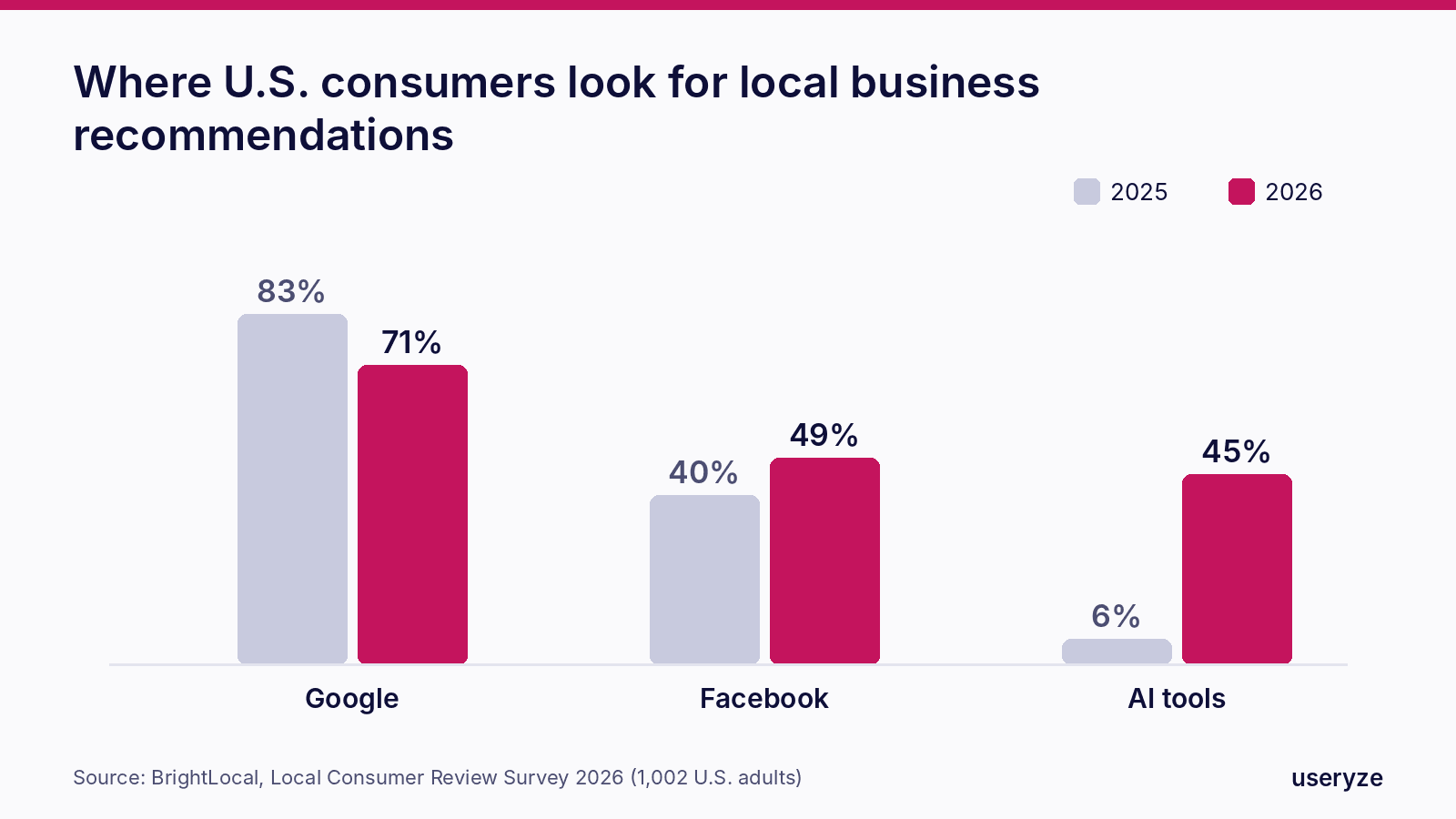
That shift does not make your profile less important. AI tools still need trustworthy facts about your business, and Google's own AI pulls those facts straight from your profile and reviews. BrightLocal also found that 88% of people who get an AI recommendation go and check the reviews before they contact the business. Your profile is where that check happens.
Step 1: Choose the right primary category
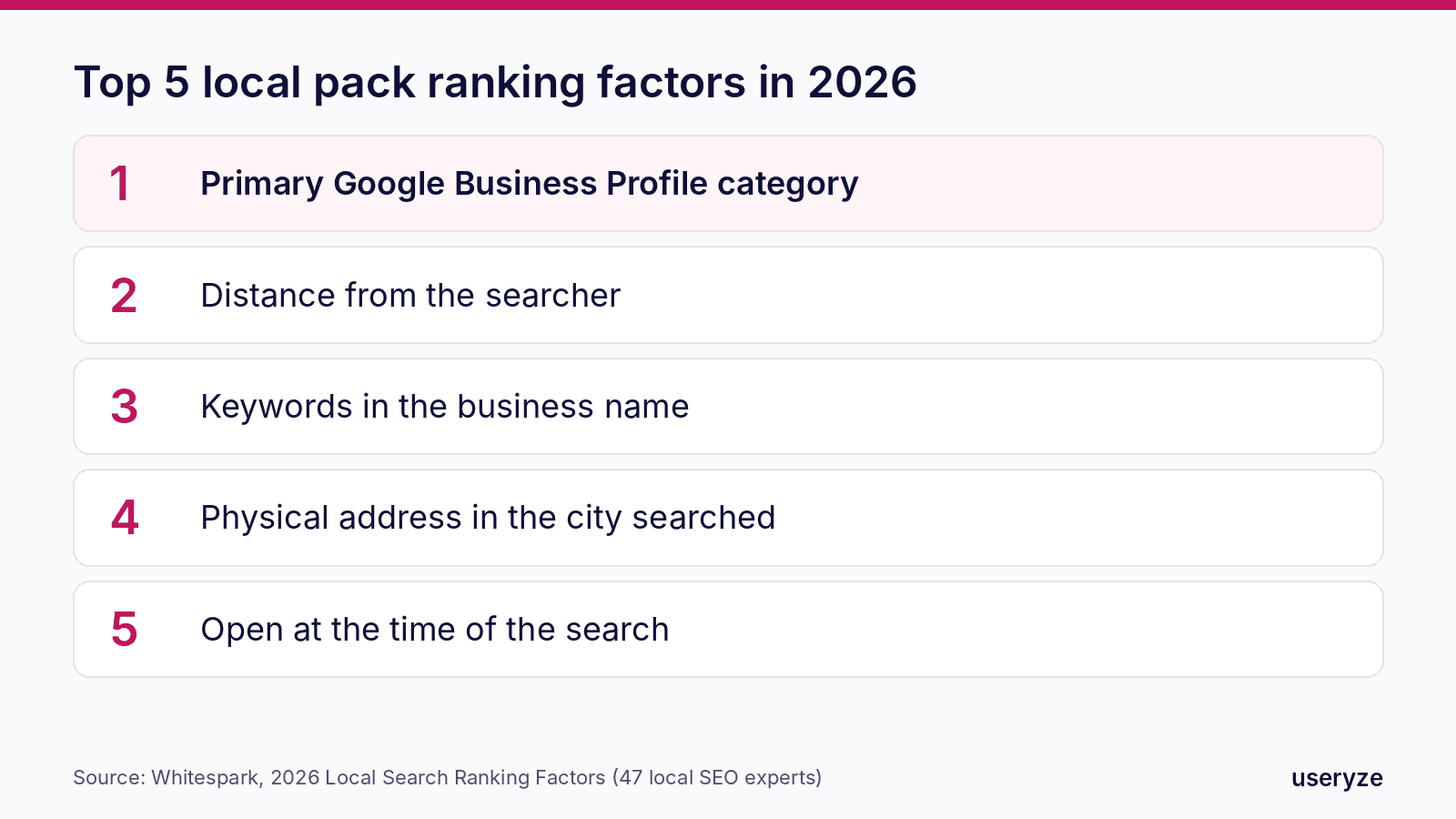
In Whitespark's 2026 Local Search Ranking Factors survey of 47 local SEO experts, the primary Business Profile category ranked first out of 187 factors, ahead even of the searcher's distance from your business.
Pick the most specific category that matches what you most want to be found for. A law firm that mainly handles injury cases should choose "Personal injury attorney," not "Law firm." A pizza place should be "Pizza restaurant," not "Restaurant." Then add secondary categories for the other services you genuinely offer. Check what the top three competitors in your area use; if they rank for a term you want and share a category you're missing, that is usually why.
The other top factors are mostly outside your control: how close the searcher is, keywords in your real business name, having a physical address in the city and being open at the time of the search. That makes accurate hours, including holiday hours, more important than most owners think.
Step 2: Complete every field, accurately
Ask Maps and AI Overviews answer questions like "do they have parking?" or "can I book online?" using what you've told Google. Missing information gets you a vague answer, or a competitor's name instead of yours.
- Description: what you do, who you serve, where, and what makes you different, in plain language. No keyword stuffing.
- Services and products: list each one with a short description and, where you can, a price or range.
- Attributes: accessibility, payment options, amenities, women-led or veteran-led, online booking. Add every one that's true.
- Hours: regular, holiday and special hours. Being shown as "open" matters in the rankings and stops people from showing up to a locked door.
- Links: website, booking, menu or ordering links that go straight to the right page, not your homepage.
- Messaging: Google is replacing Business Profile chat with WhatsApp and SMS. Connect the channel you actually answer.
Step 3: Make reviews a weekly habit
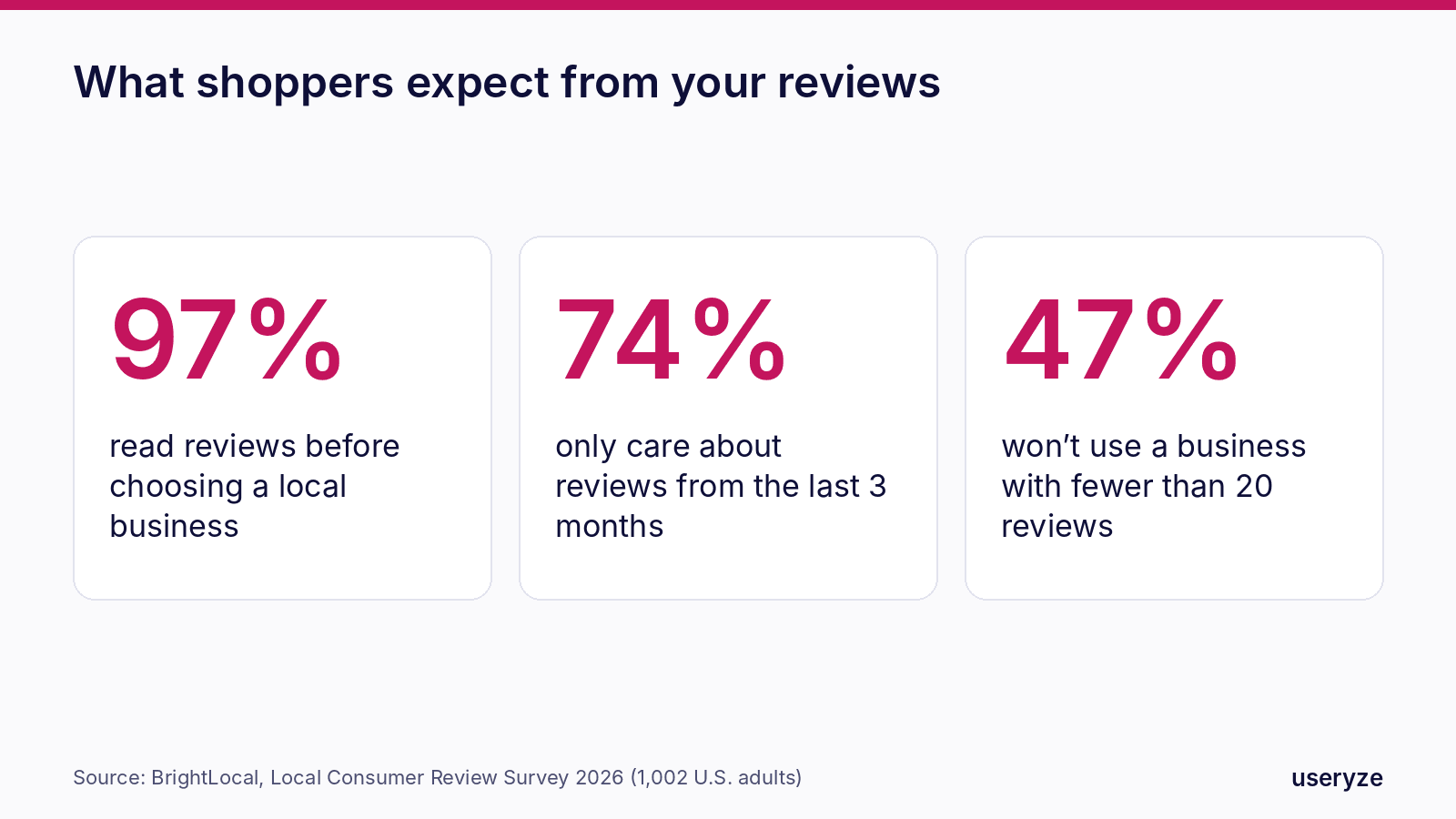
Reviews are now a gate, not a bonus. BrightLocal found that 97% of consumers read reviews for local businesses, 74% only care about reviews from the last three months, and 47% won't use a business with fewer than 20 reviews.
- Ask every happy customer, every time. A short text with a direct review link, sent right after the job or visit, works better than a sign at the counter.
- Reply to every review, good and bad, within a few days. Use the customer's name and mention the specific service. Replies show shoppers and AI tools that you're active and fair.
- Never buy or gate reviews. Offering incentives or only asking happy customers breaks Google's policies and can get reviews removed or your profile restricted.
- Get reviews beyond Google too. AI tools read Facebook, Yelp, industry sites and the reviews on your own website, not just Google.
Step 4: Keep the profile alive with photos and posts
A profile that changes signals an active business. Add new photos every week or two: your team, your work, your space, your products. Real photos beat stock images every time. Publish updates, offers and events as posts, and use the "What's Happening" feature for events if you run them.
Think of posts as answers. A post that says "Yes, we do same-day water heater replacement in Round Rock" gives Ask Maps and shoppers a clear, quotable fact.
Step 5: Feed the AI that now answers for you
Since Google retired the Q&A feature, you can no longer post your own questions and answers on the profile. Ask Maps builds answers from your profile information, your reviews and your website.
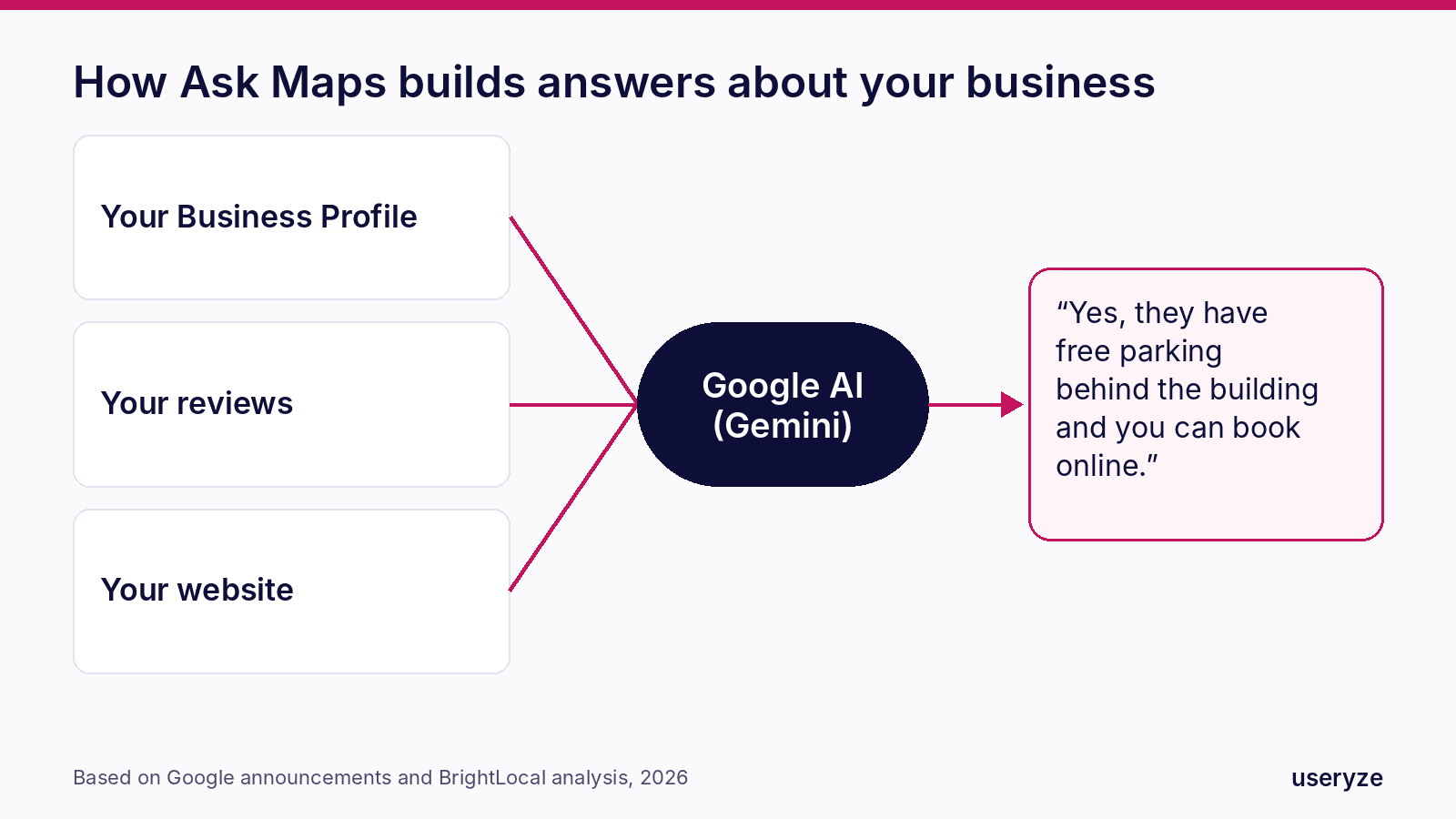
So the job is to make sure those three sources agree and are specific:
- Put a real FAQ page on your website answering the questions customers actually ask, with clear one-sentence answers.
- Keep your name, address, phone and hours identical on your profile, website and major directories.
- Encourage reviews that mention the service, the location and the person who helped. AI tools quote these details.
- Search for your own business in Google Maps on a phone, tap "Ask," and test common questions. If an answer is wrong, fix the source, not the answer.
Our AI search visibility work does exactly this, across Google and ChatGPT.
Step 6: Measure what matters
Rankings move every day and depend on where the searcher is standing. Calls, direction requests, bookings and website clicks are what pay the bills. Check your profile's performance report monthly, tag your website and booking links so they show up separately in analytics, and track how many new customers say they found you on Google.
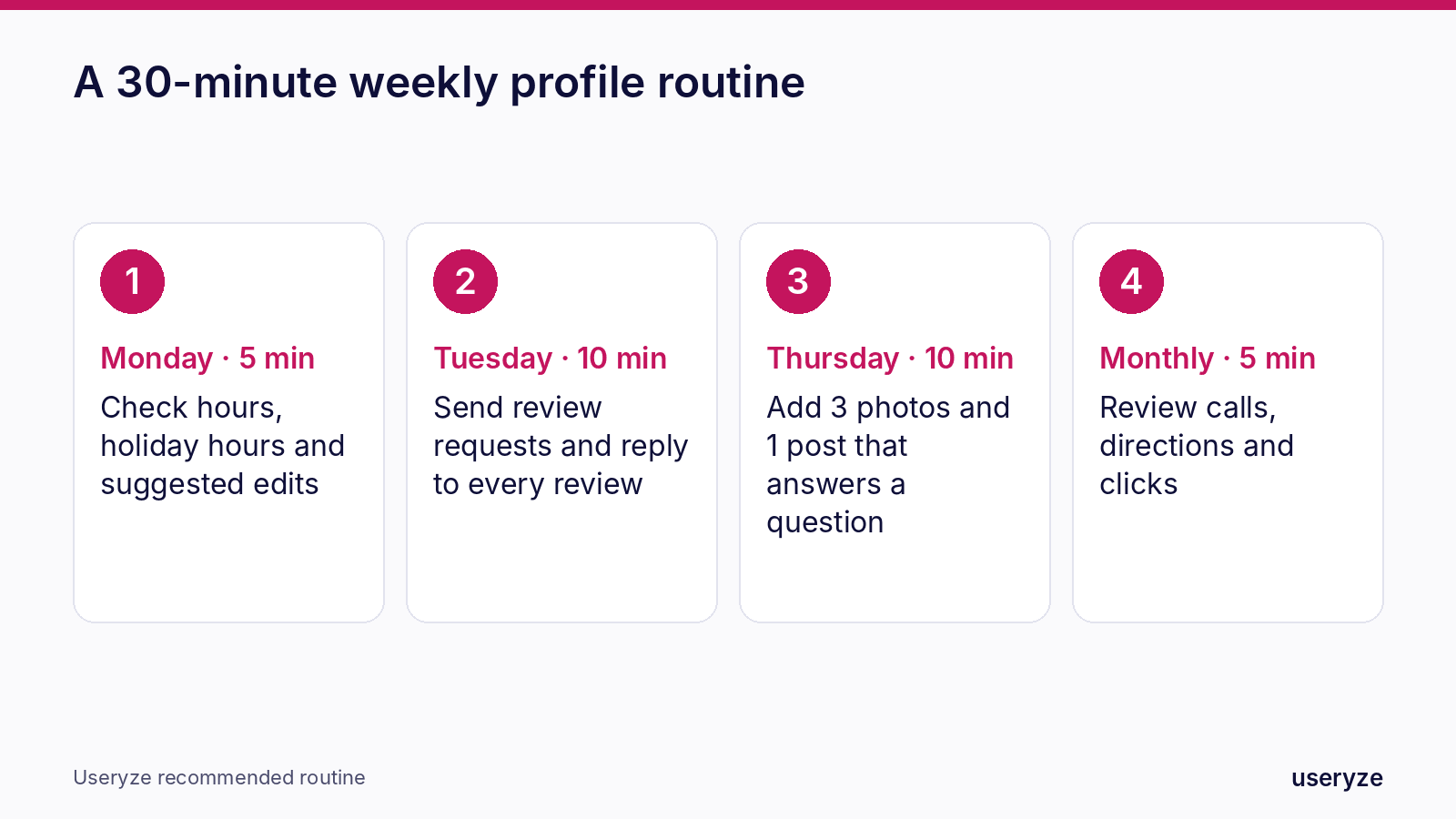
A 30-minute weekly routine
- Monday (5 minutes): check hours, holiday hours and any changes Google or users suggested.
- Tuesday (10 minutes): send review requests for last week's customers and reply to every new review.
- Thursday (10 minutes): add three new photos and one post that answers a real customer question.
- End of month (5 minutes): look at calls, directions and clicks; note what changed and why.
When to get help
If you serve several towns, run multiple locations, or your category is crowded, a profile alone won't carry you. You'll need location pages on your website, consistent listings across directories and a review process that runs without you. Our local SEO team handles all of it, and AI follow-up makes sure the calls and messages your profile generates get answered in minutes.
Next in the series: Part 2, your website: how to turn the visitors your profile sends into calls and bookings.
FAQ
What is the most important Google Business Profile setting? Your primary category. It ranked first of 187 factors in Whitespark's 2026 survey of local SEO experts.
Did Google remove Q&A from Business Profiles? Yes. Google retired the Q&A API in November 2025 and has replaced the public Q&A section with Ask Maps, a Gemini-powered feature that answers questions from your profile, reviews and website.
How many reviews do I need? BrightLocal found 47% of consumers won't use a business with fewer than 20 reviews, and 74% only care about reviews from the last three months, so steady recent reviews matter more than a big old total.
Does my Google profile affect ChatGPT recommendations? Indirectly. ChatGPT draws on information and reviews from across the web, and most people check Google reviews after getting an AI recommendation, so a strong profile helps you win either way.
Sources
- BrightLocal: Local Consumer Review Survey 2026
- BrightLocal: Nearly half of consumers are asking AI for business recommendations (March 2026)
- Whitespark: 2026 Local Search Ranking Factors
- BrightLocal: Goodbye Google Q&A, it's time to Ask Maps (April 2026)
- Search Engine Roundtable: Google removing Q&A feature in Google Maps for AI-powered Ask button
- PinMeTo: Google Business Profile updates 2026
Free growth plan
Turn this into more customers.
We run marketing, video and AI follow-up for owner-led businesses. Tell us about yours and we will show you the three fixes that matter most.
Keep reading
- Bilingual Marketing in Dallas: How to Reach Spanish-Speaking Customers on Google, Meta and AI43% of Dallas County is Hispanic and 43% speak another language at home. How local businesses win bilingual customers on Google, Meta and AI.
- Paid Ad Strategies for Dental Practices: Attracting High-Value Patients with Google & MetaGoogle, Meta and TikTok ad strategies that help dental and orthodontic practices attract high-value implant and Invisalign patients.
- Local SEO for Home Services: Dominate Google Maps & AI SearchLocal SEO for home services: Google Maps optimization for contractors and AI search visibility for home repair businesses.