The Paid Ads Data Loop: Right Ad, Right Person, Right Time
Quick Summary
5 min read- 01
Most businesses run ads. Few run a system. A paid ads data loop connects every ad platform, social channel, your website, CRM and point of sale into one picture of who buys, then uses that...
- 02
That is the difference between spending money on ads and building an advertising engine that keeps improving.
- 03
Ad platforms are very good at finding people who click. Left alone, they optimize for whatever signal you give them, and for many businesses that signal is a form fill or a page view, not a...
- 04
The result is familiar: spend goes up, leads come in, and nobody is sure which ones turned into revenue. Creative gets stale, audiences overlap, and the same shopper sees the same ad for...
Most businesses run ads. Few run a system. A paid ads data loop connects every ad platform, social channel, your website, CRM and point of sale into one picture of who buys, then uses that picture to decide who sees which ad, when to follow up, and which channel to use next. Every sale makes the next ad smarter.
That is the difference between spending money on ads and building an advertising engine that keeps improving.
01The short version
- Connect everything: Google, Meta, TikTok, YouTube, Instagram, your website, CRM, Shopify or POS.
- Learn from real buyers: purchase patterns, lookalike audiences built from customers, and in-market shoppers.
- Personalize: the right ad to the right person at the right time, not one ad for everyone.
- Run parallel funnels: different journeys for first-time browsers, big-ticket shoppers and repeat customers.
- Move people forward: ads to discover, email and retargeting to consider, a timely text or offer to decide.
Why "just running ads" stops working
Ad platforms are very good at finding people who click. Left alone, they optimize for whatever signal you give them, and for many businesses that signal is a form fill or a page view, not a sale.
The result is familiar: spend goes up, leads come in, and nobody is sure which ones turned into revenue. Creative gets stale, audiences overlap, and the same shopper sees the same ad for weeks after they already bought.
The fix is not a new campaign. It is feeding the platforms better data and acting on it across every channel.
Step 1: Connect every source into one loop
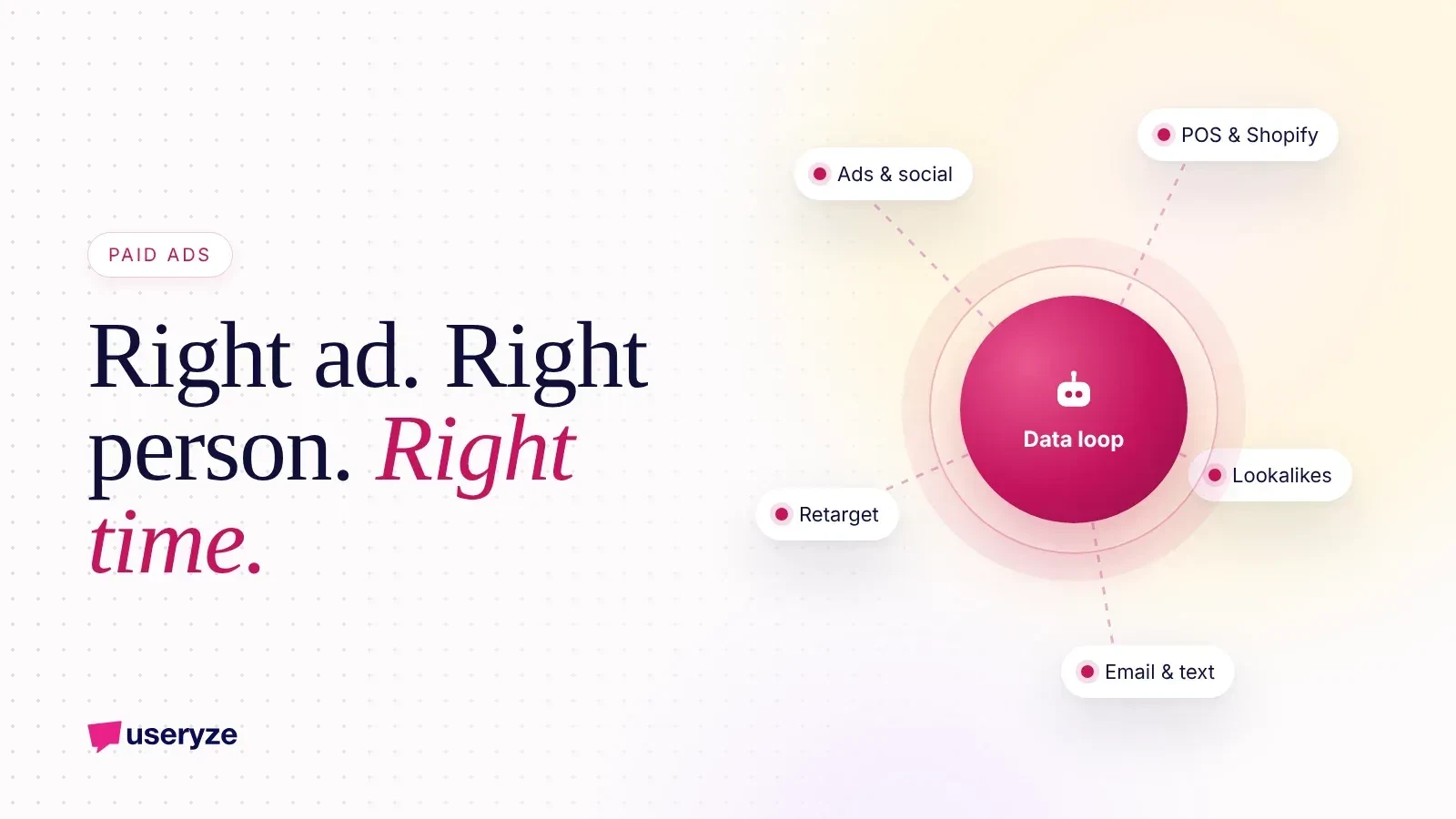
The loop starts by pulling data from everywhere a customer touches your business:
- Ad platforms: Google Ads, Meta, TikTok and YouTube spend, audiences and results.
- Social channels: which posts and videos people engage with and share.
- Your website: pages viewed, products browsed, carts, bookings and forms.
- CRM and follow-up: which leads became customers, and how fast.
- POS or e-commerce: what was bought, how much, and how often.
When these live in separate dashboards, decisions are guesses. When they live in one place, patterns show up quickly: which products start the journey, which ads bring buyers instead of browsers, and how long a high-value purchase really takes.
Step 2: Learn who actually buys
With sales data connected, audiences get much sharper.
- Lookalikes from real purchasers: the platforms find people who resemble your best customers, not your casual clickers.
- In-market capture: reach shoppers actively researching what you sell right now.
- Purchase patterns: seasonality, typical order size, and what people buy together or next.
This is also where the loop stops wasting money. Recent buyers are excluded from acquisition ads, and people who show no buying signals stop being chased at full price.
Step 3: Serve the right ad to the right person at the right time
Personalization is not a buzzword here. It is a set of simple rules driven by data:
- A first-time visitor sees an ad that introduces you and the problem you solve.
- Someone who viewed a specific product sees that product, with proof and an answer to their biggest objection.
- A past customer sees what usually comes next, not the thing they already own.
Creative is produced in volume with AI help, so each audience and stage gets its own message and testing never stalls. Winners stay. Losers get switched off.
Step 4: Run parallel funnels and move buyers forward
Different customers need different journeys, so we run several funnels at once. A jeweler might run one for engagement rings, one for gifts and one for repairs and events. A restaurant might run dine-in, online orders and catering.
Within each funnel, people move from discover to consider to decide, and the channel changes with them:
- Discover: short video and social ads to lookalike and in-market audiences.
- Consider: retargeting, reviews and comparison content, plus an email drip for high-value purchases that need time.
- Decide: a text or offer when intent spikes, a fast path to book or buy, and a reminder if they stall.
High-intent shoppers get an immediate, low-friction next step. Big-ticket buyers get patience, proof and the right touch at the right moment instead of being pushed too early.
When to text, when to email, when to retarget
The loop uses simple, respectful timing rules:
- Text when a shopper shows strong intent and has opted in: a booking started, a high-value product viewed several times, a quote requested.
- Email for education and nurture: guides, comparisons, stories and offers over days or weeks.
- Retarget to stay visible while someone researches, with messages that match where they are.
Everything respects consent and frequency, and every message gives a clear next step.
How the loop improves every month
Each week, agents pull fresh data from every connected source and flag what changed: a campaign that started wasting spend, an audience that is converting, a creative angle that is tiring. Each month, the intelligence report sums it up as wins, fails, neutrals and action items, so the plan for next month is based on what actually happened.
Over time the loop compounds. Better data trains better audiences, better audiences bring better buyers, and better buyers feed the next round.
How Useryze builds it for you
We start with your ads because they produce the fastest, clearest data, then work backwards through landing pages, lead capture, follow-up and reporting. See the full approach on our paid ads page, how the process runs from first call to monthly report on how we work, and the agents behind it on AI agents. If you want to see what your own loop would look like, ask for a free growth plan and we will map it out.
Free growth plan
Turn this into more customers.
We run marketing, video and AI follow-up for owner-led businesses. Tell us about yours and we will show you the three fixes that matter most.
Keep reading
- Paid Advertising Strategies for High-Value Dental ProceduresMaster your dental PPC strategy to attract high-value patients. Discover proven ad copy, precise targeting, and conversion funnels for implants, Invisalign, and cosmetic dentistry.
- Start With Your Ads: The Backwards Way to Automate Small Business MarketingWhere should a small business start with AI automation? With the ads. Here is why we automate from ad spend backwards through every layer of the funnel.
- Google Ads for Jewelers: Which Products and Searches to Fund FirstGoogle Ads for jewelers, in order: the searches, products and campaigns to fund first so your budget goes to buyers instead of browsers and freebie hunters.