Fewer Federal Paychecks Downtown: How DC Restaurants and Shops Find New Customers in 2026
Quick Summary
5 min read- 01
Short answer: The Washington metro area lost 100,500 jobs between May 2025 and May 2026, and 54,500 of them were federal positions, according to Bureau of Labor Statistics data reported by...
- 02
Federal employment in the region fell from about 375,800 at the start of 2025 to 312,500, the lowest level in 30 years, 7News reported. Economists warned the effects would spread to...
- 03
Businesses have felt it. A D.C. Policy Center survey found roughly six in ten local businesses said federal budget cuts, agency relocations and layoffs were hurting profits, and many were...
- 04
According to the Greater Washington Board of Trade, DC has about 79,579 small businesses, 98.2% of all companies in the city. Most of them can't wait for federal hiring to return.
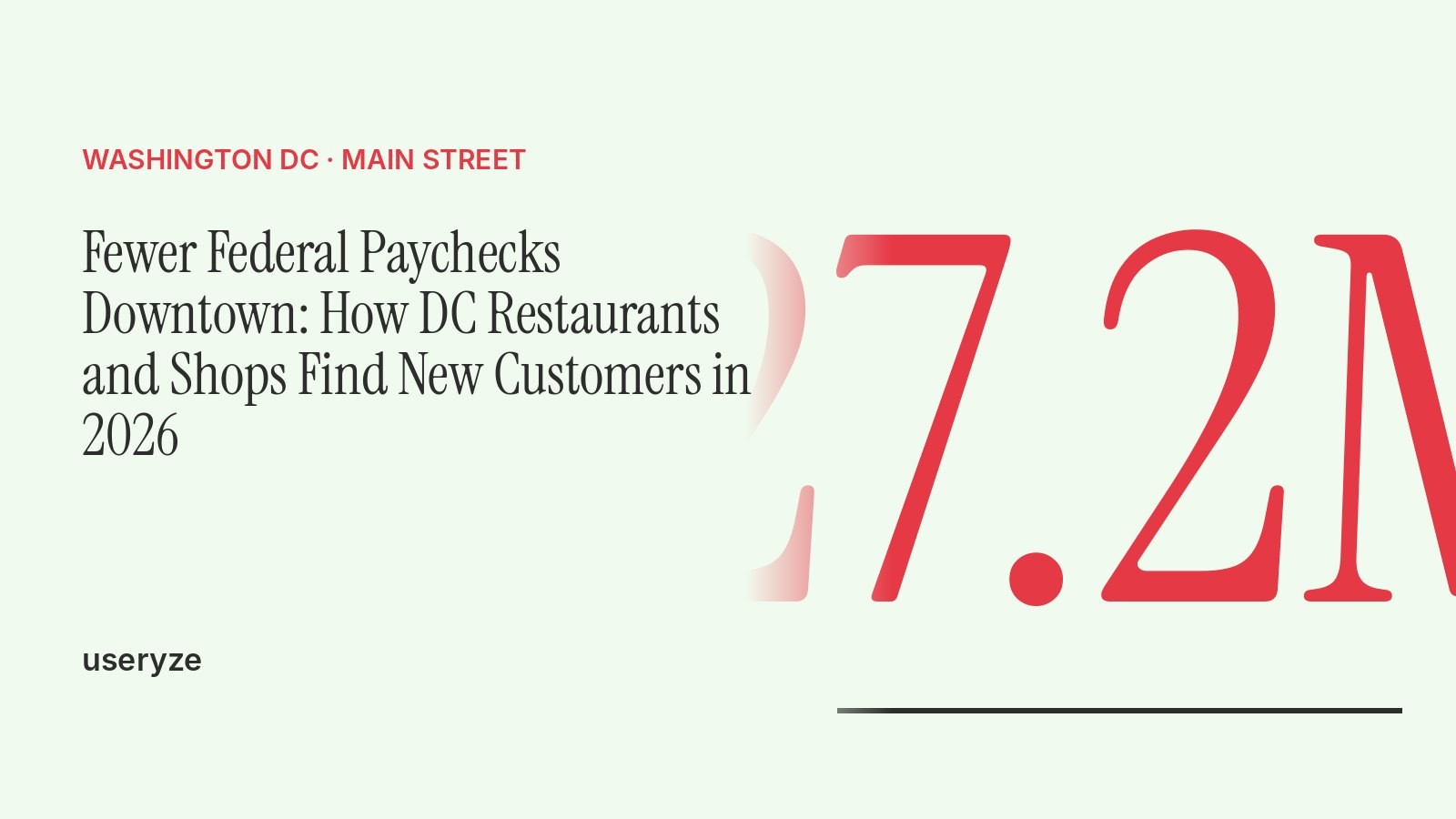
Short answer: The Washington metro area lost 100,500 jobs between May 2025 and May 2026, and 54,500 of them were federal positions, according to Bureau of Labor Statistics data reported by 7News. For DC restaurants, retailers and service businesses near federal offices, that means fewer weekday customers. But DC still drew 27.2 million visitors in 2025, who spent almost $12 billion, and the city has a large resident base. The businesses holding up best are moving their marketing toward residents, visitors and event crowds, and toward the people whose habits have changed.
01How the cuts reach Main Street
Federal employment in the region fell from about 375,800 at the start of 2025 to 312,500, the lowest level in 30 years, 7News reported. Economists warned the effects would spread to restaurants, retailers and small businesses. Each lost job means one less lunch, one less dry-cleaning ticket and one less happy hour near the office.
Businesses have felt it. A D.C. Policy Center survey found roughly six in ten local businesses said federal budget cuts, agency relocations and layoffs were hurting profits, and many were holding back on investment. The District's own forecast expected a mild recession in fiscal 2026 with a gradual recovery in 2027.
According to the Greater Washington Board of Trade, DC has about 79,579 small businesses, 98.2% of all companies in the city. Most of them can't wait for federal hiring to return.
Where the customers are now
Visitors. Destination DC reported 27.2 million visitors in 2025. Their spending supported more than 114,000 jobs. America 250 events, museum openings and conventions kept visitors coming through 2026. 7News reported the city had secured 18 conventions for 2026, worth an estimated $317 million.
Residents. People who live in DC still eat out, get haircuts, see dentists and hire contractors. Neighborhood businesses that win locals' weekly habits have the steadiest income.
Changed customers. Many former federal workers are still here, often working from home, freelancing or starting businesses. They need coworking, coffee meetings, services and affordable treats near home rather than near an agency.
How to shift your marketing
1. Follow the event and convention calendar
Visitors decide where to eat and shop on their phones, often minutes before they walk in. Build a list of convention dates, museum openings and major events. Run short, nearby paid ads on those days only, and post event-day specials on your Google Business Profile.
2. Win "near me" searches with your Google profile
Update your hours if your weekday rush has shifted. Add photos, a menu or service list, and answers to common questions. Visitors filter by things like price, outdoor seating and walking distance from a Metro station, so mention the station by name. Our local SEO work begins here.
3. Build a neighborhood regulars program
A resident who comes back twice a month is worth more than a one-time visitor. Collect emails or phone numbers with consent and send something useful: a new dish, a neighbor night, a seasonal service reminder. Automated follow-up handles this without adding staff time.
4. Market to remote workers near home
If you're in a residential neighborhood, people who used to commute downtown may now be working nearby. Offer weekday lunch specials, quiet hours for laptop work, meeting-friendly tables or midday appointments, and say so in your Google profile and ads.
5. Show up in AI and map answers
Visitors increasingly ask assistants for "a quick lunch near the Smithsonian" or "a family-friendly dinner near Union Station." Make your website clearly state what you offer, where you are and why you're a good choice. Our AI search visibility service helps assistants find and cite that information.
What to track
Compare sales on event days with ordinary days. Track calls and direction requests from your Google profile, repeat visits from your list, and weekday versus weekend revenue. If weekend and event-day revenue is growing while weekday lunch shrinks, your marketing should follow that shift.
For a plan built around your neighborhood, see how we work with Washington DC businesses.
FAQ
How many federal jobs has the DC region lost? Federal employment in the region fell by more than 63,000 jobs since the start of 2025, to about 312,500, according to 7News's reporting on BLS data. The metro lost 100,500 total jobs from May 2025 to May 2026.
Is DC tourism still strong? Destination DC reported 27.2 million visitors in 2025, slightly more than the year before, though international visitation dropped about 4%.
What should a DC restaurant change first? Update your Google Business Profile with accurate hours and event-day posts, then start collecting regulars' contact details so you can bring them back.
Sources
- 7News (WJLA): Federal workforce in DC region falls to lowest level in 30 years
- WLOS (7News): DC metro lost 100,500 jobs May 2025 to May 2026
- Washington Times: DC businesses expect prolonged slump (D.C. Policy Center survey)
- WLOS (7News): DC braces for $1 billion deficit from federal workforce cuts
- WJLA: America 250 could bring major tourism boost to Washington, DC (Destination DC figures)
- KATV (7News): DC conventions secured for 2026
Free growth plan
Turn this into more customers.
We run marketing, video and AI follow-up for owner-led businesses. Tell us about yours and we will show you the three fixes that matter most.
Keep reading
- San Diego's Visitor Mix Is Changing: How Hotels, Restaurants and Attractions Win Drive-In and Mexican VisitorsSan Diego visitor spending dipped to $14.4B as Canadian travel fell. How hotels, restaurants and attractions win drive-in and Mexican visitors.
- Grocery Costs Up 5.2%, Menu Prices Up 2.6%: How Philadelphia Restaurants Market Through the SqueezePhilly-area grocery costs rose 5.2% while menu prices rose 2.6%. How restaurants protect margins with direct orders and loyal regulars.
- Kendall Square After the Biotech Boom: How Cambridge and Boston Restaurants Rebuild Weekday BusinessKendall lab vacancy hit 17% and lunch spots closed. How Cambridge and Boston restaurants rebuild weekday sales as biotech steadies.