Headless CMS for Marketing Agility: Powering Dynamic Content with Payload CMS
Quick Summary
6 min read- 01
Traditional content management systems were built for a simpler era of the web, when a company only needed to publish static blog posts and basic web pages to a single desktop browser....
- 02
Adopting a modern dynamic content strategy headless architecture removes these bottlenecks. By decoupling content creation from frontend presentation, marketing teams gain the speed and...
- 03
A headless CMS separates the backend repository where content is created, stored, and structured (the "body") from the frontend presentation layer where visitors actually see and interact...
- 04
For growing businesses and enterprise organizations, this separation fundamentally changes how teams operate:
Traditional content management systems were built for a simpler era of the web, when a company only needed to publish static blog posts and basic web pages to a single desktop browser. Today, growing US businesses and enterprise teams face a completely different reality. Buyers interact with brands across websites, mobile applications, localized storefronts, social channels, and AI-powered search interfaces. When marketing teams rely on legacy monolithic platforms, launching a new campaign page or updating product messaging often requires waiting in an engineering queue, wrestling with rigid templates, and dealing with sluggish page speeds.
Adopting a modern dynamic content strategy headless architecture removes these bottlenecks. By decoupling content creation from frontend presentation, marketing teams gain the speed and autonomy required to capture market share without sacrificing site performance or developer velocity.
01What Is a Headless CMS?
A headless CMS separates the backend repository where content is created, stored, and structured (the "body") from the frontend presentation layer where visitors actually see and interact with it (the "head"). Instead of locking text, images, and metadata inside rigid page templates, a headless system stores content as clean, structured data and delivers it via APIs to any digital touchpoint.
For growing businesses and enterprise organizations, this separation fundamentally changes how teams operate:
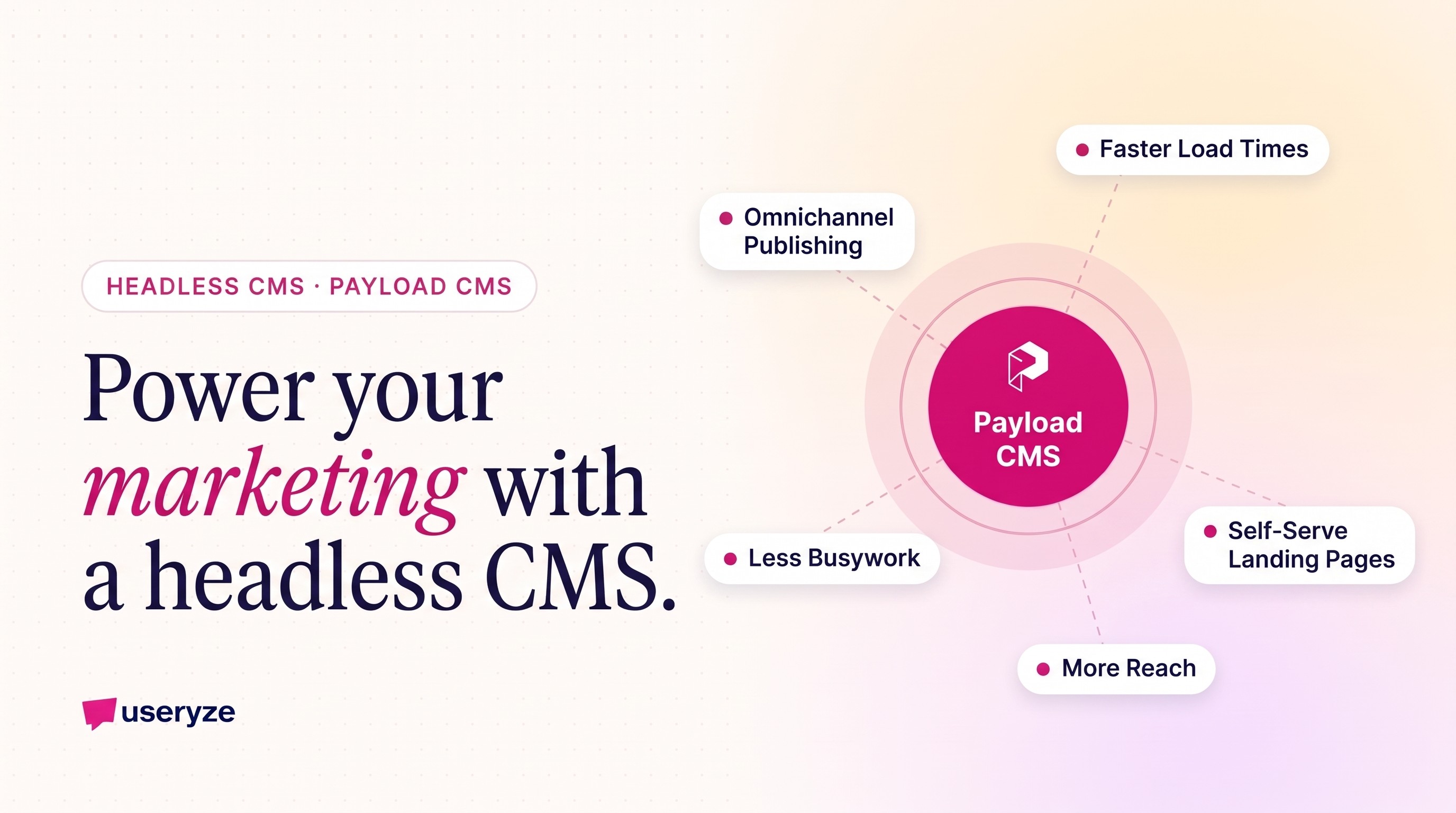
- Faster content delivery and Core Web Vitals: Because the frontend is built using modern frameworks like Next.js, pages can be pre-rendered and served directly from global Content Delivery Networks (CDNs). Visitors experience near-instant load times, which directly improves conversion rates and search engine rankings.
- True omnichannel publishing: A single piece of structured content, such as a product launch announcement, regional promotion, or customer case study, can be published simultaneously to a primary website, a mobile app, an e-commerce portal, and partner syndication feeds without duplicating effort.
- Developer-friendly architecture: Engineering teams are no longer forced to work within outdated PHP templates or fragile plugin ecosystems. Developers use modern tools like TypeScript and React to build bespoke, secure digital experiences while keeping content models clean and version-controlled.
To explore how decoupled architecture transforms digital operations, review our headless CMS development services.
Key Headless CMS Marketing Benefits for Scaling Teams
When evaluating headless CMS marketing benefits, leadership teams often focus on technical performance, yet the operational advantages for marketing departments are equally transformative.
Eliminating Engineering Bottlenecks
In traditional setups, building a custom landing page with interactive calculators, dynamic testimonials, and localized pricing requires developer intervention. With a properly architected headless CMS, developers build modular, reusable UI components once. Marketers then assemble, reorder, and launch entirely new pages independently using pre-approved design system blocks.
Future-Proofing Brand Redesigns
Rebranding or upgrading a website frontend on a monolithic platform typically requires a painful, months-long content migration. Because a headless CMS stores content independently of visual styling, enterprise teams can redesign their entire web presence or launch a new regional microsite without touching their underlying content database.
Granular Governance and Security
As organizations scale across multiple departments, brands, or geographic regions, maintaining brand consistency becomes difficult. Modern headless platforms provide role-based access controls, approval workflows, and version histories. Regional marketers can localize copy while central brand teams lock down core layout rules and compliance disclosures.
Why Useryze Chooses Payload CMS as Our Preferred Content Engine
While several SaaS headless platforms exist on the market, Useryze standardizes on Payload CMS for content marketing and high-growth web builds. Built natively on TypeScript, React, and Next.js, Payload bridges the gap between strict engineering standards and an intuitive editorial experience.
Unlike closed SaaS platforms that penalize growth with escalating per-seat licensing fees, API rate limits, and rigid vendor lock-in, Payload is open-source and self-hosted. Enterprises retain complete ownership of their data, database infrastructure, and source code. Even better, Payload embeds directly inside a Next.js application. This eliminates unnecessary network hops between the CMS and the website, yielding exceptional speed and reliability.
For a deeper technical breakdown of its architecture and AI-agent readiness, read our guide on why Payload CMS is a great headless CMS.
Empowering Marketers with Dynamic Content Capabilities
A CMS is only effective if the marketing team actually enjoys using it. Payload delivers an editorial workspace designed specifically for speed and clarity:
- Visual Live Preview: Marketers do not have to guess how a draft will look once published. Payload provides real-time live previews across desktop, tablet, and mobile breakpoints directly alongside the editing fields.
- Composable Layout Builders: Using Payload's flexible blocks field, content creators can mix and match hero banners, comparison grids, video embeds, lead-capture forms, and dynamic product feeds to build high-converting pages in minutes.
- Native SEO and Redirect Management: Official Payload plugins equip marketers with built-in metadata controls, automated title and description templates, real-time search snippet previews, and self-serve URL redirect management, removing reliance on bloated third-party SEO plugins.
- Field-Level Localization and Multi-Tenancy: Expanding into new markets is straightforward. Editors can translate individual fields within a single document rather than duplicating entire page trees, while enterprise organizations can manage multiple brands from one unified dashboard.
More Reach, Less Busywork: The Useryze Advantage
Technology alone does not drive revenue; execution does. At Useryze, we architect Payload CMS implementations around two measurable business outcomes: More reach and Less busywork.
Achieving More Reach
Speed, structured data, and omnichannel readiness directly expand your organic and paid visibility. Websites powered by Payload and Next.js consistently achieve top Core Web Vitals scores, giving your pages a competitive edge in traditional search engines. Simultaneously, clean semantic markup and structured content schemas make your brand's expertise easily digestible for generative AI search engines and answer engines. Whether a prospect discovers your brand via Google, an AI assistant, or a targeted paid campaign, your digital experience loads instantaneously and adapts dynamically to their intent.
Eliminating Busywork
Marketing teams waste countless hours copying and pasting text between documents, resizing images manually, chasing approval emails, and filing support tickets for minor layout tweaks. Useryze configures Payload to automate repetitive operational tasks. Automated image optimization handles responsive cropping and next-gen formatting upon upload. Built-in form builders route leads directly into your CRM. Furthermore, because Payload supports modern Model Context Protocol (MCP) integrations and lifecycle hooks, human marketers and AI content agents can collaborate safely within the same governed workspace, drafting, tagging, and scheduling content in a fraction of the usual time.
For multi-location brands and complex organizations seeking dedicated governance, custom integrations, and scalable infrastructure, explore our enterprise solutions.
Build a Faster, More Agile Content Engine
Outgrowing your legacy CMS is a sign of business momentum, but staying on a rigid platform will eventually cap your growth. Transitioning to a headless architecture powered by Payload CMS gives your developers the modern TypeScript foundation they want while giving your marketers the creative freedom and speed they need.
Ready to eliminate publishing bottlenecks and turn your website into a high-velocity growth engine? Get your free growth plan with the Useryze team today.
Free growth plan
Turn this into more customers.
We run marketing, video and AI follow-up for owner-led businesses. Tell us about yours and we will show you the three fixes that matter most.
Related Posts
View All ›
A practical analysis of headless CMS versus traditional ecommerce platforms for jewelry brands. Discover the operational tradeoffs, costs, and data realities.


An operational look at how jewelry brands use multi channel CMS architecture to eliminate duplicate data entry, reduce catalog errors, and scale storefronts.

A practical guide to integrating Payload CMS with Next.js App Router to achieve faster page loads, stable infrastructure, and optimized asset delivery.