How Small Businesses Can Measure Marketing Beyond Clicks
Quick Summary
6 min read- 01
Small businesses measure marketing beyond clicks by tracking what happens after the click: leads, booked appointments, sales and the revenue each channel brings in. The simplest method is to...
- 02
Clicks, likes and impressions are early signals. They tell you people noticed you. They do not tell you whether marketing is paying for itself.
- 03
A click is cheap to get and easy to count. That is exactly why it is misleading.
- 04
If you only reward clicks, you will slowly push your budget toward whatever is easiest to click, not what grows the business.
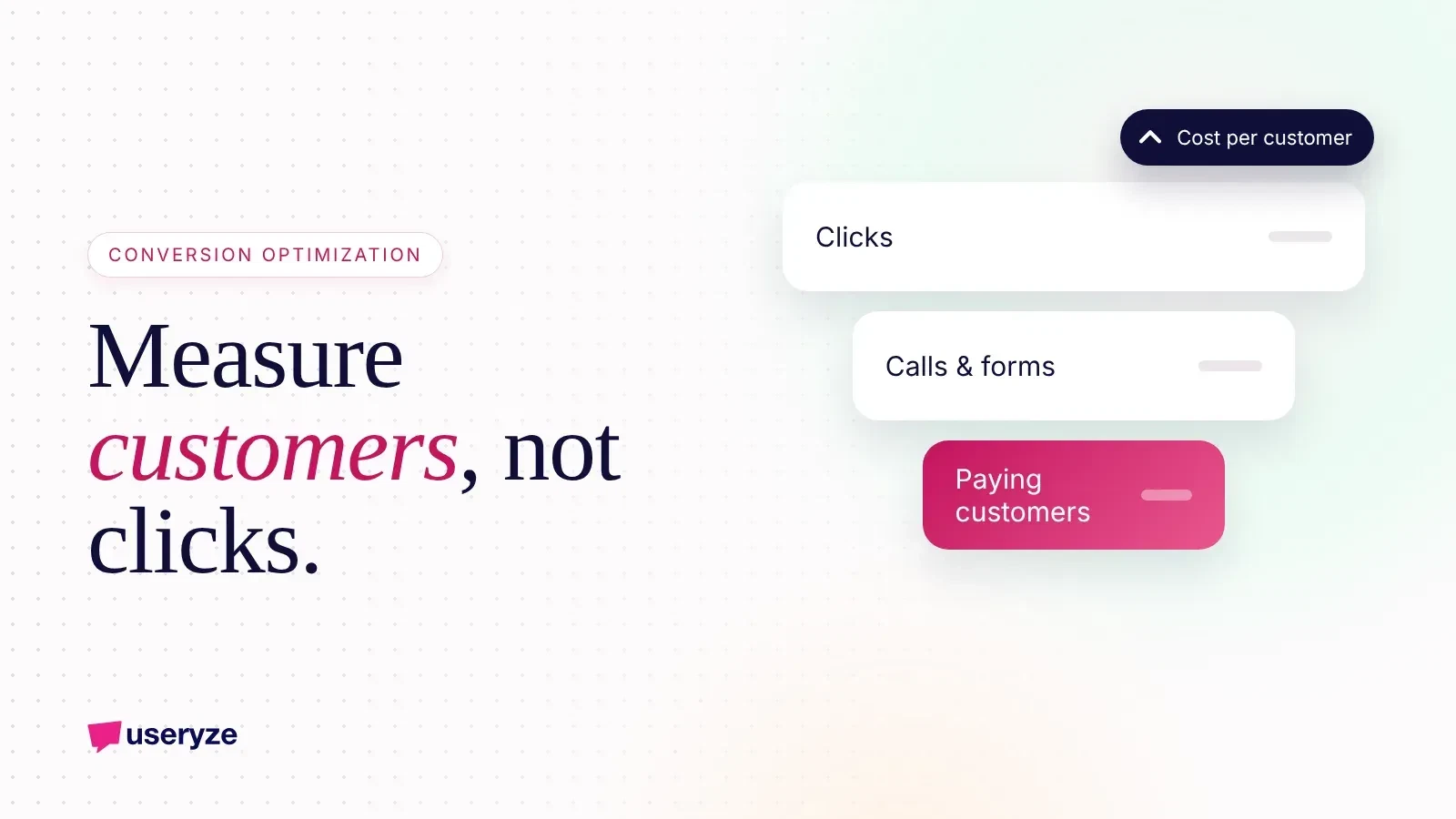
Small businesses measure marketing beyond clicks by tracking what happens after the click: leads, booked appointments, sales and the revenue each channel brings in. The simplest method is to tag every lead with its source, record which leads become paying customers, and compare that revenue to what you spent. That gives you a real return on marketing spend, not just a traffic number.
Clicks, likes and impressions are early signals. They tell you people noticed you. They do not tell you whether marketing is paying for itself.
01Quick answer
- Track outcomes, not activity: calls, forms, bookings, orders and walk-ins matter more than clicks.
- Tag every lead with a source: use UTM links, call tracking numbers and a "how did you hear about us" question.
- Close the loop in a CRM: mark which leads became customers and how much they spent.
- Use three core numbers: cost per lead, cost per customer and return on marketing spend.
- Review weekly, decide monthly: look at trends often, but give channels enough time before cutting them.
Why clicks are a weak measure
A click is cheap to get and easy to count. That is exactly why it is misleading.
- Clicks can come from the wrong people: a broad ad can pull in visitors from outside your service area or people with no intent to buy.
- High click-through can hide a bad page: lots of clicks to a page that does not convert just means more wasted spend.
- Some of your best marketing creates no clicks: a Google Business Profile call, a customer who saw your video and walked in, a referral from a happy client.
If you only reward clicks, you will slowly push your budget toward whatever is easiest to click, not what grows the business.
The numbers that actually matter
You do not need a complicated dashboard. Most small businesses can run on five numbers.
- Leads by source: how many calls, forms, bookings or messages came from each channel.
- Cost per lead: spend on a channel divided by leads from that channel.
- Lead-to-customer rate: of the leads you got, how many paid you.
- Cost per customer: spend divided by new customers. This is the number to watch.
- Return on marketing spend: revenue from marketing-sourced customers divided by marketing spend.
For businesses with repeat customers, add one more: average customer value over a year. A restaurant guest or dental patient is worth more than their first visit, so judge channels against that bigger number.
How to measure return on marketing spend, step by step
Here is a setup that works for most small businesses within a couple of weeks.
- 1. List every channel you pay for: Google Ads, Meta, SEO, email, local sponsorships, printed mailers, agency fees.
- 2. Give each channel a trackable path: UTM-tagged links for online channels, a separate call tracking number for ads and your website, and unique offer codes for print.
- 3. Ask every new customer: add a required "How did you hear about us?" field to forms and train staff to ask on the phone and at the counter.
- 4. Log leads in one place: a CRM, or even a shared spreadsheet, with date, source, name and outcome.
- 5. Mark the result: won, lost or still open, plus the dollar value when won.
- 6. Total it monthly: revenue by source divided by spend by source.
The first month will be messy. That is fine. The habit of tagging and closing the loop is what makes the numbers trustworthy over time.
To keep it simple, start a one-page scorecard this week and fill it in every Monday.
- Spend this week, by channel
- Leads this week, by channel
- New customers this week, by channel
- Revenue from new customers, by channel
- One thing that changed, and one action to take
After a month, you will know which channels earn their keep. After a quarter, you can move budget with confidence.
Measuring the channels that do not click
Some marketing works without a trackable click. You can still measure it.
- Google Business Profile: check calls, direction requests and website clicks in the profile's performance view. Tag the website link with UTMs.
- Social and video: watch for increases in branded searches, direct traffic and "I saw your video" mentions in the source question.
- Word of mouth and referrals: track referrals as their own source, and note who referred whom.
- In-store visits: use offer codes, ask at checkout, or compare foot traffic and sales during campaign periods against similar weeks.
- Offline media: give flyers, mailers and radio a dedicated phone number or landing page.
You will never capture everything perfectly. Aim for "good enough to make decisions," not perfect attribution.
Common mistakes to avoid
- Judging a channel too fast: SEO and content take months. Paid ads can be judged sooner, but still need enough data.
- Ignoring lead quality: a channel with fewer, better leads can beat one with lots of tire-kickers.
- Not following up: slow responses kill leads. If leads go cold, the channel looks bad when the real problem is speed. Good CRM follow-up fixes this.
- Letting platforms grade their own homework: ad platforms often credit themselves generously. Compare their numbers to what your CRM and bank account say.
- Tracking too much: if a number never changes a decision, stop reporting it.
Where AI and automation help
Measurement breaks down when it depends on someone remembering to copy data between tools. This is a good job for automation.
- Pull data into one place: an automated report can combine ads, Google Analytics, your Business Profile and CRM results each week.
- Tag leads automatically: forms and call tracking can push the source straight into the CRM.
- Spot changes early: an AI agent can flag when cost per lead jumps or a channel goes quiet, so you look at it before the month is over.
- Write the summary for you: instead of a spreadsheet, you get a few plain sentences on what changed and what to do.
We describe how we run reporting this way in how we run on AI agents. For restaurants, we have pulled Business Profile, website, ads and social data into one loop, as shown in this restaurant data case study.
Get a clearer view of what is working
If you are spending on marketing and cannot say what it returns, that is the first thing to fix. Useryze builds measurement into everything we run, and our AI agents handle the reporting busywork so you see results in plain language. Start with our free growth plan: we review your site, search and ads, then spend 30 minutes walking you through what is working and what is not.
Free growth plan
Turn this into more customers.
We run marketing, video and AI follow-up for owner-led businesses. Tell us about yours and we will show you the three fixes that matter most.
Keep reading
- What Is CRO in Digital Marketing? A Plain-English Guide for OwnersCRO in digital marketing means turning more of your existing visitors into calls, bookings and sales. Learn what it is, how it works and where to start.
- Conversion SEO: How to Rank for Searches That Turn Into CustomersConversion-focused SEO targets searches from people ready to buy, then builds pages that turn them into leads. Here is the step-by-step playbook to follow.
- From Clicks to Consultations: CRO Strategies for Dental & Orthodontic WebsitesDiscover proven dentist CRO strategies to boost your orthodontic website conversion rate. Learn how patient appointment booking optimization turns traffic into booked chairs.