Local SEO in St. Louis: How to Rank on Google Maps Across the City, County and Metro East
Quick Summary
6 min read- 01
Local SEO in St. Louis is harder than it looks because "St. Louis" is not one search market. The City of St. Louis is independent of St. Louis County, the county is split into roughly 90...
- 02
This guide covers what actually moves Google Maps rankings for St. Louis businesses in 2026, and how to set it up without wasting months.
- 03
The Census Bureau's 2025 estimates put the St. Louis metro at about 2.81 million people, but only about 278,000 of them live in the City of St. Louis. Close to 991,000 live in St. Louis...
- 04
Your Google Business Profile is the single biggest factor in Google Maps visibility. For St. Louis businesses, check these first:
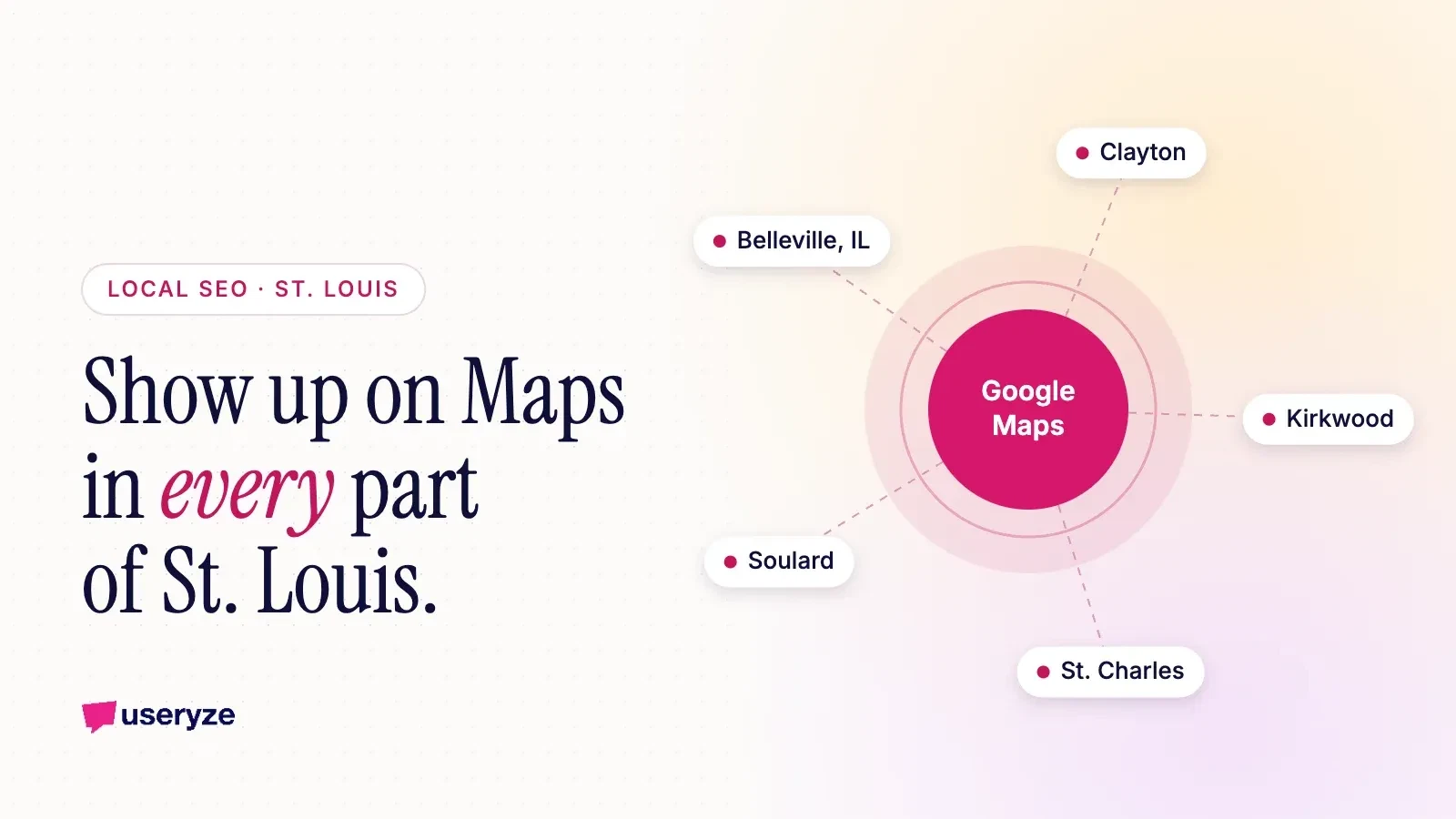
Local SEO in St. Louis is harder than it looks because "St. Louis" is not one search market. The City of St. Louis is independent of St. Louis County, the county is split into roughly 90 municipalities, and the metro crosses the Mississippi into Illinois. Buyers search by the place they live or work, such as "plumber Kirkwood", "dentist Chesterfield" or "roofer O'Fallon IL", not just "St. Louis". The businesses that win on Google Maps are the ones that show up clearly in each of those places.
This guide covers what actually moves Google Maps rankings for St. Louis businesses in 2026, and how to set it up without wasting months.
01Why St. Louis needs a different local SEO plan
The Census Bureau's 2025 estimates put the St. Louis metro at about 2.81 million people, but only about 278,000 of them live in the City of St. Louis. Close to 991,000 live in St. Louis County, and more than 400,000 live in St. Charles County, according to Greater St. Louis, Inc. On the Illinois side, Madison and St. Clair counties add hundreds of thousands more.
That spread has three practical effects on search:
- Proximity matters more than your address. Google Maps ranks businesses partly by how close they are to the searcher. A shop in Soulard will rarely show for a search made in Chesterfield, however good its profile is.
- People search by suburb. Search Console data for St. Louis keywords shows people typing "st louis", "st. louis", "stl" and the names of individual towns. Each is a separate query you need to be relevant for.
- The river is a real border. Many Metro East buyers search with "IL" or the town name (Belleville, Edwardsville, O'Fallon), and many Missouri buyers never cross the river. If you serve both sides, you need to say so plainly on your site and profile.
Step 1: Get your Google Business Profile right
Your Google Business Profile is the single biggest factor in Google Maps visibility. For St. Louis businesses, check these first:
- Primary category. Pick the most specific category that matches your main service. "Kitchen remodeler" beats "Contractor". Add secondary categories only for services you really offer.
- Service area. If you visit customers, set a service area that matches where you actually go, such as St. Louis City, St. Louis County and St. Charles County, rather than a vague radius.
- Address and hours. Use the exact same name, address and phone number everywhere online. Inconsistent details across directories confuse Google and AI tools alike.
- Services and products. List each service with a short, plain description. This is text Google can match to searches.
- Photos. Add real photos of your team, work and location. Stock photos do nothing for trust.
If you have more than one location, each one needs its own profile and its own page on your website.
Step 2: Build pages for the places you serve
A single "Areas we serve" list at the bottom of your homepage is not enough. Create a page for each area where you want to win customers, starting with the ones that bring you the most business today.
A good St. Louis area page includes:
- What you do in that area, in the first sentence.
- Real local detail: the neighborhoods you work in, the types of homes or businesses you serve there, and how quickly you can get there.
- Proof from that area, such as a project, a review or a photo, when you have one.
- A clear next step: call, book or request a quote.
Avoid copying the same page and swapping the town name. Google treats near-identical pages as low value, and they rarely rank. Ten genuinely useful pages beat fifty thin ones.
Step 3: Earn reviews that mention what you did
Reviews affect both rankings and whether people choose you once they see you. Ask every happy customer, and make it easy with a direct link. When customers mention the service and the area in their own words ("fixed our furnace in Webster Groves the same day"), those reviews help you show for those searches.
Reply to every review, good or bad, briefly and personally. It shows active management to both Google and buyers.
Step 4: Fix your listings and citations
Check that your business details match on the directories St. Louis buyers actually use: Google, Apple Maps, Bing, Yelp, the Better Business Bureau, Nextdoor and any industry directories. Look for old addresses, old phone numbers and duplicate listings, and merge or correct them.
Local chambers, business districts and community organizations are also worth joining. A listing on a real St. Louis organization's site is a strong local signal, and it is a source AI tools trust.
Step 5: Make your website fast and clear on a phone
Most local searches happen on a phone, often while someone is deciding right now. Your site should load quickly, show your phone number at the top, and make the next step obvious. If someone taps through from Google Maps and has to hunt for how to book, they go back and pick the next result.
Step 6: Track calls and bookings, not just rankings
Rankings move around daily. What matters is whether more people call, book or visit. Set up:
- Call tracking from your Google Business Profile.
- Conversion tracking on forms and booking buttons.
- A monthly look at which areas and services bring in customers, not just clicks.
That data tells you which area pages to build next and where to focus reviews.
How long does local SEO take in St. Louis?
Fixing your profile and listings can show results within weeks. Ranking in new areas usually takes a few months of steady work: pages, reviews and links. Highly competitive categories, such as personal injury law or HVAC, take longer than niche services.
Where to start this week
- Open your Google Business Profile and check the category, service area, hours and services.
- Search for your main service plus three towns you serve, from a phone, and note who shows up.
- Ask your last five happy customers for a review, with a direct link.
- Pick one area that brings you good customers and give it a real page.
If you want help, our local SEO and Google Maps service covers profiles, area pages, reviews and tracking. You can also see how we work with businesses across Greater St. Louis.
Free growth plan
Turn this into more customers.
We run marketing, video and AI follow-up for owner-led businesses. Tell us about yours and we will show you the three fixes that matter most.
Related Posts
View All ›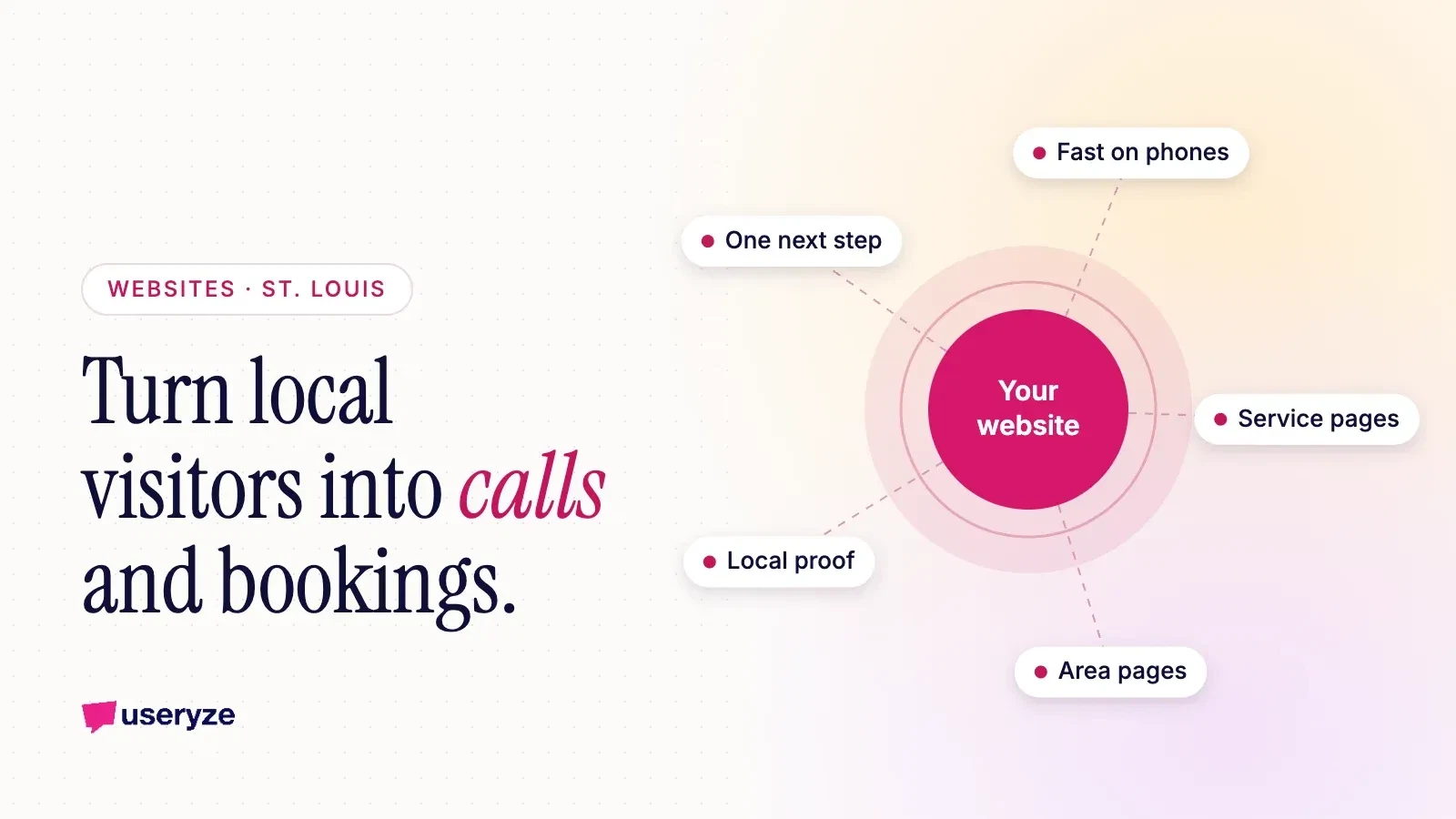
What a St. Louis business website needs to turn local visitors into calls: speed on phones, service and area pages, local proof and one clear next step.


How St. Louis businesses show up when people ask ChatGPT, Gemini or Google AI Mode for a recommendation: test prompts, business facts, pages and proof.

A practical social media plan for St. Louis businesses: short-form video on Reels, TikTok and Shorts, local content ideas, posting rhythm and tracking.