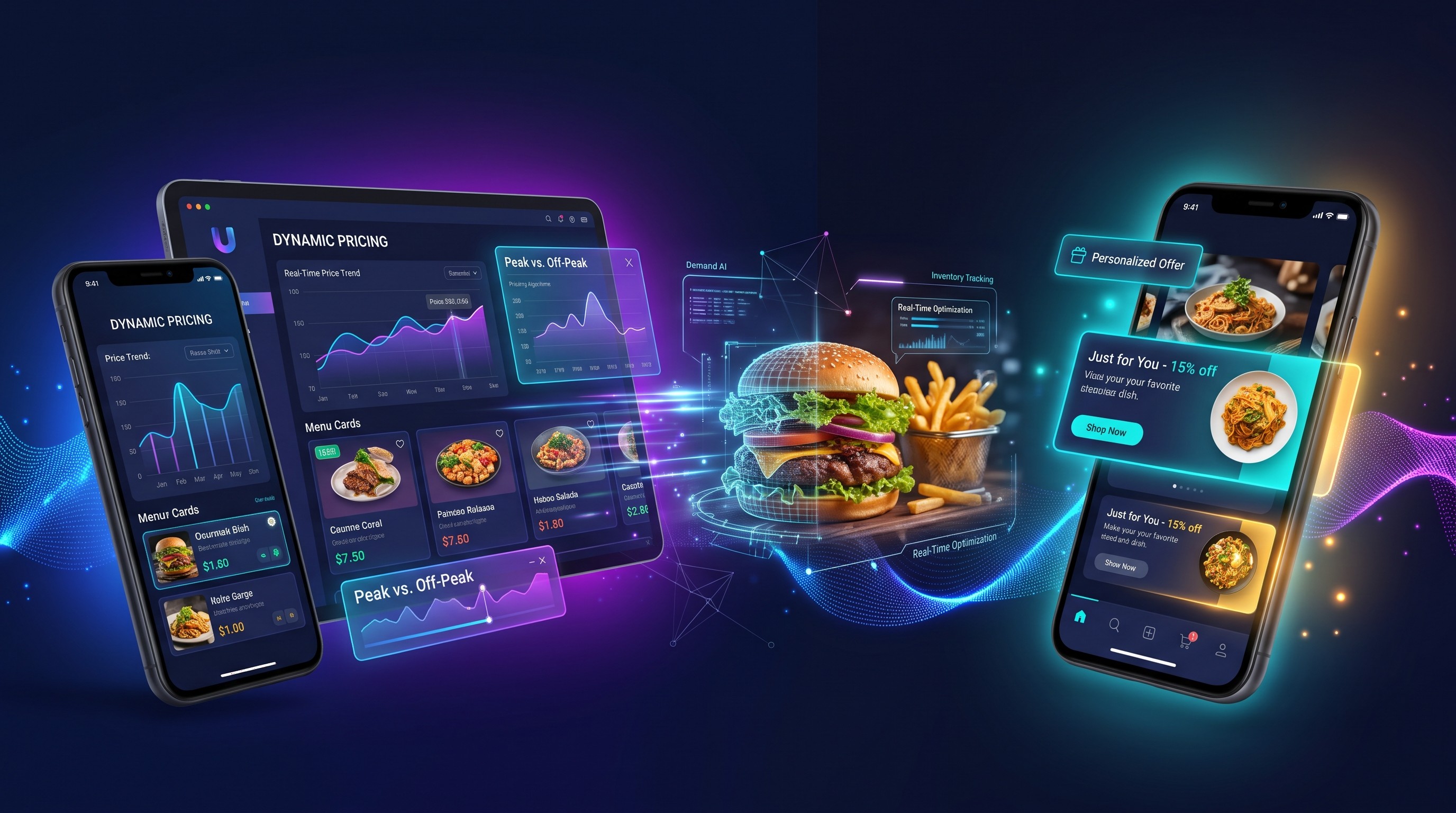
AI for Dynamic Pricing & Personalized Promotions in Restaurants
Updated: November 04, 2026
E-commerceQuick Summary
8 min read- 01
The printed, static menu has long been a fixture of the hospitality industry. For decades, operators calculated food costs, factored in labor, added a markup margin, and printed a single set...
- 02
In an era of volatile supply chain costs, shifting diner habits, and digital ordering platforms, static pricing is no longer sustainable. Restaurant revenue management powered by AI is...
- 03
Transitioning to intelligent pricing does not mean alienating guests with surprise charges. When executed thoughtfully, dynamic pricing and personalized restaurant promotions build...
- 04
Dynamic pricing refers to adjusting the price of goods or services in response to changing market conditions such as demand, time of day, supply availability, and competitive pressures.
The printed, static menu has long been a fixture of the hospitality industry. For decades, operators calculated food costs, factored in labor, added a markup margin, and printed a single set of prices expected to perform across lunch rushes, dead Tuesday afternoons, and packed Friday evenings.
In an era of volatile supply chain costs, shifting diner habits, and digital ordering platforms, static pricing is no longer sustainable. Restaurant revenue management powered by AI is transforming how operators price menus and reward guests. Rather than relying on guesswork, modern operators are adopting artificial intelligence to match menu pricing and guest promotions to real-time market reality.
Transitioning to intelligent pricing does not mean alienating guests with surprise charges. When executed thoughtfully, dynamic pricing and personalized restaurant promotions build sustainable profitability, stabilize kitchen volume, and deepen guest loyalty.
01What is Dynamic Pricing in Restaurants?
Dynamic pricing refers to adjusting the price of goods or services in response to changing market conditions such as demand, time of day, supply availability, and competitive pressures.
While the concept may seem novel in food service, restaurants have utilized manual forms of dynamic pricing for generations:
- Happy hour drink and appetizer discounts designed to draw foot traffic during the late afternoon lull before dinner service.
- Lunch specials and prix-fixe menus structured to drive volume during midday office breaks.
- Weekend premiums or holiday surcharges applied when kitchen capacity and seating are pushed to maximum limits.
- Third-party delivery markup fees used to offset commission percentages on delivery aggregators.
The limitation of traditional approaches is their rigidity. A static happy hour runs from 4:00 PM to 6:00 PM regardless of whether a sudden rainstorm empties the dining room or an unexpected local event packs every booth. Traditional rules cannot adjust in real time.
AI dynamic pricing elevates this mechanism from blunt, scheduled discounts to responsive, data-backed optimization across direct ordering platforms, digital menu boards, and delivery channels.
How AI Powers Dynamic Pricing
Artificial intelligence processes vast datasets simultaneously, identifying micro-trends and non-linear patterns that manual spreadsheets cannot detect. A dedicated AI dynamic pricing restaurant engine continuously evaluates four core pillars:
Real-Time Demand Fluctuations
Demand is influenced by dozens of variables operating at once, including day of week, time of day, weather conditions, local sporting events, traffic patterns, and seasonal shifts. Machine learning models evaluate historical order volume alongside real-time inputs. If rain suppresses in-person dining while delivery demand surges, the system adapts pricing and item availability accordingly.
Kitchen Capacity and Perishable Inventory
Food waste is one of the highest silent costs in hospitality. When ingredients near their shelf life or prep levels exceed daily pace, AI can automatically adjust pricing or feature high-margin dishes utilizing those ingredients. Conversely, when the kitchen faces order bottlenecks during peak rushes, pricing adjustments on labor-intensive dishes can smooth kitchen operations and protect ticket times.
Competitive Market Intelligence
Monitoring competitor delivery menus, local price changes, and neighborhood offerings is tedious when done by hand. AI algorithms monitor regional market pricing across direct digital channels and third-party delivery apps, ensuring your core menu items remain competitively positioned without unnecessarily sacrificing margin.
Customer Micro-Segments
Different guest cohorts demonstrate distinct price sensitivities. A weekday solo office worker ordering lunch prioritizes speed and value, whereas a weekend family ordering dinner prioritizes variety and convenience. AI models evaluate basket sizes, channel preferences, and purchase frequency to understand price elasticity across distinct ordering contexts.
To maximize the impact of dynamic adjustments, restaurants often combine algorithmic pricing with structural menu layout improvements. Pairing real-time rate modeling with proven tactics from menu engineering for digital success: boosting AOV and conversions for restaurant online ordering ensures that guests naturally gravitate toward your most profitable combinations.
Core Benefits for Restaurant Operators
Adopting an intelligent revenue strategy yields measurable returns across operations, guest retention, and profitability.
Maximizing Off-Peak Yield
Empty seats and idle kitchen staff during shoulder hours drain operational margins. AI dynamic pricing enables automated off-peak incentives, such as discounted combo bundles or value-driven digital promotions during mid-afternoon or late-evening lulls. By capturing marginal orders that cover prime costs, operators lift baseline profitability without devaluing their primary dinner service.
Slashing Food Waste
Connecting inventory tracking to dynamic promotional triggers ensures perishable inventory is turned into sales rather than spoilage. If high-value proteins or seasonal produce remain in excess toward the end of a shift, AI systems can dynamically package them into limited-time specials or meal combos on digital channels, directly recovering ingredient costs.
Protecting Peak-Hour Margin and Throughput
During peak volume, tables and kitchen stations are finite resources. Modest dynamic adjustments during sustained peak rushes discourage price-sensitive orders that cause long ticket delays while capturing higher willingness-to-pay from diners seeking immediate table access or fast delivery.
Improving Long-Term Guest Lifetime Value
Intelligent pricing balances margin protection with customer value. When diners consistently receive pricing that aligns with the speed, timing, and nature of their order, perceived value increases, resulting in repeat orders across digital channels.
Personalized Promotions with AI
Dynamic pricing manages baseline item economics, while personalized promotions determine how guests receive targeted incentives. Blanket email blasts offering 15 percent off to an entire database erode profit margins and train regular guests to delay orders until a coupon arrives.
Personalized restaurant promotions powered by AI deliver relevant incentives exclusively to the guests who need a prompt to convert.
Historical Order Pattern Recognition
AI evaluates individual order histories to identify preferred dining days, flavor profiles, dietary preferences, and spending thresholds. A customer who exclusively orders vegan bowls on Tuesday evenings receives an offer featuring a new seasonal plant-based starter, rather than a generic promotion highlighting steak platters.
Churn Prevention and Win-Back Triggers
Machine learning models predict an individual diner's ordering cycle. If a regular guest who typically orders every 10 days goes silent for 25 days, the system triggers a personalized win-back voucher right before the predicted drop-off turns into permanent attrition.
Real-Time Behavioral Personalization
When a customer interacts with your online ordering system, their active browsing signals reveal clear intent. If a diner adds a burger to their basket but hesitates on sides or drinks, AI can serve a one-click, personalized upgrade offer priced specifically to hit the guest's conversion threshold while lifting average order value.
For independent brands looking to build sustainable online funnels, applying these principles is central to modern conversion rate optimization. As detailed in our guide on AI-powered CRO for small business, systematic testing and personalization consistently outperform one-size-fits-all promotional discounting.
Implementation Considerations and Best Practices
Deploying dynamic pricing and automated promotions requires clear strategy, clean data, and customer empathy.
Unified Data Integration
AI systems depend on clean, centralized inputs. Integrating your point-of-sale system, online ordering platform, loyalty program, and inventory management software ensures pricing algorithms make decisions using verified sales velocity and actual stock availability.
Rigorous A/B Testing
Never roll out radical pricing shifts across an entire menu simultaneously. Begin by testing price elasticity on select categories, such as high-volume appetizers, specialty beverages, or delivery-exclusive combos. Compare conversion rates, ticket sizes, and gross margins between test groups and control groups to validate incrementality before scaling across the board.
Maintaining Customer Trust and Transparency
Guest perception is paramount in the hospitality sector. Operators must avoid aggressive price gouging or volatile fluctuations that frustrate patrons. The industry consensus points toward three golden rules:
- Use discounts rather than peak penalties on direct dine-in menus. Diners welcome afternoon value pricing, but they resent paying a surge premium for the same sit-down pasta dish they ordered yesterday.
- Keep dynamic shifts within defined guardrails. Set hard minimum and maximum pricing boundaries so items never fluctuate beyond sensible thresholds.
- Focus dynamic pricing primarily on off-peak incentives and digital delivery channels, where variable logistics and time-based incentives are already an understood consumer norm.
How Useryze Helps Restaurants Unlock Intelligent Growth
Implementing data science in a fast-paced restaurant environment can feel overwhelming for busy operators. Useryze bridges the gap between sophisticated artificial intelligence and everyday restaurant growth.
Useryze helps restaurant brands analyze guest interactions, streamline online ordering flows, and deploy predictive pricing strategies that protect margins. By examining digital customer behavior across web ordering touchpoints, Useryze enables operators to:
- Identify hidden friction points in online ordering menus that depress average ticket sizes.
- Implement structured A/B testing on menu placement, bundled offerings, and promotional incentives.
- Optimize direct-ordering conversion funnels to reduce reliance on commission-heavy third-party aggregators.
- Deliver tailored digital experiences that turn one-time diners into loyal, recurring guests.
With Useryze, restaurant owners gain the tools to make data-driven revenue management accessible, measurable, and customer-friendly.
Smarter Revenue Management for the Modern Restaurant
The restaurant industry operates on tight margins where small adjustments in volume, average order value, and waste reduction yield substantial gains in net profit. Static menus and blanket discounts can no longer handle the complexity of today's digital dining landscape.
By combining AI dynamic pricing with individualized promotional targeting, restaurant operators can stabilize operational flow, reward loyal guests, and capture revenue that static menus leave on the table. The future of restaurant revenue management belongs to operators who treat their menu not as an unchangeable document, but as an intelligent, responsive engine for growth.
Related Posts
View All ›
Discover how AI local SEO for restaurants transforms foot traffic into loyal diners. Learn actionable AEO for restaurant marketing tactics to dominate search engines and AI answer engines.

Discover how AI personalized restaurant ordering increases AOV and loyalty. Learn actionable strategies for AI menu recommendations, upsells, and dynamic promos.
Discover how multi-location restaurant chains can overcome local search challenges, optimize Google Business Profiles, dominate Google Maps, and leverage AI to drive foot traffic across every location.