YouTube for Local Business 2026: How Videos and Shorts Win Trust, Search and AI Answers
Quick Summary
6 min read- 01
Part 6 of The Art of Organic Growth, a seven-part series on getting customers without paying for every click.
- 02
Short answer: YouTube is where local customers go to see who you are before they call, and in 2026 it's also one of the sources AI answers cite most. Local businesses win with clear...
- 03
Video has become part of how people check out a business. BrightLocal's 2025 Local Consumer Review Survey found that more than three-quarters of U.S. consumers watch video content when they...
- 04
YouTube also reaches people in more places than any other video platform. YouTube CEO Neal Mohan's January 2026 letter said Shorts now averages 200 billion daily views.
Part 6 of The Art of Organic Growth, a seven-part series on getting customers without paying for every click.
Short answer: YouTube is where local customers go to see who you are before they call, and in 2026 it's also one of the sources AI answers cite most. Local businesses win with clear 5-to-20-minute videos that answer real customer questions, split into chapters, with accurate captions and a full description, plus Shorts cut from the same footage. Embed those videos on your service pages, link the channel from your Google Business Profile, and make it easy for viewers to call or book.
01Why YouTube matters for a local business
Video has become part of how people check out a business. BrightLocal's 2025 Local Consumer Review Survey found that more than three-quarters of U.S. consumers watch video content when they look for information about local businesses. SOCi's 2026 Local Discovery Index found that 43% of consumers use social media to preview what a place is like before visiting, and 59% say a social post or video has turned them into a customer of a local business.
YouTube also reaches people in more places than any other video platform. YouTube CEO Neal Mohan's January 2026 letter said Shorts now averages 200 billion daily views.
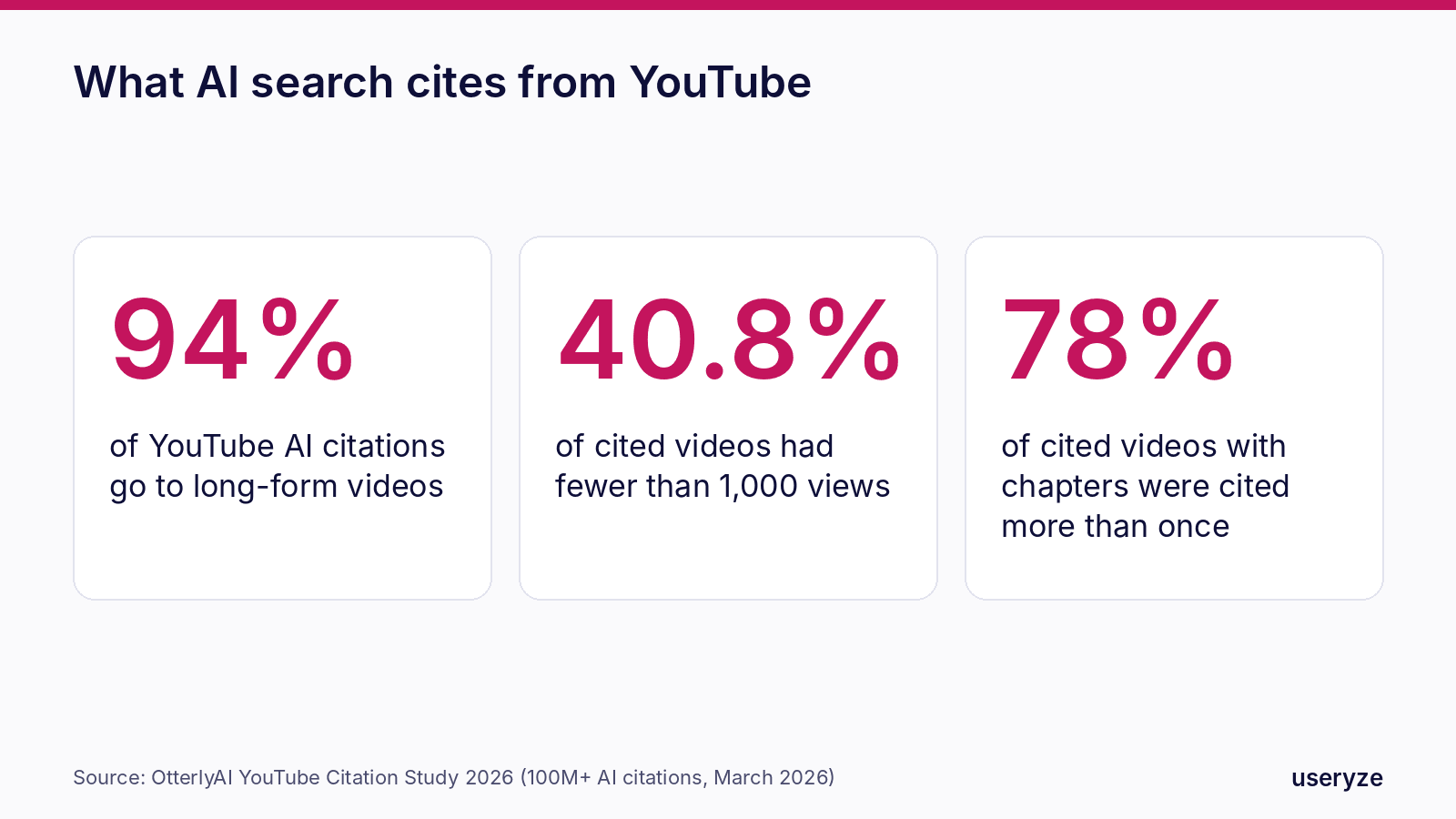
And it feeds AI search. OtterlyAI's YouTube Citation Study, published in March 2026 and based on more than 100 million AI citations, found YouTube was the second most-cited social platform in AI answers, behind Reddit. Almost all of those citations went to long-form videos, and many went to small channels.
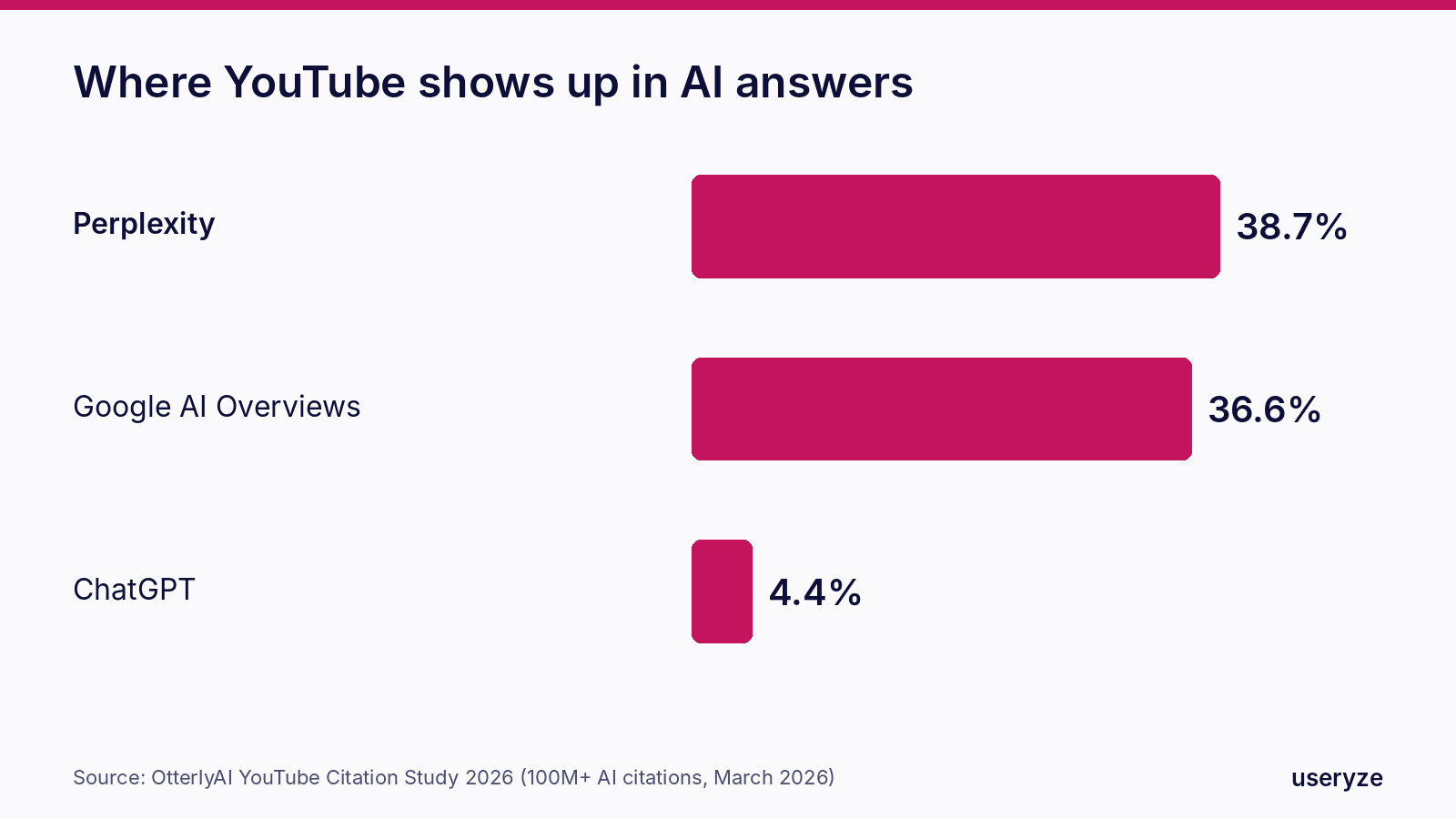
Most YouTube citations appear in Perplexity and Google AI Overviews. ChatGPT cites YouTube much less often, which is one more reason to keep your website and Google Business Profile strong too.
Step 1: Set up a channel people can trust
- Name and handle: your business name, plus your city if it's common, such as "Luna Bakery Austin."
- Description: what you do, the areas you serve and the best way to reach you, in plain words.
- Links: your website, booking page and phone number in the channel links.
- Banner and profile image: your logo or storefront and your team, not stock photos.
- Connect it everywhere: add the channel to your Google Business Profile, your website footer and your other social profiles, so search engines and AI tools can tie it to your business.
Step 2: Make answer videos people search for
Start with the questions customers ask on the phone, in your inbox and in your reviews. Then answer one question per video, clearly and specifically.
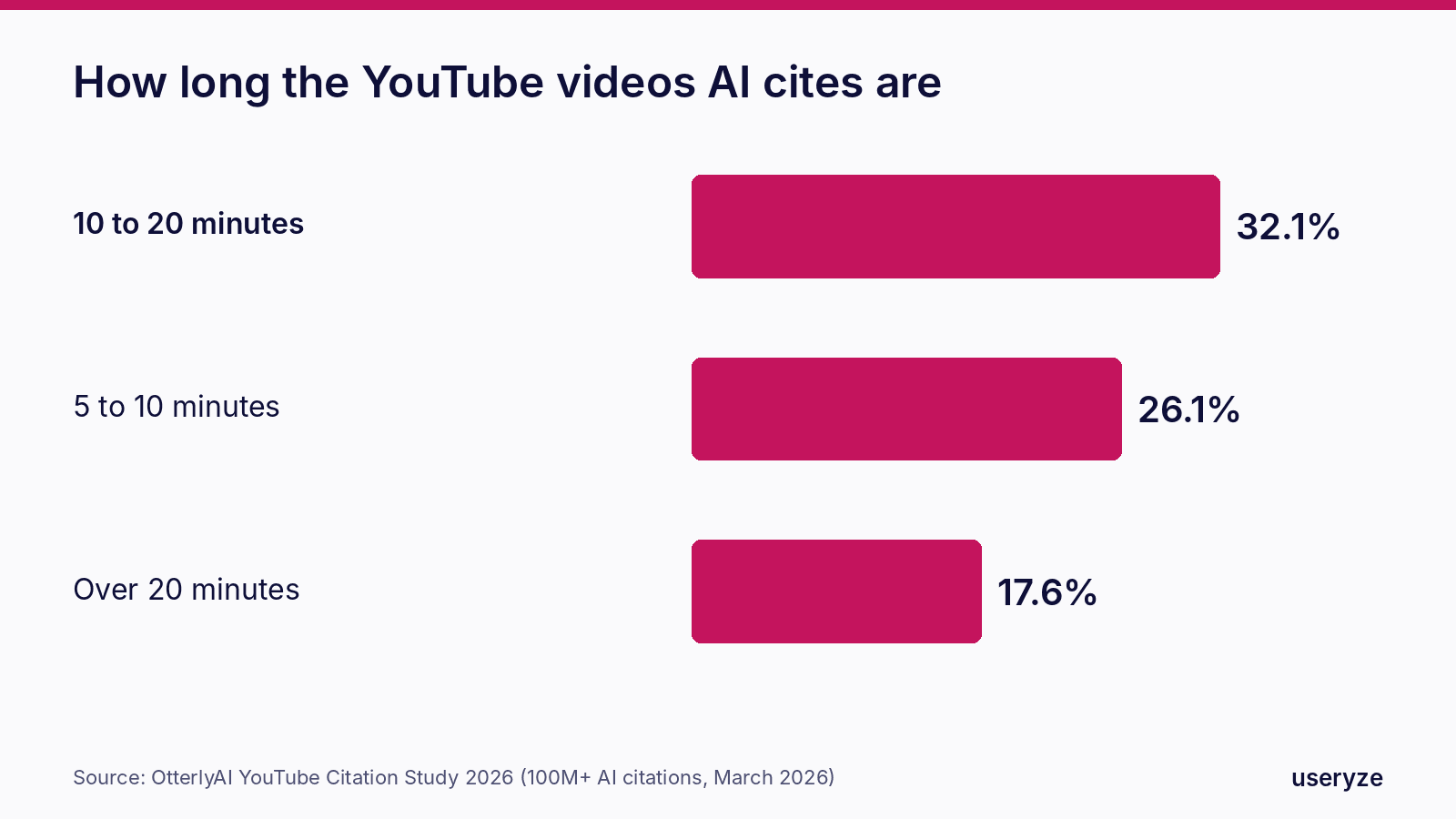
- Pick the right length. In OtterlyAI's study, the most-cited videos ran 10 to 20 minutes, followed by 5 to 10 minutes. A walk-through of a process, a price breakdown or a "what to expect" visit fits well.
- Title it like a search: "How much does a custom engagement ring cost in Austin?" works better than "Ring Talk Episode 4."
- Add chapters. Put timestamps in the description so YouTube creates chapters. Google's AI surfaces often link straight to a chapter, and in the study, 78% of timestamped videos that got cited were cited more than once.
- Write a full description. Summarize the answer in the first two lines, then cover the details. Longer descriptions were linked to more citations in the study.
- Check the captions. Upload or correct the captions so your service names, product names and town names are spelled right.
You don't need a big audience to be found. In the study, 40.83% of cited videos had fewer than 1,000 views, and the median cited channel had fewer than 41 videos.
Step 3: Use Shorts to reach new people
Shorts can now be up to three minutes long and appear in the Shorts feed, in YouTube search and in Google results.
- Cut Shorts from your long videos. One 10-minute answer can give you three or four Shorts.
- Reuse your TikToks and Reels, without other apps' watermarks.
- Link each Short to the related long video so interested viewers can go deeper.
- Show the real thing: the finished job, the dish, the person who'll do the work.
Step 4: Put your videos to work on your website
- Embed the right video on each service page, so visitors can see the work without leaving your site.
- Add video structured data (VideoObject) with a title, description, thumbnail, upload date and the embed URL, so Google can show the video in results.
- Check Search Console's Video indexing report to make sure Google can find the videos on your pages. Our website design team builds service pages with this in place.
Step 5: Turn viewers into customers
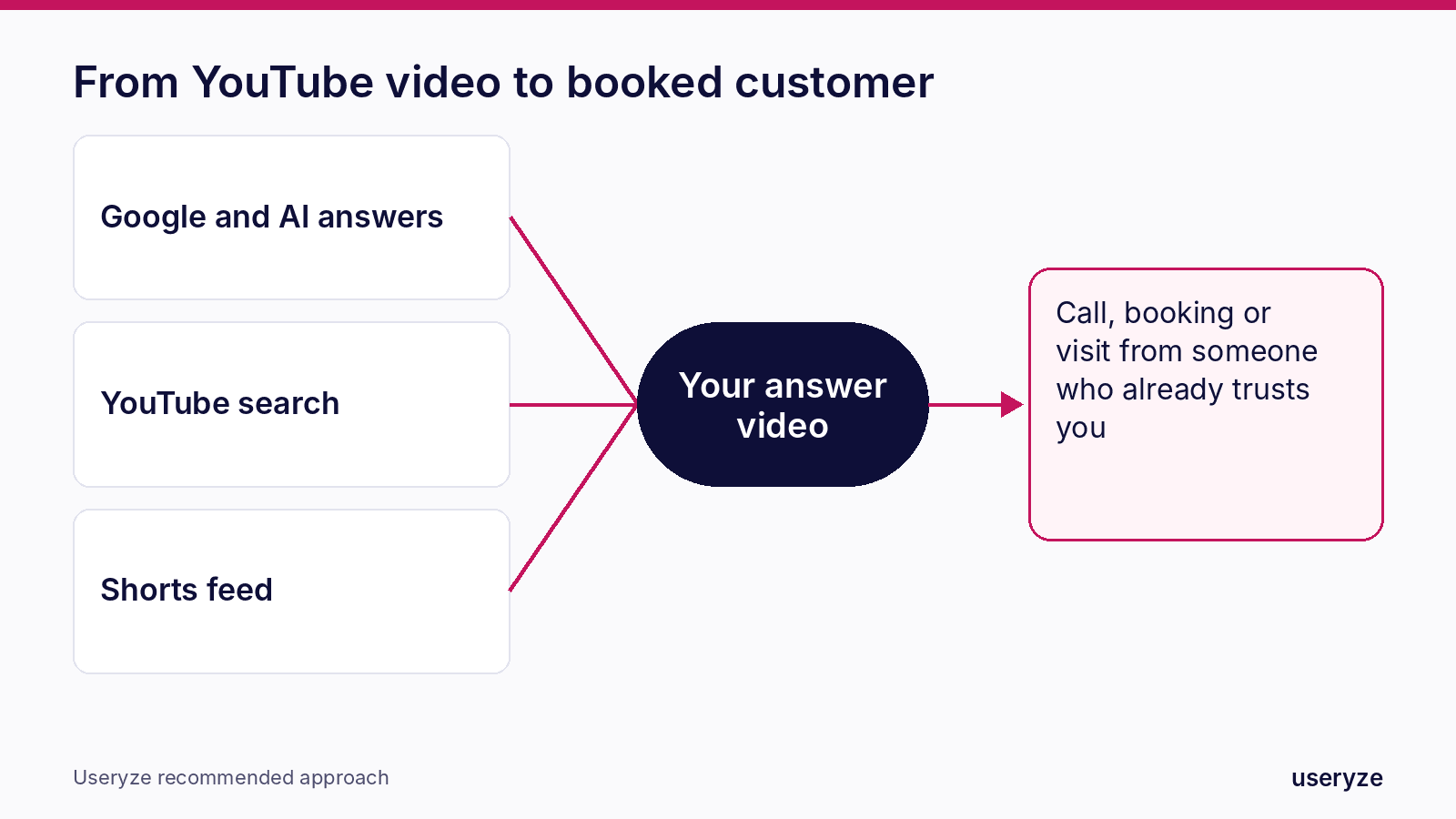
- Say what to do next near the end: "Call us," "Book a consultation," "Visit us on Saturday."
- Put your phone number and booking link in the first lines of the description and in a pinned comment.
- Reply to comments. Questions in the comments are ideas for your next video.
- Ask new customers where they found you, and add "YouTube" as an option on your booking or contact form.
- Send YouTube leads to your CRM so they get the same follow-up as any other lead. Our AI follow-up handles that.
Step 6: Measure, then build on what works
In YouTube Studio, check which search terms bring viewers, how long they watch, and which videos send people to your website. Make more videos on the topics that bring calls and bookings, not just views. When a video clearly brings customers, our paid media team can promote it to people in your area, and our content team can plan and film new videos with you. To see where you show up in AI answers, see our AI search visibility service.
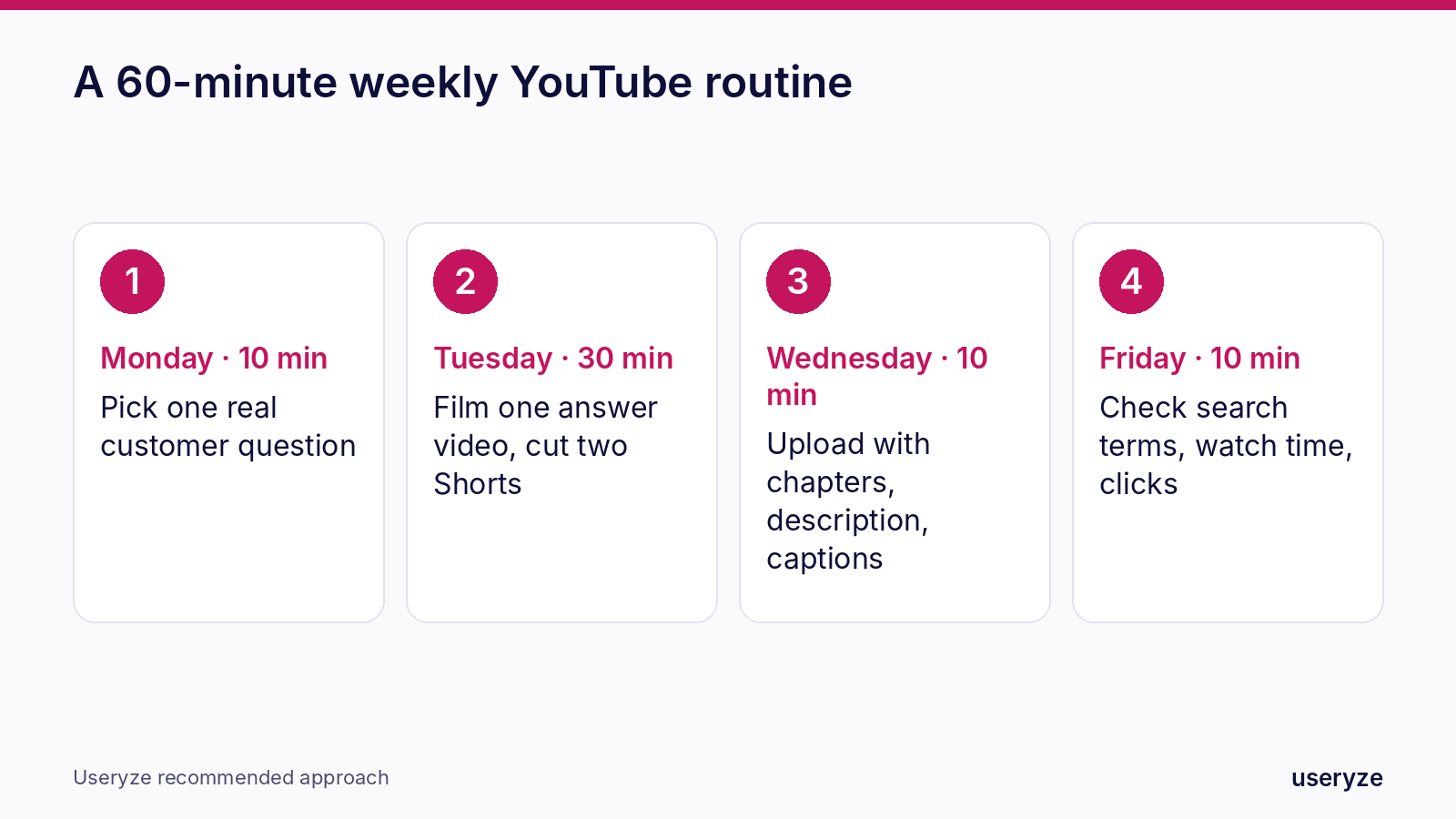
A 60-minute weekly YouTube routine
- Monday (10 minutes): pick one real customer question to answer this week.
- Tuesday (30 minutes): film one answer video and cut two Shorts from it.
- Wednesday (10 minutes): upload with a search-style title, chapters, a full description and checked captions.
- Friday (10 minutes): check search terms, watch time and website clicks; reply to comments.
Up next: Part 7, LinkedIn: how owners and local businesses use personal and company profiles to win referrals and bigger clients.
FAQ
Is YouTube worth it for a small local business? Yes, if you answer real customer questions. Most consumers watch video when they research local businesses, and small channels with few views still get cited in AI answers.
Should I make long videos or Shorts? Both. Long-form answer videos build trust and get cited by AI search; Shorts reach new people. Cut Shorts from your long videos to save time.
How long should a local business YouTube video be? Long enough to answer the question well. Many cited videos run 5 to 20 minutes, and Shorts can run up to three minutes.
Do I need expensive equipment? No. A recent phone, a cheap microphone and good light are enough. Clear answers matter more than polish.
Sources
Free growth plan
Turn this into more customers.
We run marketing, video and AI follow-up for owner-led businesses. Tell us about yours and we will show you the three fixes that matter most.
Keep reading
- Google Business Profile Guide 2026: How to Rank in Maps, Show Up in AI Answers and Win More CallsThe 2026 Google Business Profile playbook: categories, reviews, photos, posts and the AI features that now decide who gets the call. Part 1 of a series.
- Bilingual Marketing in Dallas: How to Reach Spanish-Speaking Customers on Google, Meta and AI43% of Dallas County is Hispanic and 43% speak another language at home. How local businesses win bilingual customers on Google, Meta and AI.
- Headless CMS for Marketing Agility: Powering Dynamic Content with Payload CMSHow a headless CMS powers dynamic content marketing, and how Useryze uses Payload CMS to drive more reach and remove busywork.