Centralized Marketing Automation for Multi-Brand, Multi-Location Teams
Quick Summary
5 min read- 01
Centralized marketing automation means running the marketing for several brands, offices or locations from one shared system: one source of truth for data and brand assets, one set of...
- 02
When every location or brand runs its own marketing, the same things happen. Logos and offers drift. Some locations post every day; others have not posted since spring. Leads land in five...
- 03
The opposite extreme fails too. A head office that controls everything ships generic content that feels like it came from nowhere. Local teams stop paying attention.
- 04
Centralized marketing sits in the middle. The center builds the machine. Locations feed it local details and get results back.
Centralized marketing automation means running the marketing for several brands, offices or locations from one shared system: one source of truth for data and brand assets, one set of templates, one reporting view, and automations that localize everything for each brand or location. The center sets the rules. Each location gets marketing that feels local without doing all the work itself.
01The short version
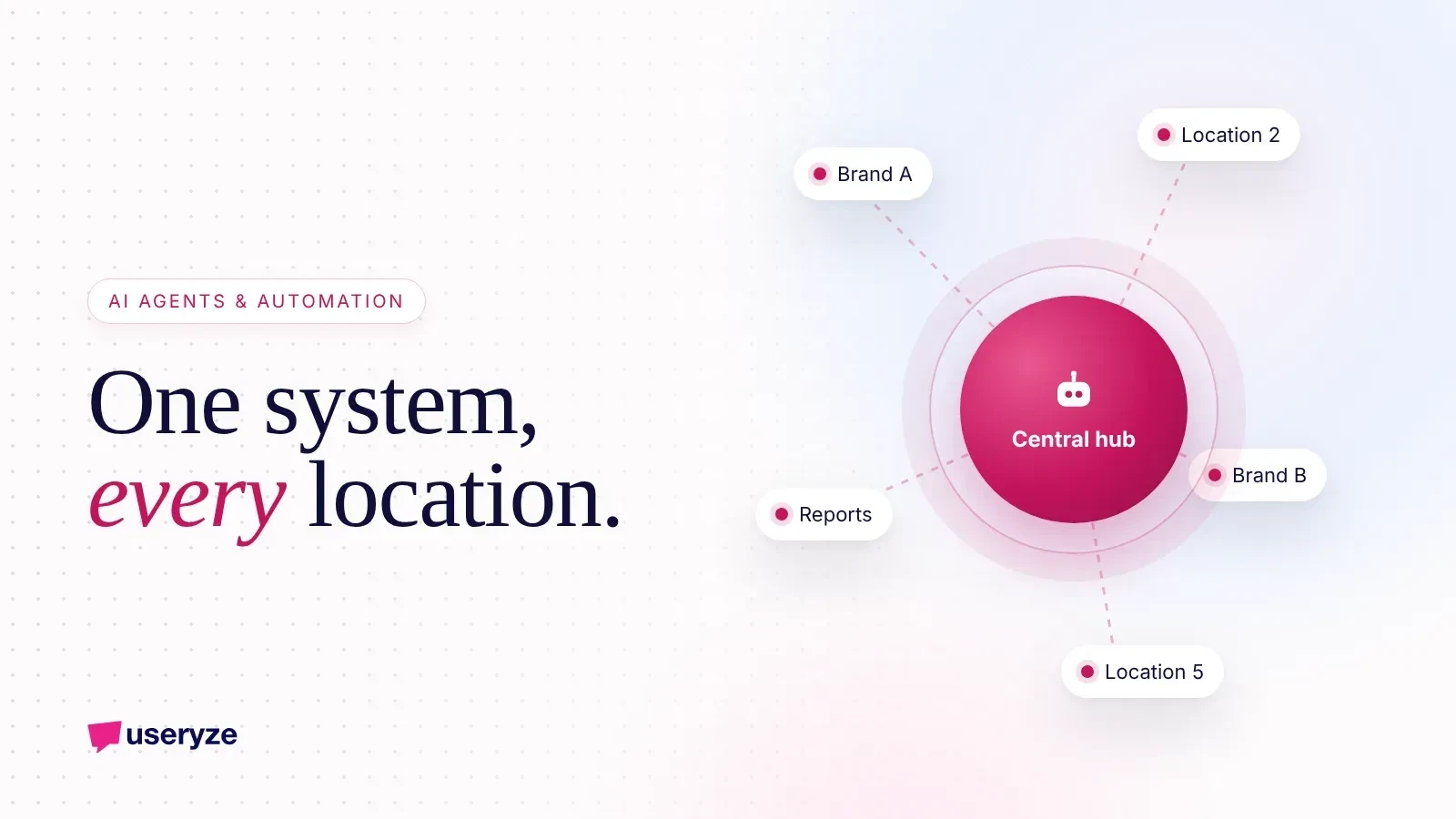
- One hub, many spokes: shared data, templates and reporting at the center; local details at each brand or location.
- Centralize brand assets, tracking, the CRM, the content calendar and approvals.
- Localize offers, photos, team members, events and service areas.
- Automate the repeatable parts: publishing, ads, lead routing, follow-up and reporting.
- It fits franchises, multi-location retail and restaurants, service companies with several territories, and multi-brand groups like real estate brokerages.
Why decentralized marketing breaks down
When every location or brand runs its own marketing, the same things happen. Logos and offers drift. Some locations post every day; others have not posted since spring. Leads land in five different inboxes. Nobody can say which location's marketing actually works.
The opposite extreme fails too. A head office that controls everything ships generic content that feels like it came from nowhere. Local teams stop paying attention.
Centralized marketing sits in the middle. The center builds the machine. Locations feed it local details and get results back.
The five layers to centralize
You do not need all five on day one, but this is the full picture.
- 1. Data. One list of brands and locations with addresses, hours, service areas, team members and current offers. Plus one CRM where every lead lands.
- 2. Brand assets. A shared library of logos, colors, photos, video and approved messaging for each brand.
- 3. Content. A central calendar with templates each brand or location can personalize. This is what most people mean by centralized content marketing.
- 4. Channels. Websites, Google Business Profiles, social accounts, ad accounts and email, all owned by the business and reachable from one place.
- 5. Reporting. One view that compares brands and locations on the same metrics.
Example: a multi-brand real estate brokerage
Brokerages are a useful example because they are multi-brand and multi-person at the same time. There may be several brands or offices, dozens of agents, and listings that change every day.
A centralized setup might look like this:
- A listings feed automatically creates social posts, short videos and email updates for each new listing, branded for the right office.
- Agent pages come from one template, so every agent has a consistent, fast page with their own bio, reviews and listings.
- Lead routing sends each inquiry to the right agent by area, price range or language, with an instant first reply.
- Shared content like market updates is written once, then localized by office or neighborhood.
- Compliance stays central. Required brokerage details and disclaimers are built into every template.
- Reporting shows leads, response time and closings by office and by agent.
The same shape works for dental groups, home service companies and restaurant groups. See our real estate page for more on how this applies to brokerages.
What to automate first
Start where the work is most repetitive and the rules are clearest.
- Lead capture and follow-up: every form, call and message goes into one CRM, gets a fast reply and is routed to the right person. This is what our CRM and follow-up work covers.
- Local listings: keep each Google Business Profile's hours, photos and posts in sync with your location data.
- Ads: build templated campaigns per location from one data feed. We explain why this is a smart first step in start with your ads and automate marketing backwards.
- Content publishing: one calendar, scheduled to every brand's channels, with local versions.
- Weekly reporting: one summary per brand or location, sent automatically.
To start this week, keep it small:
- List every brand, location, channel and login, and who owns each one.
- Find where leads go today for each location and close any gaps.
- Pick one template to centralize first, like a weekly social post or a new listing announcement.
Where AI agents fit
Traditional automation follows fixed rules: if this happens, do that. AI agents handle the messier work in between.
For example, an agent can take one central article and rewrite it in each brand's voice. It can draft local social posts for every location, check them against brand rules and queue them for approval. It can watch the numbers and flag the location whose leads dropped this week, before anyone asks.
People stay in charge of strategy, approvals and anything sensitive. We describe our own setup in how we run marketing on AI agents.
How to centrally manage marketing without losing local buy-in
- Give locations a voice. A simple weekly form for events, staff news, photos and what customers are asking about.
- Make approvals fast. If local managers approve posts, give them a one-tap option and a default deadline.
- Share results back. Each location should see its own numbers, not just the head office.
- Lock some fields, open others. Brand elements stay fixed; local fields stay editable.
- Name owners. Every channel and every automation should have one responsible person.
And avoid these common traps:
- Buying a platform before defining the process. Tools do not fix unclear ownership.
- Accounts owned by vendors or former staff. Make sure the business owns every login.
- Too many tools. Each new tool is another place data gets stuck.
- Automating weak content at scale. Get one great template working, then copy it.
How Useryze helps
We set up centralized marketing for multi-location and multi-brand businesses: the shared data, templates, CRM and AI agents that keep every location's marketing moving with less busywork. If you want a plan for your setup, ask for a free growth plan. We will review your site, search and ads, then walk through it with you on a 30-minute call.
Free growth plan
Turn this into more customers.
We run marketing, video and AI follow-up for owner-led businesses. Tell us about yours and we will show you the three fixes that matter most.
Keep reading
- Why Payload CMS Is a Great Headless CMS (With AI Agents)Payload CMS is open source, code-first and runs inside Next.js. See why we use it for content-heavy sites and how AI agents and humans publish in it.
- Speed to Lead: How an AI Agent Replies to Every Lead in MinutesSpeed to lead is how fast you reply to a new inquiry. See how an AI agent answers every lead in minutes, books the next step and hands off to your team.
- Agentic Marketing Operations: How We Run Our Business on AI AgentsData agents, content pipeline agents, an internal ops agent and execution agents. Here is how Useryze runs marketing and operations on AI, and how clients get the same.