Speed to Lead: How an AI Agent Replies to Every Lead in Minutes
Quick Summary
6 min read- 01
Speed to lead is how fast your business responds after someone fills out a form, calls or sends a message. An AI agent improves it by replying to every new lead within minutes, day or night,...
- 02
When someone fills out your form, they are thinking about their problem right now. They may have two of your competitors open in other tabs. A few hours later, they are back at work, on a...
- 03
Every lead costs you something: ads, SEO, your website, your time. A slow reply is like paying for a customer and then leaving them on hold. Answering faster is often cheaper than buying...
- 04
Most owners believe they respond quickly. Then they test it and find leads sitting overnight, over the weekend, or in an inbox nobody checks.
Speed to lead is how fast your business responds after someone fills out a form, calls or sends a message. An AI agent improves it by replying to every new lead within minutes, day or night, answering common questions, and booking the next step or handing off to your team. The faster and more useful that first reply is, the more of the leads you already paid for turn into customers.
01The short version
- Speed to lead is the time between a lead reaching out and getting a real reply.
- Slow replies lose deals because people contact several businesses and often go with whoever answers first.
- An AI agent can text or email back in minutes, answer basic questions, qualify the lead and book a time.
- People still close. The agent hands off with full context so your team picks up where it left off.
- Start with one channel, like your website form, and measure response time before and after.
Why speed to lead matters
When someone fills out your form, they are thinking about their problem right now. They may have two of your competitors open in other tabs. A few hours later, they are back at work, on a call, or already booked with someone else.
Every lead costs you something: ads, SEO, your website, your time. A slow reply is like paying for a customer and then leaving them on hold. Answering faster is often cheaper than buying more leads.
Most owners believe they respond quickly. Then they test it and find leads sitting overnight, over the weekend, or in an inbox nobody checks.
Measure your real response time first
Before you automate anything, find out where you stand.
- Submit your own form at different times: weekday morning, weekday evening and Saturday. Time each reply.
- Check your CRM for the time between "lead created" and "first contact," if it tracks that.
- Look for black holes: forms emailing an old address, Facebook lead ads nobody downloads, voicemails nobody returns.
- Count your doors. Website forms, phone calls, Google Business Profile messages, Instagram DMs, Facebook lead forms and marketplace inquiries. Each one needs an owner.
Write down your slowest channel and your most ignored channel. That is where to start.
What an AI speed-to-lead agent actually does
An AI agent is not just an autoresponder. An autoresponder says "Thanks, we will be in touch." An agent keeps the conversation going.
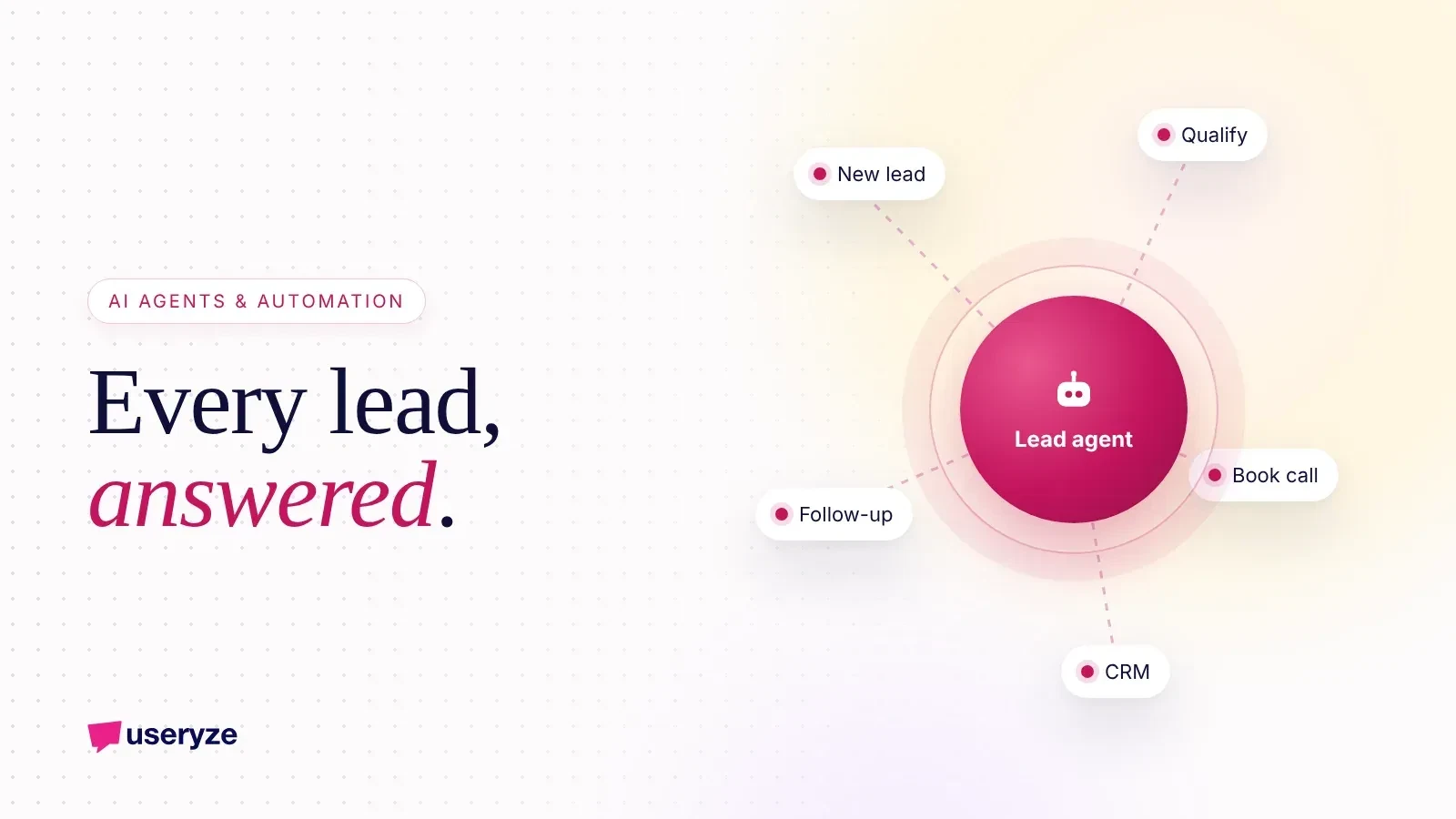
A typical flow looks like this:
- 1. A lead comes in from a form, ad or message.
- 2. The agent replies within minutes by text or email, using their name and referencing what they asked about.
- 3. It answers common questions from your approved information: services, hours, service area, price ranges you are comfortable sharing and what happens next.
- 4. It asks a few qualifying questions, such as timeline, budget range or location.
- 5. It books the next step, like a call, consultation or visit, right on your calendar.
- 6. It hands off to the right person with a short summary and logs everything in your CRM.
- 7. It follows up if the lead goes quiet, a few times over several days, then stops.
A good agent never invents prices or makes promises. If it does not know the answer, it says a person will follow up and alerts your team right away.
Where speed to lead makes the biggest difference
- Home services: a homeowner with a leak often calls whoever picks up first. See how we work with home services businesses.
- Dental and medical practices: new patients tend to book wherever scheduling is easiest.
- Real estate: buyers and sellers often reach out to several agents at once.
- Jewelers and high-ticket retail: engagement ring shoppers want a quick answer and an appointment. We post qualified jewelry leads straight into Podium so the store team can respond fast, as in our jewelry lead generation case study.
- Restaurants and event venues: catering and private event inquiries that sit for a day can easily go elsewhere.
Setting it up without making it creepy
Fast should not feel robotic. Put these guardrails in place:
- Say who is talking. "This is the virtual assistant for Smith Plumbing" is honest and fine. Do not pretend to be a person.
- Get consent for texts. Your form should clearly say you may text them, and every text should make opting out easy. Follow the texting rules that apply to your business.
- Keep messages short. Two or three sentences and one question at a time.
- Time follow-ups politely. An instant reply is fine at any hour; reminder nudges should land at reasonable times.
- Offer an easy exit. "Prefer to talk to a person? Reply CALL" works well.
- Review conversations weekly and improve the answers that fell flat.
How to measure it and start this week
Track these numbers before and after you launch:
- Median time to first reply, by channel.
- Share of leads that get any reply at all.
- Share of leads that book a call, visit or consultation.
- Show rate for booked appointments.
- Closed deals from those leads, if your CRM can connect them.
If time to first reply drops but bookings do not move, the problem is the message or the offer, not the speed.
To get started this week:
- Secret-shop your own business on three channels and time each reply.
- List every place leads come in and where each one ends up.
- Write down the five questions new leads ask most, with approved answers.
- Pick one channel to automate first. For most businesses, that is the website form.
How Useryze helps
We build speed-to-lead agents and the CRM follow-up behind them, so every new lead gets a fast, helpful reply and your team gets a clean handoff. You can see more about how we use AI agents to take busywork like this off your plate. If you want to know how fast your business really responds, ask for a free growth plan. We review your site, search and ads, then walk through what we found on a 30-minute call.
Free growth plan
Turn this into more customers.
We run marketing, video and AI follow-up for owner-led businesses. Tell us about yours and we will show you the three fixes that matter most.
Keep reading
- Why Payload CMS Is a Great Headless CMS (With AI Agents)Payload CMS is open source, code-first and runs inside Next.js. See why we use it for content-heavy sites and how AI agents and humans publish in it.
- Agentic Marketing Operations: How We Run Our Business on AI AgentsData agents, content pipeline agents, an internal ops agent and execution agents. Here is how Useryze runs marketing and operations on AI, and how clients get the same.
- AI CRO Tools vs an AI CRO Agent: What Actually Moves ConversionsAI CRO tools speed up single tasks. An AI CRO agent runs the whole test-and-improve loop. Learn the difference and which one will lift your conversion rate.