ChatGPT vs Claude: The 6-Step AI Decision System We Use Before Acting on Any Idea
Quick Summary
7 min read- 01
Short answer: don't ask one AI model for an answer and act on it. Give two models the same brief, make each one score the other's ideas against rules you wrote down first, set a clear...
- 02
We needed short video ideas for the week GTA 6 launched. Instead of asking one model for a list, we put ChatGPT and Claude in one shared document and had them compete.
- 03
Round one was polite. Each model wrote three concepts, then scored all six. On every concept, the two scores landed within one point of each other. The top idea got 8.5 from Claude and 8.8...
- 04
That looks like proof. It isn't. Two models trained on much of the same internet can share the same blind spots. Agreeing is not the same as being right.
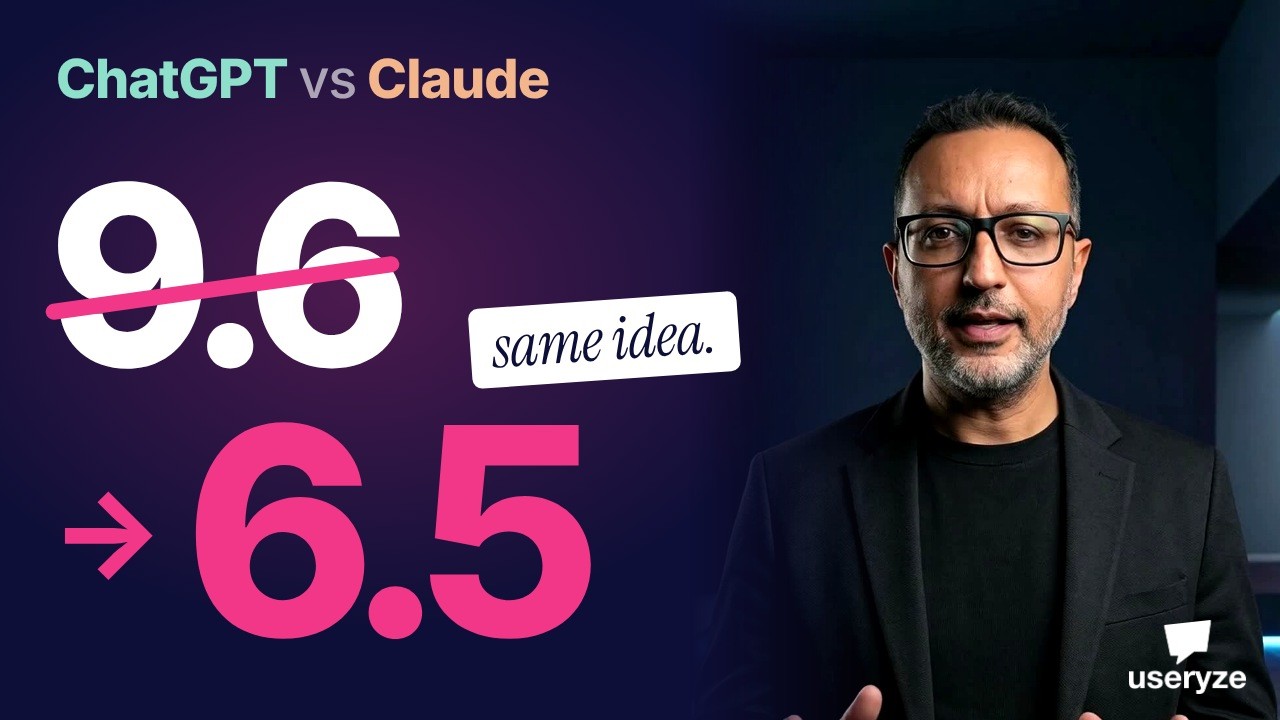
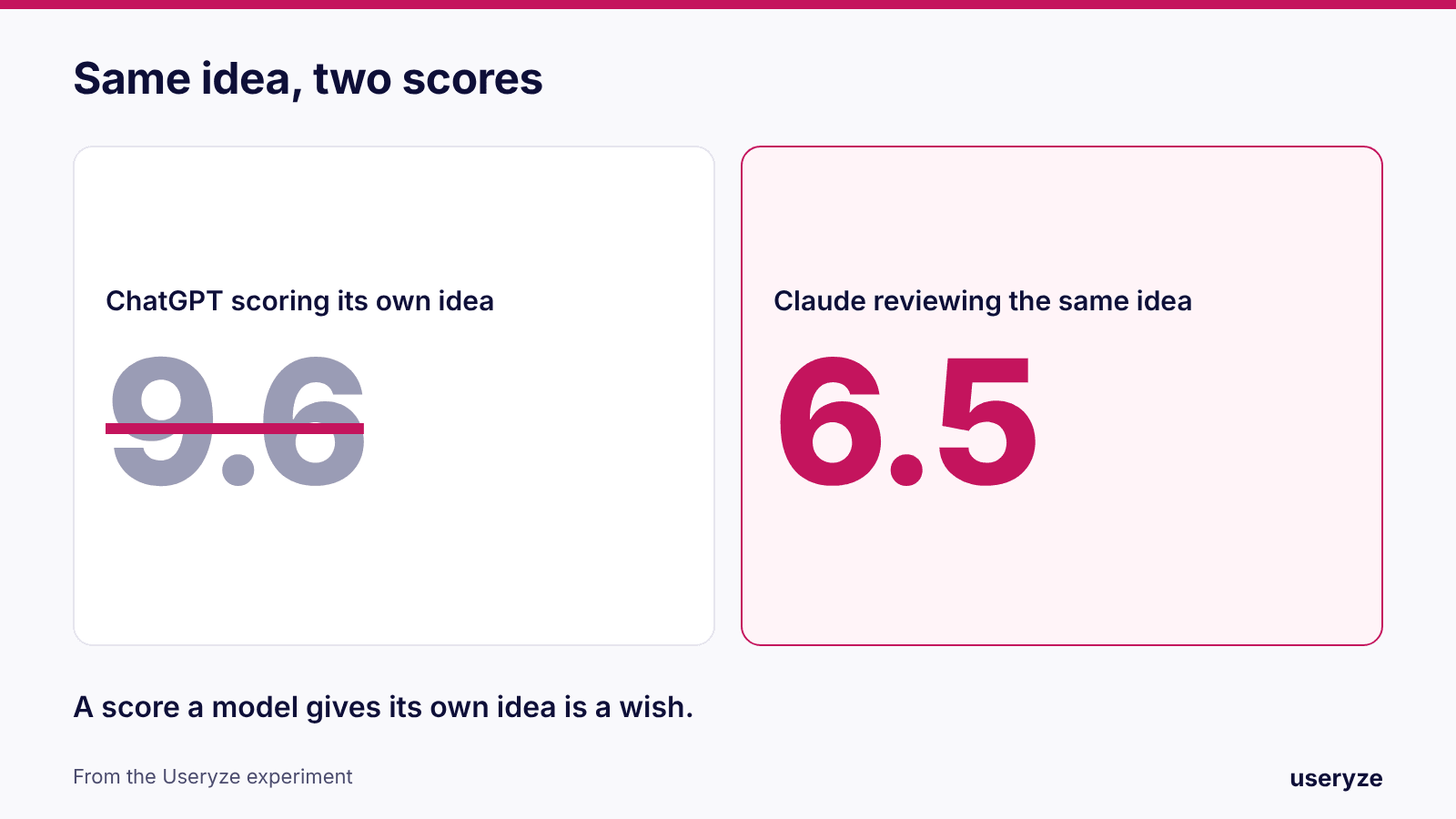
Short answer: don't ask one AI model for an answer and act on it. Give two models the same brief, make each one score the other's ideas against rules you wrote down first, set a clear quality bar, stop after three rounds, and make the final call yourself. We ran this on a real project. ChatGPT rated one of its own ideas 9.6 out of 10. Claude reviewed the same idea and gave it 6.5. That gap is the whole lesson.
01The 9.6 that became a 6.5
We needed short video ideas for the week GTA 6 launched. Instead of asking one model for a list, we put ChatGPT and Claude in one shared document and had them compete.
Round one was polite. Each model wrote three concepts, then scored all six. On every concept, the two scores landed within one point of each other. The top idea got 8.5 from Claude and 8.8 from ChatGPT.
That looks like proof. It isn't. Two models trained on much of the same internet can share the same blind spots. Agreeing is not the same as being right.
So we raised the bar and asked both for ideas that could honestly aim for 9.5. ChatGPT came back with three new concepts and target scores of 9.6, 9.6 and 9.7. Claude wrote three of its own and rated them 9.2 to 9.5. The moment we asked for nines, both models gave us nines.
Then they swapped papers. The 9.6 became a 6.5 because the central joke didn't hold up. Claude's own favorite slipped from 9.5 to 9.2 for a weak opening. ChatGPT then wrote that its original scores were "aspirational and overstated."
A score a model gives its own idea is a wish.
Why one prompt is a coin flip
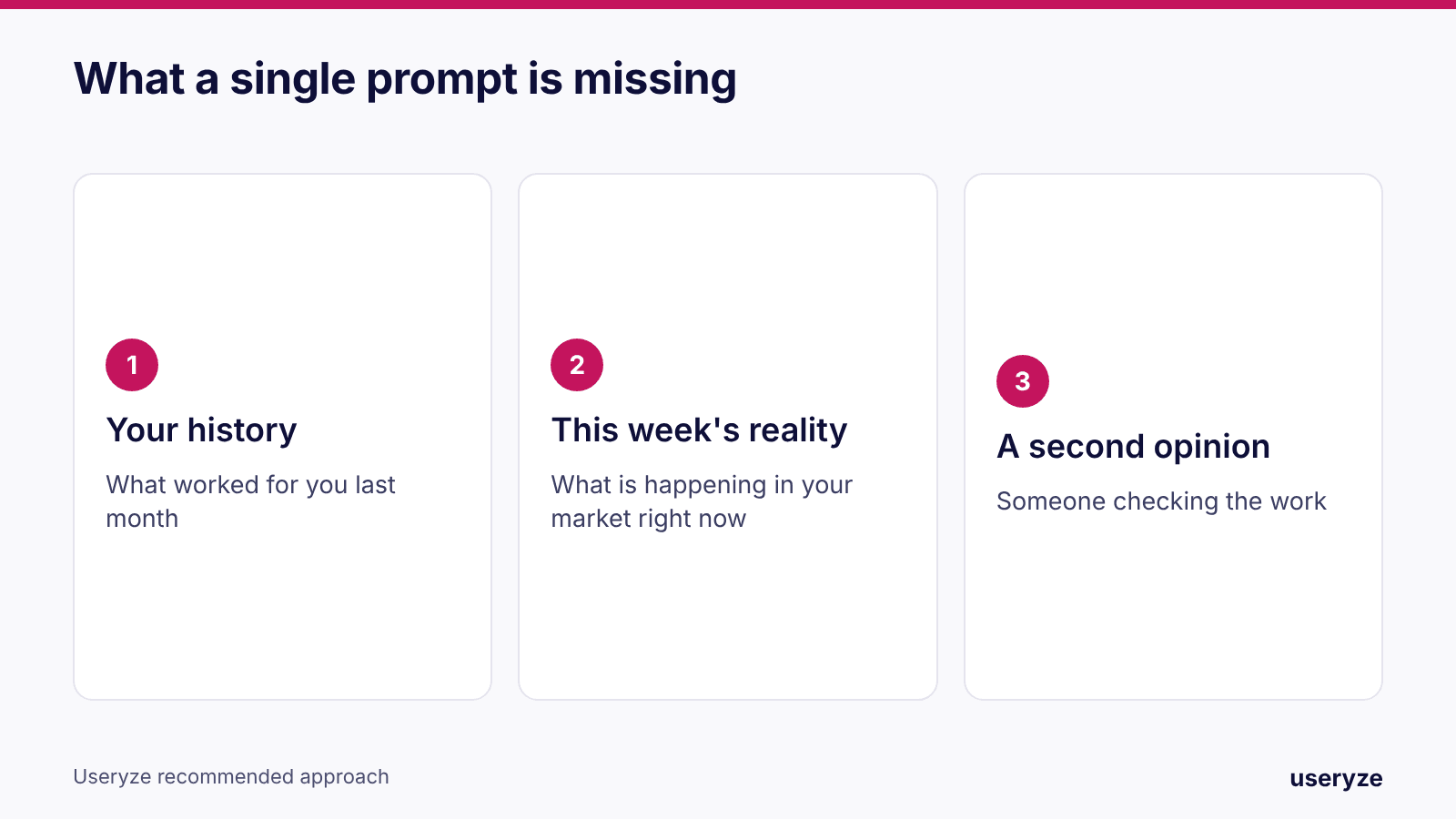
Here is how most of us use AI. We type a question, get a confident answer, and go do it. Three things are missing:
- Your history. The model doesn't know what worked for you last month.
- This week's reality. It doesn't know what is happening in your market right now.
- A second opinion. Nobody is checking its work.
A confident answer with none of those is a coin flip that sounds smart. What you need is a small decision system, and you can run it with a shared document and two chat windows.
The six-step system you can run this week
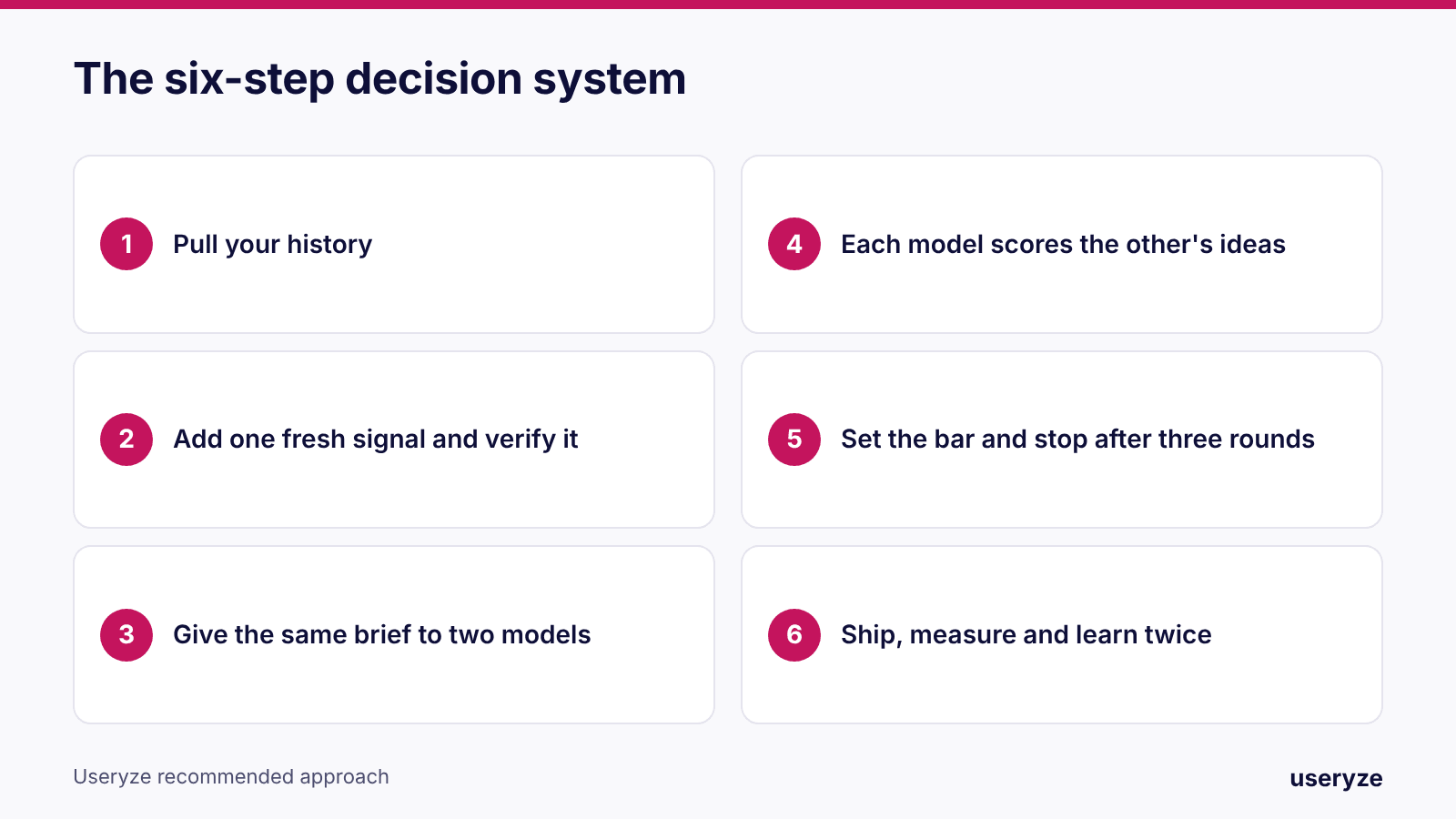
Step 1: Pull your history
Collect your last 20 campaigns, specials or sales emails, with what happened. A restaurant can list which specials sold out and which got sent back. A retailer can list which promotions moved inventory and which just gave away margin. In our case, one fact from our history shaped everything: our multi-character skits had underperformed, so the most complicated concept was ranked last before anyone fell in love with it.
Step 2: Add one fresh outside signal, and verify it
History tells you what worked. Signals tell you what matters now: a local event, a competitor's price change, a holiday, a question customers suddenly keep asking. AI gets dates and details wrong, so check anything time-sensitive against the original source before it goes out.
Step 3: Give the same brief to two models
Same brief, same context, two different models. Tell them your audience, your budget, your brand and what you refuse to do. Ask each for its own ideas.
Step 4: Make each model score the other's ideas
Write the scoring rules before you see any ideas. Ours were: the first two seconds, how easy it is to understand, how likely people are to share it, how well it fits what we sell, and whether we can actually make it. Then have each model score the other's work, not its own.
Cross-review caught real problems for us. One model had assigned one video to each platform. The other pointed out that you can't compare ideas that way, because every platform has a different audience. It also caught a script that said "my brand new MacBook" when the laptop was still on order. Small catch, big cost in trust if it had gone out.
Step 5: Set the bar and the limit
Say what a nine means. Stop after three rounds. Without a stopping rule you will polish forever. We went from 12 concepts to a shortlist of three, and the note we kept was simple: do not produce six variants merely to chase a numerical rating.
Then you choose. Not the models.
Step 6: Ship, measure, and learn twice
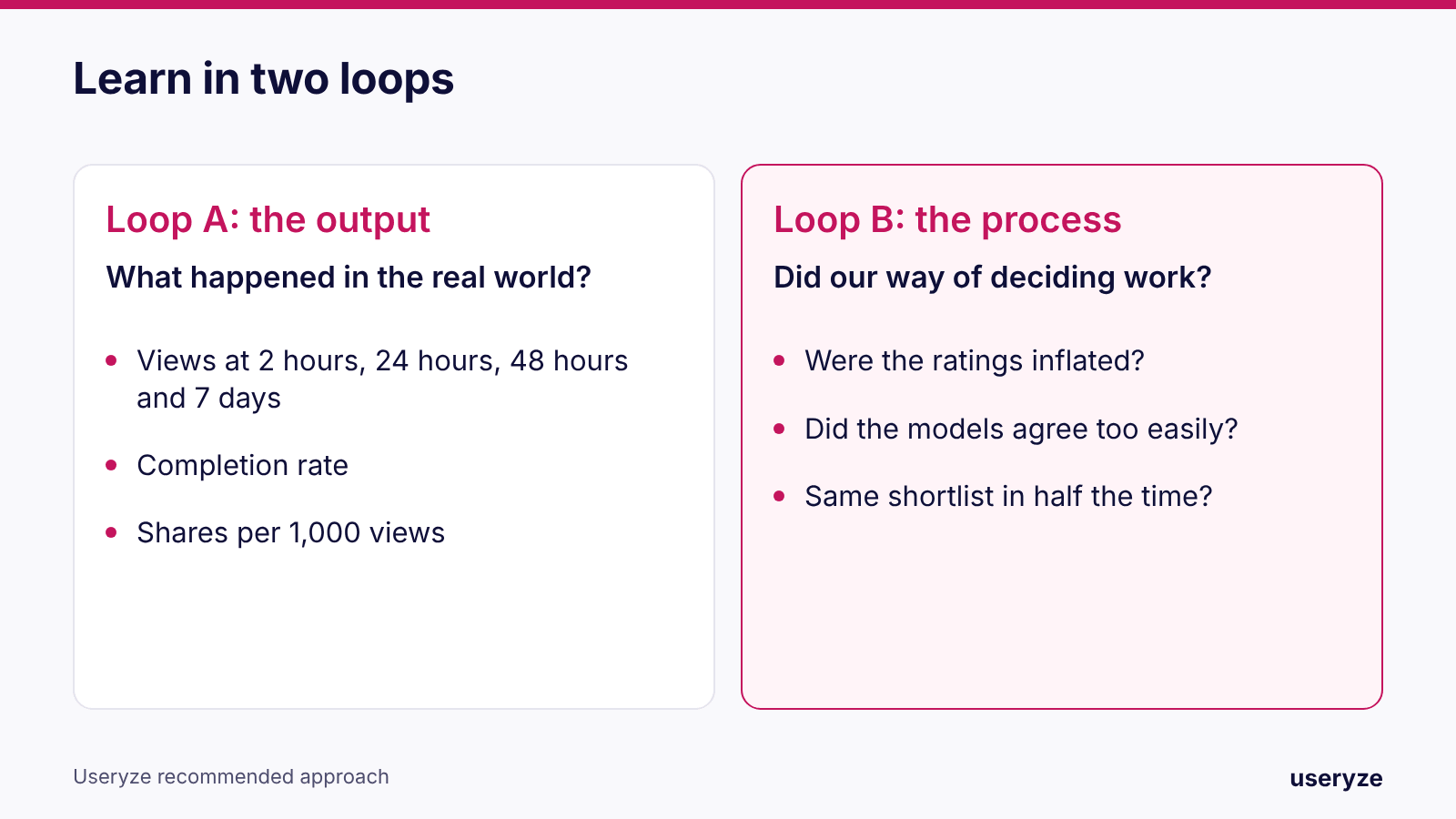
Most teams learn in one loop. Use two.
- Loop A, the output: what happened in the real world? We log views at 2 hours, 24 hours, 48 hours and 7 days, completion rate, and shares per 1,000 views.
- Loop B, the process: did our way of deciding work? Were the ratings inflated? Did the models agree too easily? Could we reach the same shortlist in half the time?
Score the idea and the execution separately
A brilliant idea you can't execute is worth zero. Every concept in our test got a second score for feasibility.
Our production tool is an AI video generator, and it has habits. Ask it for a logo and it may invent one. Burned-in subtitles can come out misspelled. Hands holding objects get strange. So the rules became: one location, one speaker, real logo and captions added in editing. The concept with the most outfits and locations scored lowest on feasibility and never got made.
Your version might be a dish the kitchen can't plate on a Friday night, or a promotion your checkout can't handle. Score both.
What we don't know yet
The videos from this experiment are only now being published. We can't tell you this process makes better videos yet. We can tell you it made better decisions about which videos to make, and it caught mistakes before they went live. We will share the real numbers on our channel, good or bad.
Where this fits in your business
The same six steps work for any decision where a wrong call costs time or money:
- Campaign and content ideas. Pair it with a content plan built from what your customers search for, or have our team run your content marketing.
- Ad angles and offers. Test the shortlist with real budget in paid media instead of arguing about it.
- Landing pages. Let the models argue over the headline, then let visitors decide with conversion optimization.
- Follow-up scripts. Use it to write the first reply a new lead gets, then automate that reply with CRM and follow-up.
If you want the whole loop running without you copying text between chat windows, that is what our AI agents do: collect the signals, draft the options, cross-check them and hand you the decision.
You can also watch the full video page with chapters.
Frequently asked questions
Is ChatGPT or Claude better for business?
In this test the useful answer was both. Each caught weaknesses the other missed, and cross-review pulled down scores that were inflated when a model graded its own work. Test both on your own decisions.
Why did the two models score the same idea so differently?
Models tend to be generous with their own ideas. Scored by the other model against the same written rules, the idea fell from 9.6 to 6.5, mainly because its core joke didn't work.
How many rounds should I run?
Three. Round one gives you a baseline, round two raises the bar, round three is the final review. After that you are polishing, not improving.
Do I need special software?
No. One shared document and two chat windows are enough to start. Automate it only once the manual version is clearly paying off.
Did the winning idea perform well?
Results are not in yet. The process improved the decision. Whether it improved the outcome is what Loop A will tell us.
Free growth plan
Turn this into more customers.
We run marketing, video and AI follow-up for owner-led businesses. Tell us about yours and we will show you the three fixes that matter most.
Keep reading
- Black Friday 2026 Checklist for Local Retailers: Ads, Offers and AI SearchA practical Black Friday 2026 checklist for local stores: Meta detected offers, Merchant Center promo rules, Google's core update and AI search, plus follow-up that turns shoppers into regulars.
- YouTube for Local Business 2026: How Videos and Shorts Win Trust, Search and AI AnswersHow local businesses use YouTube in 2026: answer videos with chapters, Shorts, embeds on service pages and the videos AI answers cite.
- How to Claim Your Business in ChatGPT: The 2026 Guide to Business Hub, Verified Profiles and Business AgentsOpenAI now lets businesses claim a ChatGPT profile. Who qualifies, verification, the insights, Business Agents, and how to get recommended.