The Weekly AI Growth Brief: What Your Marketing Agent Should Report
Quick Summary
5 min read- 01
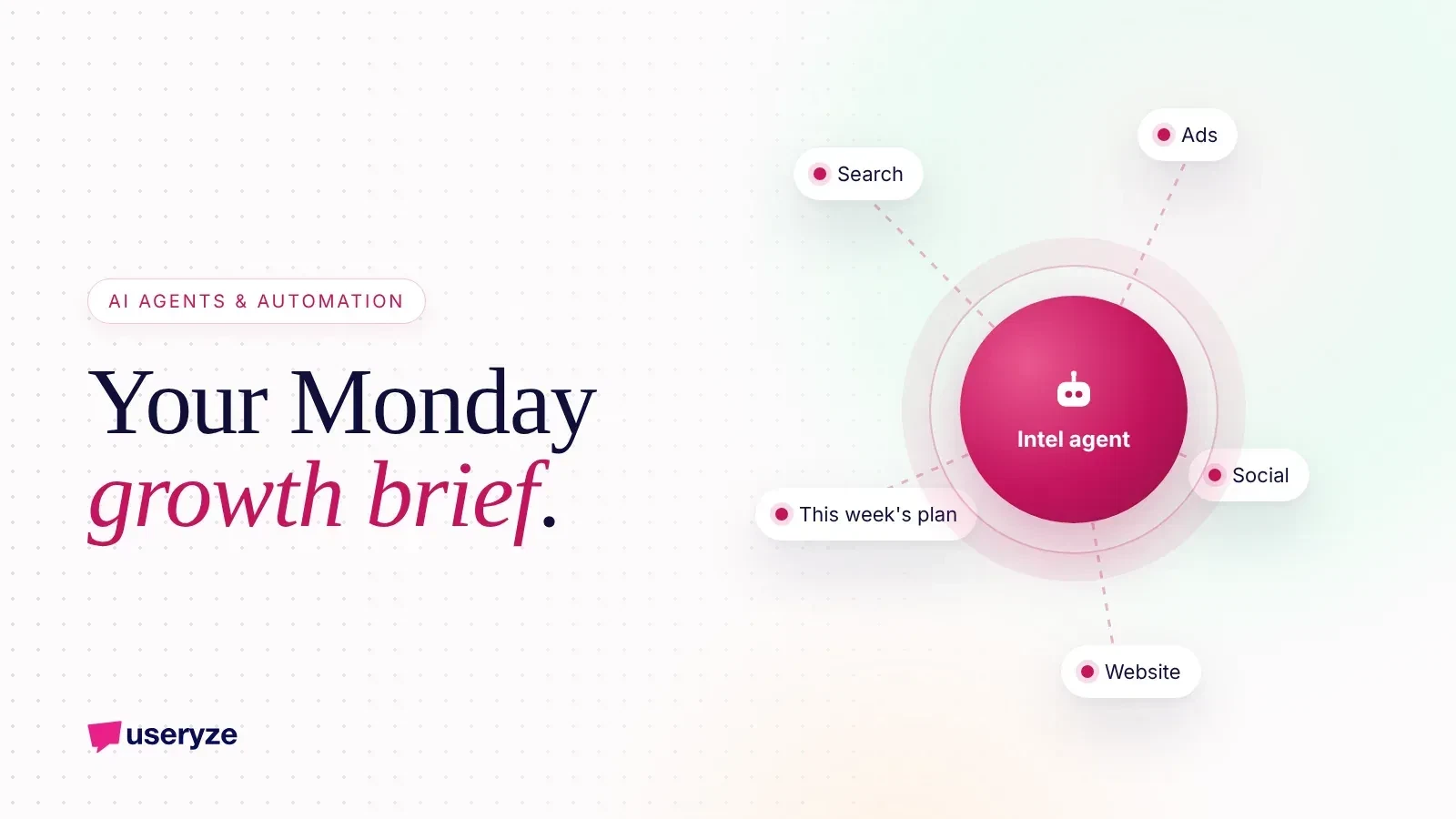
A weekly AI growth brief is a short Monday report, written by a marketing intelligence agent, that tells you what changed last week, why it probably changed and what to do next. It pulls...
- 02
Dashboards are great when someone looks at them. Most owners do not, because they are busy running the business. Dashboards also show numbers without saying what they mean.
- 03
A brief does the looking for you. It reads the data, compares it, and points to the one or two things that need your attention. Weekly is the right rhythm for most small and mid-size...
- 04
If you can only connect two sources, start with ads and your CRM or sales data. That ties spend to money. For restaurants, we built a data loop that pulls Google Business Profile, website,...
A weekly AI growth brief is a short Monday report, written by a marketing intelligence agent, that tells you what changed last week, why it probably changed and what to do next. It pulls from your ads, website, search, CRM and reviews so you do not have to log into six dashboards. A good one fits on one screen and ends with three to five clear actions.
01The short version
- One page, every Monday, in your inbox or Slack before the week gets busy.
- Lead with outcomes: leads, sales, bookings and cost per result, compared with last week and a four-week average.
- Explain changes in plain English, with the likely cause.
- Flag problems like broken tracking, overspend, disapproved ads and new bad reviews.
- End with actions: three to five specific next steps, each with an owner.
Why a weekly brief beats a dashboard
Dashboards are great when someone looks at them. Most owners do not, because they are busy running the business. Dashboards also show numbers without saying what they mean.
A brief does the looking for you. It reads the data, compares it, and points to the one or two things that need your attention. Weekly is the right rhythm for most small and mid-size businesses: fast enough to catch problems, slow enough to avoid reacting to noise.
What the agent should connect to
The brief is only as good as its data. Connect what you have:
- Ads: Google Ads, Meta, TikTok and anything else you run.
- Website analytics: traffic, conversions and top pages from a tool like Google Analytics.
- Search: Google Search Console for queries, clicks and positions.
- Local: Google Business Profile calls, direction requests and reviews.
- CRM: leads, response time, booked appointments and closed deals.
- Sales: your store, POS or booking system, where possible.
If you can only connect two sources, start with ads and your CRM or sales data. That ties spend to money. For restaurants, we built a data loop that pulls Google Business Profile, website, ads and social data together, which is the kind of foundation a brief needs.
The Monday brief, section by section
Here is a structure that works. Keep every part short.
- 1. The headline. One or two sentences. For example: "Leads were up, mostly from Google search. Meta cost per lead rose, and one ad set is the cause."
- 2. Scorecard. Five to eight core numbers: leads or orders, revenue, ad spend, cost per lead or order, conversion rate and lead response time. Show each with last week and a four-week average.
- 3. What changed and why. The two or three biggest moves, with the likely reason: a new ad, a holiday, a page change, a competitor or a tracking break.
- 4. Wins. What worked, so you can do more of it.
- 5. Problems and risks. Overspend, disapproved ads, broken forms, slow lead replies, new negative reviews and pages that dropped in search.
- 6. Search and content. New queries you are showing up for, pages gaining or losing clicks, and content ideas based on what people actually search.
- 7. Actions for this week. Three to five, each specific, with an owner and a rough time estimate.
What good actions look like
The action list is the whole point. Vague actions get ignored.
Weak: "Improve Meta performance."
Strong: "Pause the two Meta ads with the highest cost per lead and move that budget to the video ad that brought in most of last week's leads. Owner: ads team. About 10 minutes."
More examples of strong actions:
- Reply to the two new three-star reviews on the downtown location today. Owner: store manager.
- The contact form on the pricing page has had no submissions in six days. Test it this morning. Owner: web.
- People are searching "emergency AC repair near me" and we have no page for it. Draft one this week. Owner: content.
Rules that keep the brief trustworthy
An AI agent writing about your business has to be careful. Set these rules from day one:
- Show the source of every number, with a link to where it came from.
- Separate facts from guesses. "Leads fell" is a fact. "Probably because of the holiday" is a guess, and the brief should say so.
- Flag data problems first. If tracking broke, every other number is suspect. Put that at the top.
- Compare fairly. Week over week, plus a longer average to smooth out noise. Note holidays and promotions.
- No action without a reason. Every recommendation should point to the data behind it.
- People approve changes. The agent recommends and a person decides, at least until you trust it with specific tasks.
Once the brief is reliable, let the agent handle small, safe tasks it already flags. It can pause ads that break your budget rules, draft review replies for approval, or open a task when a form stops working.
This is where marketing intelligence turns into time back. We run our own business this way, and we explain how in how we run marketing on AI agents.
Set up your first brief this week
- List every tool where your marketing data lives.
- Pick your five to eight core numbers and write down exactly how each is defined.
- Copy the brief structure above into a doc and fill it in by hand the first time, even if it takes an hour.
- Decide who reads it and who owns each type of action.
- After four weeks, review it. Which actions did you take? Which sections did nobody read? Cut those.
How Useryze helps
We build marketing intelligence agents that connect your ads, website, search and CRM, then send a clear brief every Monday with actions you can take. It is a core part of how our AI agents give owners time back, and it makes conversion optimization and paid media decisions faster and better informed. Ask for a free growth plan and we will review your site, search and ads, then show you what your first brief could look like on a 30-minute call.
Free growth plan
Turn this into more customers.
We run marketing, video and AI follow-up for owner-led businesses. Tell us about yours and we will show you the three fixes that matter most.
Keep reading
- Why Payload CMS Is a Great Headless CMS (With AI Agents)Payload CMS is open source, code-first and runs inside Next.js. See why we use it for content-heavy sites and how AI agents and humans publish in it.
- Speed to Lead: How an AI Agent Replies to Every Lead in MinutesSpeed to lead is how fast you reply to a new inquiry. See how an AI agent answers every lead in minutes, books the next step and hands off to your team.
- Agentic Marketing Operations: How We Run Our Business on AI AgentsData agents, content pipeline agents, an internal ops agent and execution agents. Here is how Useryze runs marketing and operations on AI, and how clients get the same.